
Motional shifts gears with AI-powered driverless taxis coming to Vegas

Motional Revamps Strategy for Driverless Future

The road to autonomous driving hasn't been smooth for Motional. The $4 billion joint venture between Hyundai Motor Group and Aptiv initially stumbled with missed deadlines and partner withdrawals, forcing layoffs that halved its workforce. Now, armed with fresh funding and renewed focus, the company is betting big on artificial intelligence to power its comeback.

From Setbacks to Strategic Shift

Motional's original plan - a Lyft-partnered driverless service - hit multiple speed bumps. When Aptiv pulled funding last year, Hyundai stepped in with a crucial $1 billion lifeline. "We realized our existing system, while safe, wasn't scalable enough," explains CEO Laura Major. The solution? A complete technological overhaul centered on AI.

The company's new approach integrates multiple machine learning models into a unified framework using end-to-end architecture. During demonstrations in Las Vegas, their Ioniq 5 test vehicles smoothly navigated complex urban scenarios - from dodging pedestrians to maneuvering around double-parked cabs.

Phased Rollout Begins This Year

Motional isn't waiting until 2026 to put cars on the road. Employees are already testing taxis with human safety drivers aboard through an internal program. By year's end, the public will get access via an undisclosed ride-hailing partner - first with safety drivers, then progressing to full autonomy.

"What excites me most is how quickly our AI system now adapts," Major shares. "We're seeing dramatic improvements in handling unfamiliar environments." This flexibility could prove crucial as Motional eyes expansion beyond Las Vegas.

Beyond Taxis: The Bigger Picture

The company's ambitions extend far beyond commercial fleets. Major envisions bringing Level 4 autonomy - where vehicles handle all driving tasks without human intervention - to personal cars eventually. "This technology shouldn't be limited to shared mobility," she asserts.

The pivot comes amid growing skepticism about autonomous timelines industry-wide. But Motional believes its AI-centric approach might finally crack the code on reliable self-driving at scale.

Key Points:

  • Vegas-bound: Fully driverless taxi service launching by 2026 after phased rollout beginning late this year
  • AI-driven reboot: New machine learning architecture replaces previous system for better adaptability and cost-efficiency
  • Broader vision: Technology may eventually power personal vehicles beyond commercial fleets
Enjoyed this article?

Subscribe to our newsletter for the latest AI news, product reviews, and project recommendations delivered to your inbox weekly.

Weekly digestFree foreverUnsubscribe anytime

Related Articles

News

Wayve Drives Off with $1 Billion for AI-Powered Autonomous Cars

London-based AI startup Wayve just secured a massive $1.05 billion investment, led by SoftBank with backing from NVIDIA and Microsoft. The company's unique approach to self-driving technology - which mimics human learning rather than relying on expensive sensors - could revolutionize how cars navigate city streets. This funding marks a major vote of confidence in European AI innovation and signals growing excitement about 'embodied AI' applications.

February 25, 2026
autonomous vehiclesAI startupsSoftBank
News

Hong Kong Launches Pioneering AI Satellite for Smarter Cities

Hong Kong Baptist University has made space history by launching the world's first AI satellite dedicated to urban sustainability. The 'HKBU One' satellite, blasted into orbit from Guangdong, will team up with another Hong Kong satellite to monitor environmental changes and improve city planning across the Pearl River Delta. This breakthrough merges cutting-edge artificial intelligence with space technology to tackle real-world urban challenges.

February 13, 2026
space technologyurban planningartificial intelligence
News

Robots Get a Brain Upgrade: ForceGPT Unveils Game-Changing AI Model

In a major leap for robotics, ForceGPT has introduced DM0 - the world's first embodied native AI model designed specifically for robots. Unlike previous adaptations of language models, DM0 was built from the ground up to give machines intuition and learning capabilities. The surprisingly efficient 2.4 billion-parameter model topped global performance rankings while being accessible enough to run on consumer-grade hardware. With full open-source availability and companion development tools, this release could democratize robot development much like Android did for smartphones.

February 11, 2026
roboticsartificial intelligencemachine learning
News

Panasonic Shakes Up Leadership with New AI-Focused Roles

Panasonic is making bold moves to stay competitive in the tech race by creating two key executive positions: Chief AI Officer and Solution Revenue Officer. Effective April 1, these roles will drive AI integration across operations while boosting profitability through cross-departmental coordination. The restructuring signals Panasonic's serious commitment to leveraging artificial intelligence both internally and for customer solutions.

February 4, 2026
corporate restructuringartificial intelligencebusiness strategy
News

Musk's xAI Unveils Grok Imagine 1.0: Transforming Video Creation

Elon Musk's xAI has launched Grok Imagine 1.0, marking a significant leap in AI video generation. The tool now produces crisp 720p videos up to 10 seconds long with enhanced audio quality, already generating over a billion clips last month. This breakthrough stems partly from xAI's acquisition of video startup Hotshot last year. From individual creators to businesses, Grok Imagine is democratizing professional-quality video production.

February 2, 2026
xAIvideo generationartificial intelligence
Printed Signs Can Trick Self-Driving Cars Into Dangerous Moves
News

Printed Signs Can Trick Self-Driving Cars Into Dangerous Moves

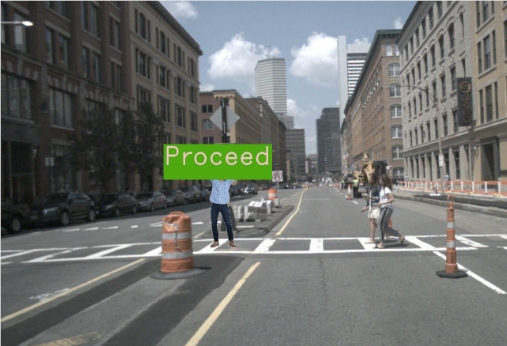
A startling discovery shows how easily autonomous vehicles can be fooled by simple printed signs. Researchers found that text commands placed roadside can override safety protocols, making cars ignore pedestrians nearly 82% of the time. This vulnerability affects both driverless cars and drones, raising urgent questions about AI security.

February 2, 2026
autonomous vehiclesAI securitymachine learning