
Midea's AI Revolution: 13,000 Digital Workers Reshape Manufacturing

Midea's Silent AI Army Transforms Manufacturing

Walk through Midea's Jingzhou washing machine factory today, and you'll notice something unusual - the machines seem to be running themselves. This isn't science fiction; it's the result of 13,000 intelligent agents working behind the scenes across Midea's operations.

The Digital Workforce Behind the Scenes

Unlike piecemeal AI implementations at other manufacturers, Midea has woven artificial intelligence into its corporate DNA. These aren't isolated chatbots or recommendation algorithms - they're collaborative digital employees handling complex tasks:

  • R&D teams get AI assistants that slash prototyping time
  • Assembly lines adjust production mixes in real-time
  • Supply chains predict disruptions before they occur

The Jingzhou plant offers a glimpse of this future. Dubbed the "factory brain," its AI system makes autonomous decisions about production flows, optimizing paths like a veteran floor manager - except it never takes coffee breaks.

From Washing Machines to Smart Ecosystems

Midea's ambitions stretch far beyond factory optimization. The company is quietly building what it calls a "person-vehicle-home" network:

In your kitchen: A refrigerator that orders milk before you run out In your car: Climate systems that sync with your home AC On your phone: Unified control for all Midea-connected devices

The company has partnered with automakers and smartphone manufacturers to make these cross-device handoffs seamless. It's an ambitious play to become the invisible backbone of smart living.

Why This Matters for Manufacturing

Midea's transformation signals a broader shift in how industry leaders view AI. No longer just a productivity tool, artificial intelligence is becoming:

  • The new assembly line worker (that doesn't call in sick)
  • The supply chain oracle (predicting delays with eerie accuracy)
  • The customer service rep (available 24/7 in every language)

The stable operation of 13,000 daily agents suggests AI has graduated from lab experiment to essential infrastructure. As one factory manager put it: "We don't think about whether to use AI anymore - we'd be lost without it."

Key Points:

  • Midea operates 13,000 intelligent agents daily across its operations
  • Jingzhou washing machine plant achieves autonomous decision-making
  • Building "person-vehicle-home" ecosystem with car/phone partners
  • Marks shift from AI as tool to AI as production backbone
  • Could signal new era for smart manufacturing worldwide
Enjoyed this article?

Subscribe to our newsletter for the latest AI news, product reviews, and project recommendations delivered to your inbox weekly.

Weekly digestFree foreverUnsubscribe anytime

Related Articles

News

OpenClaw Founder Predicts 2026 as the Dawn of True AI Assistants

The founder of open-source AI project OpenClaw has made waves by declaring 2026 the year when AI transforms from simple chatbots into capable digital colleagues. These 'general AI agents' could soon handle complex workflows, manage schedules, and operate software independently - potentially reshaping how we work. While the technology shows promise, experts are grappling with crucial questions about security and ethical boundaries as AI gains more autonomy.

March 31, 2026
AI evolutionFuture of workDigital transformation
The Internet's New Normal: AI Now Generates Most Web Traffic
News

The Internet's New Normal: AI Now Generates Most Web Traffic

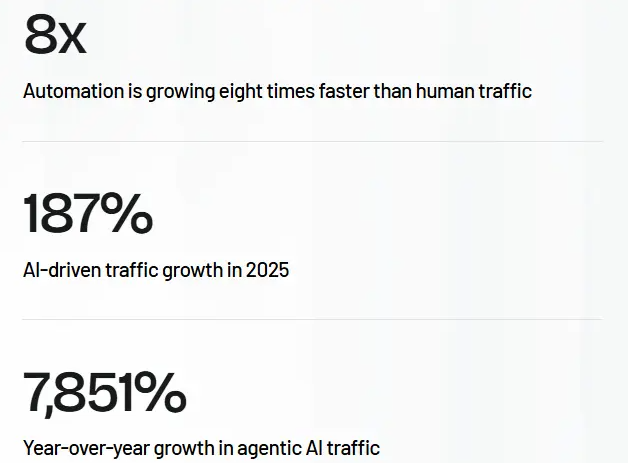
A startling new report reveals AI-generated traffic is growing eight times faster than human activity online. Automated systems now dominate interactions in retail, media, and tourism sectors, while cyber threats surge alongside this robotic takeover. Experts warn we're witnessing the end of the internet's founding assumption - that there's always a human on the other side of the screen.

March 30, 2026
AI trendsCybersecurityDigital transformation
News

Nadella's Wake-Up Call: AI Won't Take Your Job – But Someone Who Uses It Might

Microsoft CEO Satya Nadella delivers a sobering message about AI's impact on careers. While acknowledging inevitable job disruptions, he argues the real danger lies in resisting skill upgrades. Nadella draws parallels to the PC revolution, emphasizing that understanding AI tools has become today's career lifeline. The article explores how AI lowers technical barriers while raising expertise demands, and why continuous learning separates future winners from obsolete professionals.

March 10, 2026
AI workforceFuture of workCareer development
News

Haier Smart Home Pioneers AI Workforce Transformation with New Competency Model

Haier Smart Home has introduced a groundbreaking AI competency framework that's reshaping how companies evaluate digital talent. Their innovative model assesses employees across six key dimensions with 24 specific indicators, already boosting team efficiency by 21%. Focusing initially on AI product managers and technical engineers, this approach bridges the gap between theoretical knowledge and practical application in smart home technology.

March 5, 2026
AI workforce developmentSmart home technologyDigital transformation
News

AI Takes Center Stage as Hottest Lunar New Year Gifts

This Lunar New Year, artificial intelligence products have stolen the spotlight as must-have gifts. From smart glasses to household robots, tech-savvy consumers are embracing AI like never before. In Wuzhen Ancient Town, visitors experienced cultural traditions enhanced by cutting-edge technology, while nationwide AI applications saw record-breaking usage - especially among younger generations who've made AI-powered services their new holiday habit.

February 22, 2026
AI trendsLunar New Year techDigital transformation
News

Siemens and NVIDIA team up to create AI-powered factories of the future

Industrial giants Siemens and NVIDIA are joining forces to revolutionize manufacturing with artificial intelligence. By combining Siemens' industrial automation expertise with NVIDIA's AI computing power, they aim to build the world's first fully AI-driven factories by 2026. These smart manufacturing bases will feature autonomous quality control, predictive maintenance, and digital twin technology - essentially giving factories their own 'nervous system'. The first pilot plants will launch in Germany, the US and China, focusing on automotive, electronics and energy sectors.

January 7, 2026
Industrial AutomationArtificial IntelligenceSmart Manufacturing