Microsoft Unveils Phi-4: A Nimble AI That Sees and Thinks Like Humans

Microsoft's New Phi-4 AI Blends Vision with Reasoning

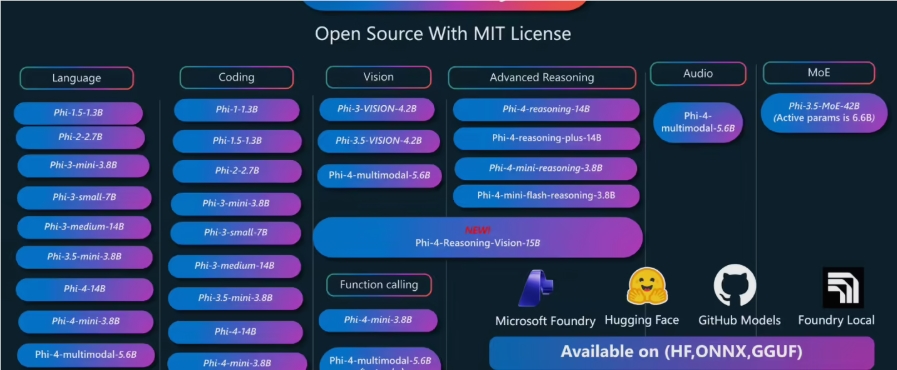
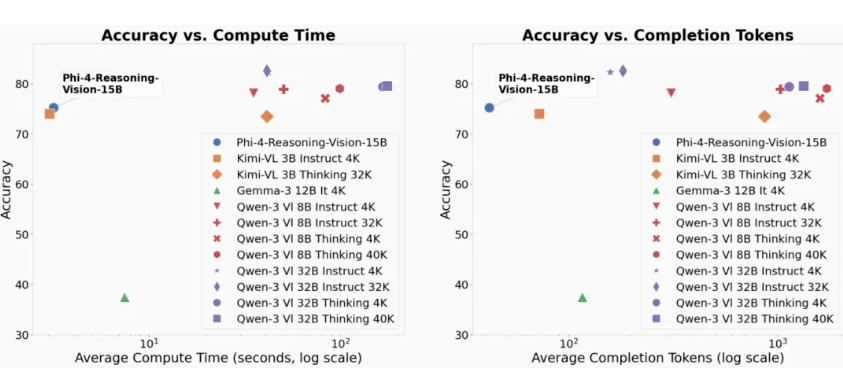
In a significant leap for artificial intelligence, Microsoft has released Phi-4-Reasoning-Vision-15B - an open-source model that marries high-resolution visual processing with sophisticated reasoning abilities. This compact yet powerful system represents the tech giant's latest innovation in their Phi series.
Image

Beyond Simple Image Recognition

What sets Phi-4 apart isn't just its ability to see images clearly, but how it interprets them. Traditional computer vision systems might identify objects in a photo, but Phi-4 goes further - analyzing relationships between elements and drawing logical conclusions. Imagine an AI that doesn't just spot charts in a document, but actually understands what the data means.

"This isn't your grandfather's image recognition software," explains Dr. Lisa Chen, an AI researcher at Stanford. "Phi-4 approaches visual information the way humans do - noticing patterns, making connections, and applying context."
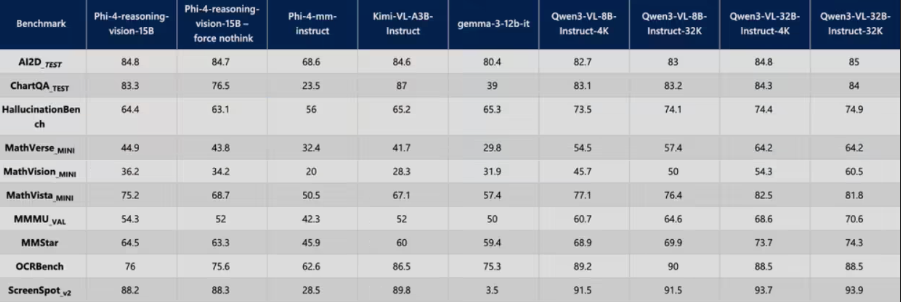
Image Caption: Non-reasoning mode enables quick responses for tasks like OCR

Two Brains Are Better Than One

The model's secret weapon lies in its adaptive thinking modes:

  1. Quick Draw Mode: For straightforward tasks like reading text or locating interface elements, Phi-4 delivers lightning-fast results.
  2. Deep Think Mode: When faced with complex problems requiring step-by-step analysis (think math proofs or logical puzzles), the AI shifts gears to methodical reasoning.

This flexibility makes Phi-4 particularly valuable for:

  • Automated data analysis from charts and graphs
  • Intelligent UI testing and interaction
  • Educational tools that explain visual concepts
  • Accessibility applications that describe complex images
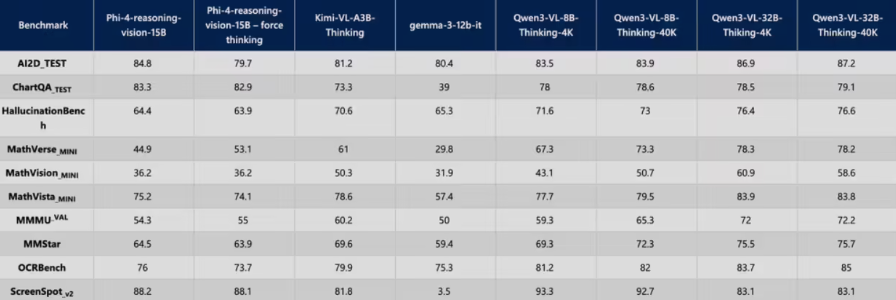
Image Caption: Reasoning mode activates multi-step analysis chains

Practical Magic

The implications extend beyond technical demonstrations. Consider these real-world scenarios:

  1. A designer uploads a website mockup with the instruction "Make all clickable elements blue" - Phi-4 identifies every button and link automatically.
  2. Researchers feed scientific charts into the system - it extracts trends and relationships without manual data entry.
  3. Educators create interactive lessons where students can ask questions about diagrams and get intelligent responses.

The model outputs standardized coordinates for UI elements, allowing other systems to interact with interfaces naturally - clicking buttons, scrolling pages, or filling forms based on simple instructions.

Key Points:

✅ Combines visual processing with contextual reasoning – a rare pairing in AI models
✅ Open-source availability lowers barriers for developer experimentation
✅ Dual-mode operation balances speed with depth as needed
✅ Particularly suited for automating interface interactions and data analysis
✅ Potential applications span education, accessibility, design automation

Enjoyed this article?

Subscribe to our newsletter for the latest AI news, product reviews, and project recommendations delivered to your inbox weekly.

Weekly digestFree foreverUnsubscribe anytime

Related Articles

Smartphones Become AI Data Collectors with Ant Digital's Neck-Mounted Hack
News

Smartphones Become AI Data Collectors with Ant Digital's Neck-Mounted Hack

Ant Digital's Tianji Lab has turned everyday smartphones into powerful data collectors for AI training. Their innovative neck-mounted bracket system captures first-person video at a fraction of traditional costs, solving one of embodied intelligence's biggest challenges. Early tests show dramatic improvements - robot task success rates jumped from 45% to 95% when supplemented with this new data source.

March 3, 2026
Embodied IntelligenceAI TrainingComputer Vision
News

Anthropic Gives Claude Vision with Vercept Acquisition

AI startup Anthropic has acquired computer vision company Vercept, equipping its Claude AI with advanced visual understanding capabilities. The deal brings cutting-edge UI recognition technology that outperforms competitors, marking a major step toward creating AI assistants that can truly navigate digital environments like humans. With this move, Anthropic solidifies its position as a leader in the race to develop practical AI agents.

February 27, 2026
Artificial IntelligenceComputer VisionTech Acquisitions
News

Fei-Fei Li's AI Startup Lands Whopping $1 Billion Investment

World Labs, the artificial intelligence startup co-founded by renowned AI pioneer Fei-Fei Li, has secured a massive $1 billion funding round. Major investors include Autodesk, Andreessen Horowitz, NVIDIA and AMD. The company aims to push boundaries in AI development, building on Li's groundbreaking work with the ImageNet project that revolutionized computer vision.

February 19, 2026
Artificial IntelligenceTech StartupsComputer Vision
Alibaba's Qwen3.5 AI Model Nears Release with Vision-Language Capabilities
News

Alibaba's Qwen3.5 AI Model Nears Release with Vision-Language Capabilities

Alibaba's next-generation AI model Qwen3.5 appears ready for launch, with code appearing in the HuggingFace repository. The model reportedly features a hybrid attention mechanism and may debut as a native vision-language model (VLM). Developers have spotted references to both a compact 2B dense model and a more powerful 35B-A3B MoE variant. If current rumors hold true, Chinese New Year celebrations might coincide with this significant open-source release in the AI community.

February 9, 2026
AIMachine LearningAlibaba
News

SenseTime's New AI Model Thinks Like a Detective

SenseTime has unveiled SenseNova-MARS, an open-source AI model that combines visual reasoning with text-image search capabilities. Outperforming GPT-5.2 on multiple benchmarks, this innovative technology mimics human-like investigation skills - zooming in on tiny details, connecting information dots, and solving complex problems autonomously. The company has made both the 8B and 32B versions publicly available for developers worldwide.

January 30, 2026
AI InnovationComputer VisionMachine Learning
News

SenseTime Unveils Revolutionary AI That Sees, Reasons and Acts

Chinese AI leader SenseTime has just opened up access to its groundbreaking SenseNova-MARS model - technology that doesn't just understand images but can think through problems like humans do. Available in two versions tailored for different needs, this innovation could redefine how machines interact with our visual world.

January 30, 2026
Artificial IntelligenceComputer VisionSenseTime