Microsoft's New AI Model Packs a Punch with Smart, Lightweight Design
Microsoft's Game-Changing AI Model Balances Power and Efficiency
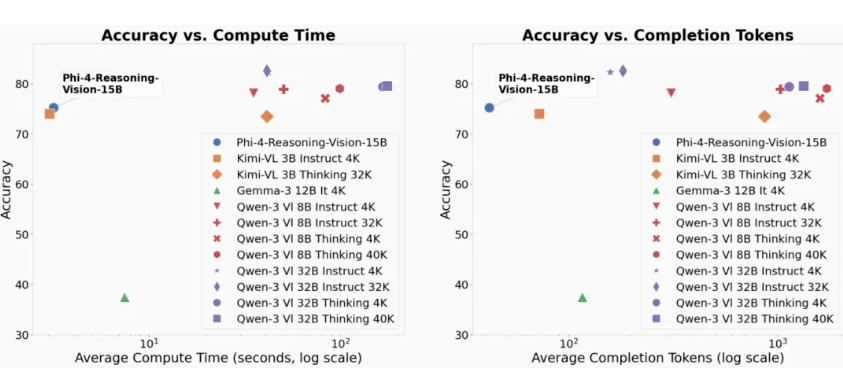
In a move that could reshape how we deploy AI for visual tasks, Microsoft has open-sourced its Phi-4-reasoning-vision-15B model. This 15-billion-parameter system punches well above its weight, offering sophisticated multimodal reasoning capabilities while remaining surprisingly lightweight.
The Power of Smart Data
Unlike typical AI models that gulp down trillions of training tokens, this efficient learner got by with just 200 billion carefully curated multimodal tokens. Microsoft's team took a "less is more" approach, focusing on:
- Deep-cleaned open-source data to remove noise
- Targeted synthetic data for specific skills
- Precisely balanced domain data (like extra math training to boost computational abilities)
The result? A model that handles scientific reasoning and screen element identification with remarkable accuracy.
Smarter Thinking, Better Performance
The real magic lies in the model's adaptive reasoning approach:
For simple tasks like image descriptions or text recognition, it takes the express lane—delivering quick, direct answers to keep things snappy.
Complex challenges like interpreting mathematical formulas trigger its full reasoning power, using structured chain-of-thought processes to ensure accuracy.
Want more control? Users can manually switch between these modes using specific commands—like choosing between sports and eco modes in a high-performance car.
Seeing the Small Stuff Clearly
Thanks to its SigLIP-2 dynamic resolution encoder, the model spots tiny interface elements with impressive precision. This makes it particularly useful for:
- Computer operation assistants that need to click precise buttons
- App testing tools that verify UI elements
- Accessibility solutions that navigate digital interfaces
"We're proving that in AI, smaller and faster can also mean stronger," suggests a Microsoft spokesperson. The company hopes this open-source release will accelerate development of spatial intelligence technologies that work in real-world, resource-constrained environments.
Key Points
- Lightweight power: 15B-parameter model delivers high performance at lower cost
- Data-smart training: Achieves more with less through careful data curation
- Adaptive reasoning: Automatically adjusts approach based on task complexity
- Pixel-perfect vision: Excels at identifying small interface elements
- Open-source availability: Now accessible to developers worldwide