

Meta's New AI Speaks 1600 Languages - Including Ones You've Never Heard Of
Meta Breaks Language Barriers With Revolutionary Speech Tech
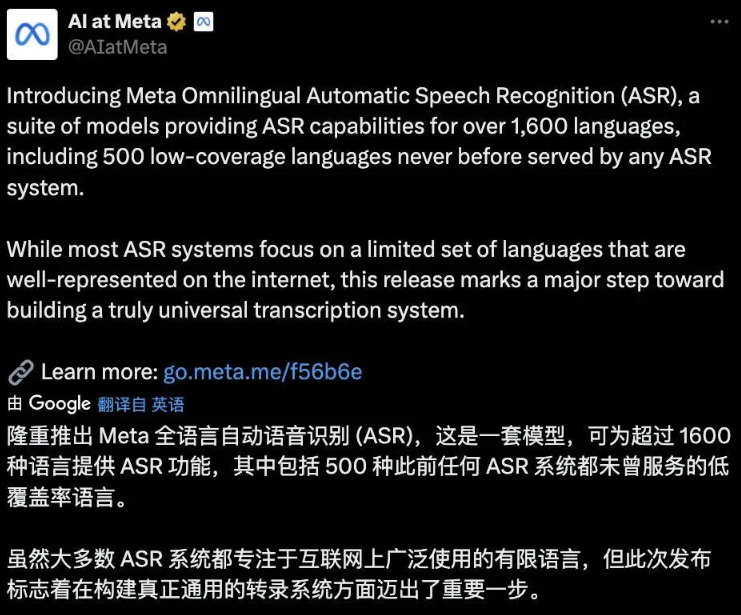
For years, artificial intelligence has been multilingual in name only - focusing on dominant languages while ignoring thousands of others. That changes today with Meta's Omnilingual ASR system, a breakthrough that brings speech recognition to 1,600 languages, including many spoken by small indigenous communities.
Giving Voice to the Voiceless
The numbers tell a sobering story: while there are about 7,000 languages spoken worldwide, over 95% have been excluded from voice technology - until now. Meta's new system achieves word error rates below 10% for 78% of supported languages. Even for tongues with extremely limited available data, it maintains respectable accuracy.
"This isn't just about better technology," explains Dr. Elena Rodriguez, a computational linguist at Stanford. "It's about digital equity. When an African tribal elder or South American indigenous leader can interact with technology in their native language, we're talking about fundamental access to information and opportunity."
Learning Languages Like Humans Do
The secret sauce? Omnilingual ASR mimics how humans learn languages through context rather than brute-force memorization. The system can pick up a new language after hearing just three to five sample sentences - a capability called "few-shot learning" that dramatically reduces the data needed.
Imagine teaching your phone to understand your grandmother's native dialect simply by recording her saying a few phrases. That's the promise of this technology.
More Than Technology - A Cultural Movement
Meta isn't keeping this breakthrough locked in Silicon Valley labs. They've open-sourced the entire system and partnered with language preservation groups worldwide:
- In Papua New Guinea: Recording oral histories passed down through generations
- In Himalayan monasteries: Digitizing sacred texts through voice commands
- Among Native American tribes: Creating educational tools in endangered languages
The implications go far beyond convenience. When a child speaking a language with just thousands of native speakers can ask questions aloud and get answers from AI assistants or search engines in their mother tongue, we're witnessing something profound - technology that adapts to people rather than forcing people to adapt to it.
The Omnilingual ASR represents what happens when technological innovation meets cultural sensitivity - proving that progress doesn't have to come at the cost of diversity.