
Kunlun Tian Gong's Mureka V8 Takes AI Music from Drafts to Radio-Ready Tracks

Kunlun Tian Gong Elevates AI Music Production

The music technology landscape just got louder with Kunlun Tian Gong's release of Mureka V8, their most advanced AI music composition system yet. This isn't just another incremental update - it represents a fundamental shift in how artificial intelligence can participate in the creative process.
Image

At its core, Mureka V8 builds upon the company's proprietary MusiCoT (Music Chain of Thought) technology. But where previous versions assembled musical elements mechanically, this iteration demonstrates something approaching genuine musical intuition. "We've moved beyond simply stitching together notes," explains Kunlun Tian Gong's chief audio engineer Li Wei. "The system now understands musical narrative - how melodies develop tension and release, how arrangements support emotional arcs."

From Technical Achievement to Artistic Partner

The improvements manifest across four key areas:

  • Melodies that stick: Gone are the forgettable sequences of earlier AI compositions. Version 8 generates hooks you might actually hum later.
  • Vocals with character: The synthesized singing now responds dynamically to lyrics, adjusting phrasing and tone like a human vocalist would.
  • Professional arrangements: Instrumentation choices make musical sense rather than feeling randomly assigned.
  • Studio-ready mixing: The spatial imaging and balance approach what you'd expect from seasoned audio engineers.

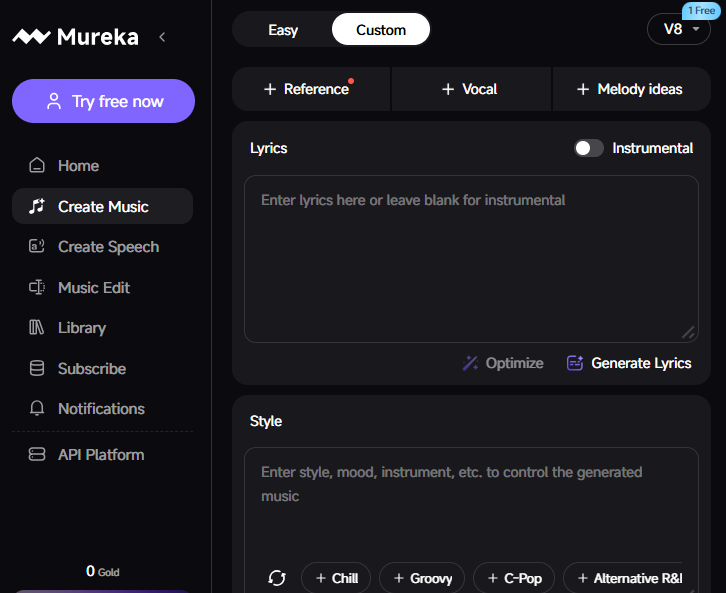
What makes Mureka V8 particularly exciting for musicians is its collaborative workflow. Rather than producing one-off tracks, creators can guide the AI through multiple iterations using natural language feedback or reference tracks. "It's becoming less about generating content and more about having a creative conversation," notes electronic producer Maya Chen during her early testing.

The system currently offers both web access and API integration options:

https://www.mureka.ai/ https://www.mureka.cn/

Why This Matters Beyond Tech Circles

For independent artists and content creators strapped for time and resources, tools like Mureka V8 could democratize professional-sounding music production. Podcasters needing theme songs, game developers requiring dynamic soundtracks, or social media creators wanting original backing tracks may find this especially valuable.

The implications extend to education as well. Music theory students could analyze AI-generated compositions across different styles faster than compiling real-world examples. Songwriting classes might use it to demonstrate how small melodic changes affect emotional impact.

Of course, questions remain about artistic authenticity and copyright implications as these tools evolve. But for now, Mureka V8 stands as compelling evidence that AI-generated music is graduating from novelty act to legitimate creative tool.

Key Points:

  • 🎵 Human-like composition: Mimics creative decision-making processes musicians use instinctively
  • 🎹 Production-ready output: Delivers complete tracks needing minimal post-processing
  • 🛠️ Iterative workflow: Allows refinement through natural language feedback rather than technical adjustments

Enjoyed this article?

Subscribe to our newsletter for the latest AI news, product reviews, and project recommendations delivered to your inbox weekly.

Weekly digestFree foreverUnsubscribe anytime

Related Articles

News

Suno's AI Music Platform Hits 2 Million Subscribers, Nears $300M Revenue

The AI music revolution is hitting high notes as Suno announces crossing 2 million paid subscribers and nearing $300 million in annual revenue. This explosive growth comes just three months after their last funding round, showing how quickly AI-generated music is being embraced. While transforming amateur poets into chart-topping artists, Suno faces copyright challenges but recently secured a landmark deal with Warner Music Group.

February 28, 2026
AI musicSunomusic technology
News

Apple Music Now Shows When AI Helps Make Your Favorite Songs

Apple Music is rolling out a new system that reveals when artificial intelligence plays a role in creating music. Starting March 2026, songs will carry labels showing whether AI helped with album covers, lyrics, melodies or music videos. While Spotify uses similar manual tagging, some competitors are experimenting with automatic detection - though telling human from machine-made music keeps getting harder.

March 6, 2026
music technologyAI transparencystreaming services
News

Apple Music Rolls Out AI Disclosure Tags for Smarter Listening

Apple Music is taking a stand in the AI music revolution by introducing detailed content labels. Unlike simple 'AI-generated' tags, the new system lets distributors specify exactly where artificial intelligence was used - whether in tracks, lyrics, cover art or videos. While relying on voluntary disclosure raises some questions, this move aligns with growing industry efforts to balance innovation with transparency.

March 5, 2026
AI musicstreaming transparencydigital ethics
News

Investor's Spotify Snub Backfires on Suno in Copyright Battle

Suno, the AI music startup, faced an unexpected PR crisis when one of its investors publicly admitted ditching Spotify for Suno's AI-generated tunes. The offhand remark undercut the company's legal defense in a high-stakes copyright lawsuit, where Suno claims its technology doesn't compete with human-created music. Legal experts say the comment handed opponents a powerful argument, revealing how quickly AI might replace traditional music platforms.

February 27, 2026
AI musiccopyright lawtech investing
News

Google's Lyria 3 Turns Images Into Music – With Built-In Copyright Protection

Google DeepMind unveils Lyria 3, its most advanced AI music generator yet. The model crafts 30-second tracks from text, images or videos across multiple languages while tackling copyright concerns head-on with watermarking tech. Though currently focused on short-form content, it gives creators unprecedented control over beats, lyrics and vocal styles.

February 22, 2026
AI musicGoogle DeepMindcreative tools
Google DeepMind's Lyria 3 Turns Anyone Into a Music Composer
News

Google DeepMind's Lyria 3 Turns Anyone Into a Music Composer

Google DeepMind unveils Lyria 3, its latest AI music generator that lets anyone create original songs with just words, images or videos. While currently limited to 30-second non-commercial tracks, this free tool opens up music creation to people without any musical training. The model understands prompts like 'cheerful reggae for a beach party' and generates complete songs with vocals and instruments.

February 19, 2026
AI musicGoogle DeepMindcreative tools