
Kunlun AI Opens Matrix-Game: A Breakthrough in Interactive World Generation

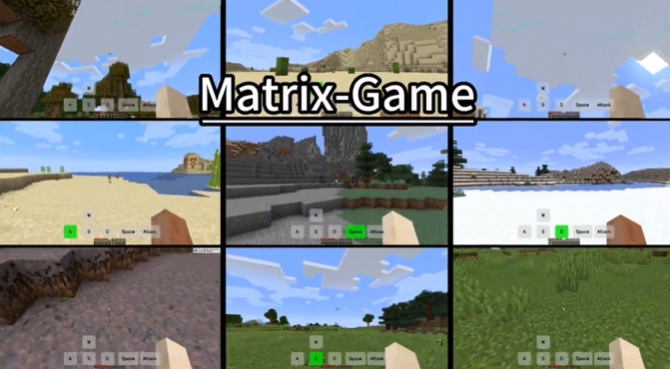
On May 13, Kunlun AI Group unveiled Matrix-Game, a groundbreaking open-source large language model that pushes the boundaries of interactive world generation. This advanced system marks the first industrial-grade open-source spatial intelligence model exceeding 10 billion parameters, specifically engineered for high-fidelity environment creation and precise user control in open-world scenarios.

The Architecture Behind Matrix-Game

Matrix-Game comprises three innovative components:

  • Matrix-Game-MC Dataset: A massive self-built collection of Minecraft gameplay videos enriched with keyboard/mouse control signals and fine-grained action annotations
  • Core Model: A diffusion-based architecture that generates coherent, physically plausible interactive videos
  • GameWorld Score: A comprehensive evaluation system measuring visual quality, temporal consistency, controllability, and physics understanding
Image

The model's two-stage training approach—beginning with unsupervised pre-training followed by controlled refinement—enables exceptional performance in spatial comprehension and user instruction response. Developers can manipulate virtual environments with surgical precision, executing commands like character movement, camera adjustments, and object interactions that feel remarkably natural.

What sets Matrix-Game apart is its ability to maintain visual continuity while adhering to real-world physics. Generated worlds exhibit proper gravity effects, collision responses, and environmental interactions that significantly boost immersion. The technology demonstrates impressive generalization across diverse terrains, weather patterns, and biomes—with potential applications extending beyond gaming into simulation and training environments.

Benchmarking Excellence

In rigorous testing against competitors Oasis and MineWorld, Matrix-Game dominated all GameWorld Score metrics. Blind user tests revealed strong preference for its outputs, validating the model's superior visual fidelity and responsive controls. The evaluation framework itself represents a major contribution to the field—establishing standardized metrics where none previously existed.

Access the Technology

Key Points

  1. First industrial open-source 10B+ spatial intelligence model for interactive worlds
  2. Combines diffusion models with two-stage training for unprecedented control fidelity
  3. Introduces GameWorld Score—the field's first comprehensive evaluation benchmark
  4. Outperforms existing solutions in blind user tests across all quality metrics
  5. Demonstrates strong generalization beyond Minecraft-style environments

Enjoyed this article?

Subscribe to our newsletter for the latest AI news, product reviews, and project recommendations delivered to your inbox weekly.

Weekly digestFree foreverUnsubscribe anytime

Related Articles

India's Alpie AI Model Makes Waves - But Is It Truly Homegrown?
News

India's Alpie AI Model Makes Waves - But Is It Truly Homegrown?

A new AI contender from India called Alpie is turning heads with performance that rivals giants like GPT-4o and Claude3.5 in math and coding tests. However, technical analysis reveals it's actually built on a Chinese open-source model, raising questions about innovation versus optimization. What makes Alpie special is its ability to run efficiently on consumer hardware, potentially democratizing AI access for smaller developers.

January 15, 2026
AIMachine LearningIndia Tech
News

Tailwind CSS Crisis: How AI Boom Left Developers Divided

Tailwind CSS, the beloved utility-first framework, faces an existential paradox. While its adoption hits record highs thanks to AI coding tools, these same technologies have gutted its revenue streams - triggering massive layoffs. Founder Adam Wathan reveals documentation traffic dropped 40% as developers bypass official channels entirely. The crisis sparks urgent debates about open-source sustainability in the AI era.

January 12, 2026
TailwindCSSOpenSourceAIEthics
Mugen3D Turns Single Photos Into Stunning 3D Worlds
News

Mugen3D Turns Single Photos Into Stunning 3D Worlds

A groundbreaking AI tool called Mugen3D is transforming how we create 3D content. Using advanced 3D Gaussian Splatting technology, it can generate remarkably realistic models from just one image - capturing textures, lighting, and materials with astonishing accuracy. This innovation promises to democratize 3D creation across industries from gaming to e-commerce.

January 12, 2026
AIComputerGraphicsDigitalCreation
News

Qualcomm and Google Join Forces to Revolutionize Car Tech with AI

Qualcomm and Google are teaming up to tackle one of the automotive industry's biggest headaches: fragmented in-car systems. Their new 'Automotive AI Agent' combines Qualcomm's Snapdragon Digital Chassis with Google's Android Automotive OS, promising smoother development and smarter features like facial recognition. The partnership also introduces cloud-based development tools that could cut R&D time significantly. This collaboration marks a major step toward more unified, intelligent vehicle systems.

January 9, 2026
automotive-techAIsmart-cars
News

Tailwind's AI Paradox: Soaring Popularity, Plummeting Profits

Tailwind Labs faces a cruel irony - while its CSS framework enjoys record-breaking adoption thanks to AI tools generating Tailwind code, the company has slashed 75% of its engineering team. As AI agents bypass documentation pages, traffic dropped 40%, causing revenue to nosedive nearly 80%. Founder Adam Wathan calls this 'AI's brutal impact' on traditional open-source business models.

January 9, 2026
TailwindCSSOpenSourceAIDisruption
News

Bosch Bets Big on AI with €2.5 Billion Push Into Smart Cars

At CES 2026, automotive giant Bosch unveiled plans to invest over €2.5 billion in AI development by 2027, targeting smarter cockpits and safer autonomous driving systems. The German supplier aims to transform from hardware specialist to software leader, projecting its tech division could hit €10 billion in sales by the mid-2030s.

January 7, 2026
BoschAIautonomous vehicles