JetBrains IDEs Get Smarter with OpenAI Codex Integration

JetBrains Supercharges Developer Tools with AI Assistant
Image

Popular developer tools from JetBrains just got a major artificial intelligence upgrade. The company announced full integration of OpenAI's Codex model across its entire IDE product line, bringing sophisticated AI assistance directly into developers' workflows.

Seamless Integration Across Platforms

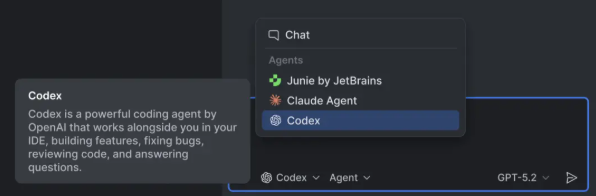
The new feature, available starting with version 2025.3, makes Codex accessible through the built-in AI chat function in JetBrains IDEs. What makes this integration stand out is its flexibility - developers can activate the AI assistant either through a JetBrains AI subscription or by connecting their existing ChatGPT accounts or OpenAI API keys.

Major JetBrains products including IntelliJ IDEA, PyCharm, WebStorm, and Rider already support this functionality. "We wanted to give developers options," explains a JetBrains spokesperson. "Whether you're already using our AI services or prefer working with your existing OpenAI setup, you can start benefiting from Codex immediately."

More Than Just Code Completion

This isn't your typical autocomplete feature. The integrated Codex functions more like a full-fledged programming partner that can:

  • Answer complex coding questions
  • Access web resources when permitted
  • Execute terminal commands autonomously
  • Participate in the entire development cycle from planning to iteration

Developers maintain control through adjustable settings for reasoning depth, generation speed, and cost management - all accessible through an intuitive chat interface.

Limited-Time Free Access Offer

To encourage adoption, JetBrains is running a promotional campaign offering free access to the Codex agent through its JetBrains AI service until allocated quotas are exhausted. The offer began January 22 and has already seen strong uptake according to early reports.

The move positions JetBrains at the forefront of what industry analysts are calling "agent-style" development environments - where AI doesn't just suggest code but actively participates in solving programming challenges alongside human developers.

Key Points:

  • Native OpenAI Codex integration across all major JetBrains IDEs
  • Flexible activation options including personal API keys
  • Transforms Codex into an autonomous programming assistant
  • Adjustable settings for different task complexities
  • Limited-time free access promotion currently available

Enjoyed this article?

Subscribe to our newsletter for the latest AI news, product reviews, and project recommendations delivered to your inbox weekly.

Weekly digestFree foreverUnsubscribe anytime

Related Articles

OpenAI's Codex Now Powers JetBrains IDEs - A Game Changer for Developers
News

OpenAI's Codex Now Powers JetBrains IDEs - A Game Changer for Developers

JetBrains developers rejoice - OpenAI's powerful Codex AI assistant has officially landed across the JetBrains suite of IDEs. This integration brings GPT-5.2 powered coding assistance directly into tools like IntelliJ IDEA, PyCharm, and WebStorm, enabling seamless switching between cloud intelligence and local environments. Currently offered with limited-time free access, this marks a significant leap forward in AI-assisted development workflows.

January 23, 2026
JetBrainsOpenAIDeveloper Tools
News

OpenAI President Dives Into Politics With $25 Million Trump Donation

Greg Brockman, OpenAI's co-founder and president, has made waves in political circles with a massive $25 million donation to a pro-Trump super PAC. The September 2025 contribution represents one of the largest single donations this election cycle and signals deepening ties between tech leaders and the Trump administration. While Brockman actively lobbies against AI regulations, some OpenAI employees are pushing back against the company's political alignment.

January 27, 2026
OpenAIPoliticalDonationsAIPolicy
OpenAI Bets Big on Ads: $60 CPMs and NFL-Level Ambitions
News

OpenAI Bets Big on Ads: $60 CPMs and NFL-Level Ambitions

OpenAI is shaking up digital advertising with premium-priced ChatGPT ads at $60 CPM - triple Meta's rate. Targeting high-value queries like travel recommendations, the AI giant aims to convert its massive user base into an $11 billion revenue stream. While data capabilities currently lag behind Google and Meta, industry watchers see parallels with Facebook's early ad growth.

January 27, 2026
OpenAIDigital AdvertisingChatGPT
News

ChatGPT Ads Hit Super Bowl-Level Pricing

OpenAI's new ChatGPT advertising platform is turning heads with its premium pricing strategy. Charging $60 per thousand impressions, these rates rival prime-time Super Bowl ads. The company opted for pay-per-impression over traditional click models, recognizing how differently users interact with AI chatbots. While CEO Sam Altman once called ads 'dystopian,' business realities appear to have changed OpenAI's tune.

January 27, 2026
ChatGPTdigital advertisingOpenAI
News

ChatGPT Gets Ads: OpenAI's Bold Move to Monetize 900 Million Users

OpenAI is making a major pivot by introducing ads to ChatGPT starting February, marking a significant shift in its business strategy. The AI giant will debut with a 'pay-per-impression' model, initially targeting free and low-cost users in the U.S. While advertisers are eager to tap into ChatGPT's massive user base, OpenAI remains tight-lipped about pricing details, leaving the industry buzzing with speculation about this new frontier in AI monetization.

January 23, 2026
OpenAIAI MonetizationDigital Advertising
News

OpenAI Executives Reveal Political Diversity Amid Conservative Criticism

OpenAI finds itself embroiled in political controversy as executives publicly counter claims of liberal bias. Marketing director Kate Rouch revealed her Republican affiliation and disclosed surprising MAGA donations from co-founder Greg Brockman. These revelations come as AI companies face growing scrutiny over their political neutrality in an increasingly polarized landscape.

January 23, 2026
OpenAItech politicsAI regulation