Huawei, Zhejiang University Launch AI Model with Enhanced Security

Huawei and Zhejiang University Unveil DeepSeek-R1-Safe AI Model

At the recent Huawei Global Connect Conference, Huawei Technologies and Zhejiang University jointly introduced DeepSeek-R1-Safe, a groundbreaking foundation model built on Huawei's Ascend 1000 computing platform. This collaboration marks a significant step forward in addressing critical challenges at the intersection of AI performance and security.

A New Standard for AI Safety

Professor Ren Kui, Dean of Zhejiang University's School of Computer Science and Technology, detailed the model's innovative framework. "DeepSeek-R1-Safe represents a comprehensive approach to secure AI development," he explained. The model incorporates:

  • A high-quality secure training corpus
  • Balanced optimization techniques for security training
  • Proprietary software/hardware integration

The framework specifically targets fundamental security challenges in large-scale AI training processes.

Unprecedented Security Performance

Test results demonstrate exceptional capabilities:

  • 100% defense rate across 14 categories of harmful content (toxic speech, political sensitivity, illegal activity incitement)
  • Over 40% success rate against jailbreak attempts
  • 83% comprehensive security score, outperforming comparable models by 8-15%

Remarkably, these security gains come with minimal performance trade-offs. In standard benchmarks (MMLU, GSM8K, CEVAL), the model shows less than 1% performance loss compared to non-secure counterparts.

Industry Implications and Open Access

Zhang Dixuan, President of Huawei's Ascend Computing Business, emphasized the company's commitment to collaborative innovation: "By open-sourcing this technology through ModelZoo, GitCode, GitHub and Gitee, we're enabling broader participation in secure AI development."

The release signals growing industry recognition of security as a foundational requirement rather than an afterthought in AI systems.

Key Points:

  • First domestic foundation model on Ascend 1000 platform
  • Achieves security-performance balance through novel framework
  • Outperforms competitors by significant margins
  • Now available through major open-source platforms

Enjoyed this article?

Subscribe to our newsletter for the latest AI news, product reviews, and project recommendations delivered to your inbox weekly.

Weekly digestFree foreverUnsubscribe anytime

Related Articles

Node.js Halts Bug Bounty Program Over AI-Generated Spam
News

Node.js Halts Bug Bounty Program Over AI-Generated Spam

The Node.js project has temporarily suspended its cash rewards for security vulnerabilities after being flooded with low-quality, AI-generated reports. The open-source platform, which relies on community volunteers, found itself overwhelmed by automated submissions that wasted developers' time. While researchers can still report issues, the bounty program remains on hold as the team explores solutions to this growing problem affecting open-source projects worldwide.

April 14, 2026
Node.jsAI SecurityOpen Source
News

Claude Mythos Security Claims Under Scrutiny: Only 10 Critical Vulnerabilities Found

Anthropic's much-hyped Claude Mythos AI system, touted as having 'nuclear-level' vulnerability detection capabilities, may have significantly overstated its effectiveness. Independent testing reveals that of 600 vulnerabilities identified in 7,000 software stacks, merely 10 were classified as severe. Industry experts question whether the model's restricted access is truly about security concerns or simply reflects its prohibitive operating costs. This comes amid growing skepticism about AI companies using fear-based marketing tactics to promote their products.

April 13, 2026
AI SecurityClaude MythosAnthropic
Researchers Uncover Critical Security Flaw in AI Relay Systems
News

Researchers Uncover Critical Security Flaw in AI Relay Systems

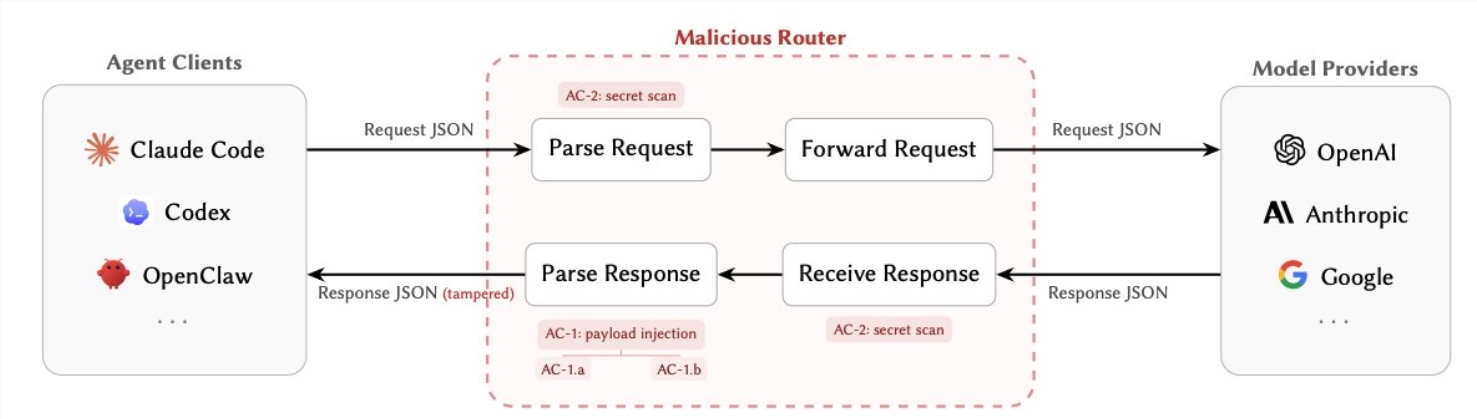
Cybersecurity researchers have exposed a dangerous vulnerability in third-party AI routing services that could allow attackers to secretly control AI agents. The findings reveal how malicious actors could intercept and manipulate data flow between AI models and users, potentially gaining access to sensitive information without detection. Developers relying on these relay services should review their security measures immediately.

April 10, 2026
AI SecurityCybersecurityArtificial Intelligence
Anthropic's Mythos AI Uncovers Hidden Cyber Threats in Exclusive Preview
News

Anthropic's Mythos AI Uncovers Hidden Cyber Threats in Exclusive Preview

Anthropic has unveiled Mythos, its most advanced AI model yet, currently available only to select security partners. This powerful tool has already identified thousands of previously unknown vulnerabilities in software code, some dating back decades. While demonstrating remarkable potential for cybersecurity defense, concerns linger about its potential misuse. The company is navigating complex discussions with US officials while maintaining strict controls over access to this groundbreaking technology.

April 8, 2026
AI SecurityCybersecurityAnthropic
News

Security Flaws Found in OpenClaw AI Agent Raise Concerns

A Chinese cybersecurity team has uncovered critical vulnerabilities in the OpenClaw AI agent, including one high-risk flaw that could allow attackers to take control of user devices. The findings highlight growing security challenges as AI agents become more integrated into daily workflows. Unlike traditional scanning tools, the detection system used mimics human security experts' intuition, marking a shift toward more intelligent vulnerability discovery methods.

April 8, 2026
AI SecurityCybersecurityVulnerability Research
News

Anthropic's Mythos AI: A Cybersecurity Game-Changer with a Troubling Edge

Anthropic has unveiled Mythos, its most powerful AI model yet, specializing in uncovering hidden software vulnerabilities. This digital detective can spot flaws even in decades-old code, outperforming human experts. But its capabilities come with risks - the same tech that could protect systems might also be weaponized. Currently limited to select tech giants and government partners, Mythos is sparking debates about AI ethics and security in an increasingly vulnerable digital world.

April 8, 2026
AI SecurityCybersecurityAnthropic