

How Two Founders Faked AI Before Building a Billion-Dollar Tool
The Unlikely Origin Story Behind Fireflies.ai
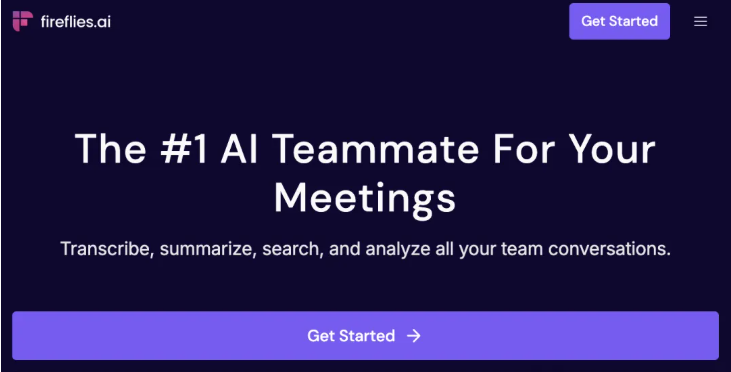
When Fireflies.ai announced its $1 billion valuation last week, few expected the revelation that would follow: For its first year, this AI meeting assistant wasn't artificial at all. Co-founder Krish Ramineni shocked tech circles by admitting their early "AI" was just two founders typing frantically behind the scenes.
Pizza-Fueled Beginnings
Back in 2016, after six failed startups, Ramineni and co-founder Sam Udotong were running on fumes - and pepperoni. "We'd take turns joining client Zoom calls," Ramineni recalls, "then race to summarize notes within ten minutes." Their secret weapon? A fictional assistant named Fred who signed all correspondence.
The scheme worked surprisingly well. Clients assumed Fred was cutting-edge tech when he was really just two keyboards and Google Docs. "We weren't trying to deceive," Udotong explains. "We needed to prove the concept before we could build it."
From Typing Fingers to True AI
The turning point came in 2017 when their first paying customers funded actual automation. Voice engineers replaced human transcribers, evolving from basic speech-to-text to today's sophisticated GPT-powered summaries.
Now serving over 500,000 organizations globally (including 35% of Fortune 500 companies), Fireflies handles more than fifty languages with military-grade encryption - a far cry from those early pizza-fueled nights.
Addressing Privacy Concerns
The confession sparked inevitable questions: Did those manual sessions violate privacy? The founders maintain all early clients knowingly participated in what they called "human-assisted AI testing." Since 2017, every transcript has been fully automated with SOC-2 compliant security measures.
Lessons for Startups Everywhere
Venture capitalists see wisdom in Fireflies' approach. "They validated demand before writing a single algorithm," notes TechStars managing director Jenny Fielding. Even competitors admit similar origins - Otter.ai and Grain reportedly used human transcription phases before achieving full automation.
The company's next ambition? Transforming from meeting assistant to voice-powered operating system capable of updating CRMs and sending follow-ups automatically. With ARR projected to surpass $100 million next year, Fireflies proves sometimes you need human hands to build something truly artificial.
Key Points:
- Bootstrapped beginnings: Founders manually typed notes as fictional "Fred" while developing actual AI
- Demand-first approach: Proved market need before building complex technology
- Privacy assurances: Transitioned to full automation by 2017 with enterprise-grade security
- Industry trend: Many AI tools began with human-assisted phases
- Future vision: Expanding beyond transcription into complete voice workflow automation