
GPT-5's Math Claims Debunked, Sparking Tech Debate

GPT-5's Mathematical Breakthroughs Questioned by Experts

Recent assertions by OpenAI regarding GPT-5's mathematical achievements have ignited controversy across the tech and academic communities. The debate centers on whether the AI system genuinely solved complex problems or merely identified existing solutions.

The Controversial Claims
Image

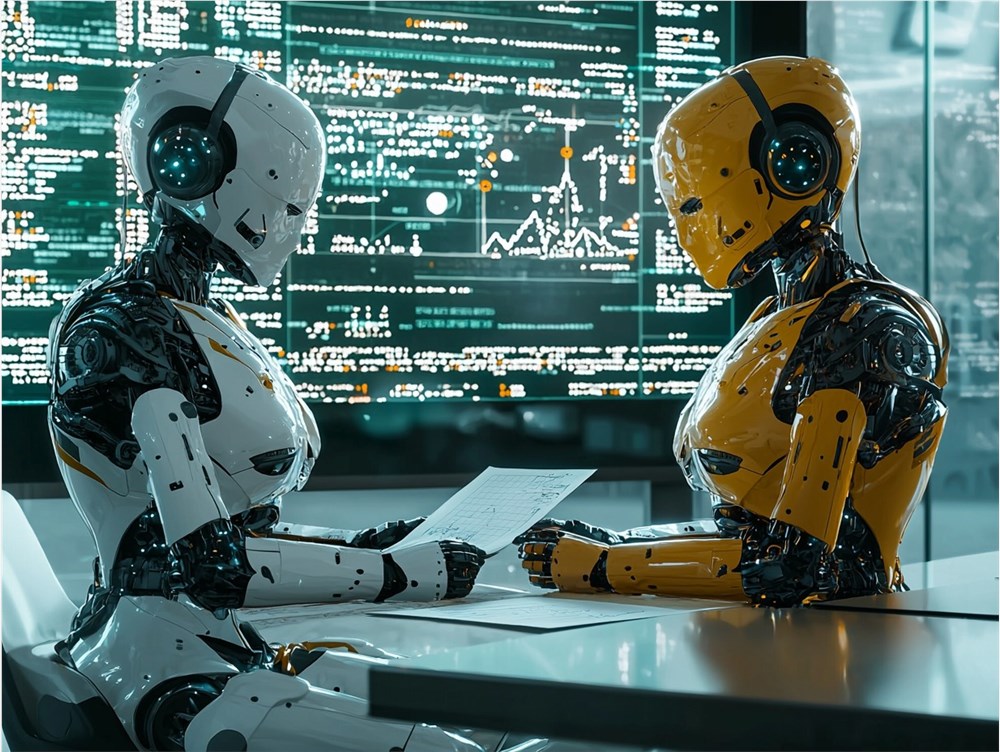
Image source note: The image is AI-generated, and the image licensing service is Midjourney

The dispute began when Kevin Weil, OpenAI's vice president, tweeted that GPT-5 had solved 10 previously unsolved Erdős problems and made progress on 11 others. These mathematical conjectures, named after renowned mathematician Paul Erdős, represent some of the most challenging problems in number theory and combinatorics.

However, Thomas Bloom, mathematician and maintainer of the Erdős problems website, quickly refuted these claims. He clarified that while these problems were listed as "open" on his site, GPT-5 hadn't actually solved them - it had simply found references containing existing solutions that Bloom himself wasn't aware of.

Industry Reactions

The incident drew sharp criticism from leading AI researchers:

  • Yann LeCun, Meta's chief AI scientist, called it "self-inflicted"
  • Demis Hassabis, CEO of Google DeepMind, described it as "embarrassing"

OpenAI researcher Sebastien Bubeck later acknowledged that GPT-5 had only located existing literature containing solutions. However, he maintained this still represented significant progress in literature search capabilities.

Broader Implications

This controversy raises important questions about:

  1. How AI achievements should be measured and communicated
  2. The distinction between finding existing knowledge versus creating new knowledge
  3. Ethical responsibilities in marketing AI capabilities

The mathematics community emphasizes that while locating obscure solutions demonstrates useful retrieval abilities, it shouldn't be conflated with genuine problem-solving breakthroughs.

The tech industry continues debating appropriate benchmarks for evaluating AI systems' mathematical reasoning capabilities without overstating their accomplishments.

Key Points:

  • 🔍 GPT-5's math claims questioned by experts across academia and tech
  • 📄 OpenAI VP asserted problem-solving feats later shown to be literature retrieval
  • 🧩 Distinction between finding vs solving crucial for evaluating AI capabilities
  • 🤖 Incident highlights ongoing challenges in accurately representing AI progress

Enjoyed this article?

Subscribe to our newsletter for the latest AI news, product reviews, and project recommendations delivered to your inbox weekly.

Weekly digestFree foreverUnsubscribe anytime

Related Articles

News

ChatGPT's Adult Mode Hits Another Snag as OpenAI Shifts Focus

OpenAI has delayed its controversial 'Adult Mode' feature for ChatGPT yet again, prioritizing core AI improvements instead. While code hints suggest the feature hasn't been abandoned, the company is focusing first on enhancing intelligence and personalization. The postponement highlights the ongoing tension between user demands and ethical considerations in AI development.

March 9, 2026
OpenAIChatGPTAI Ethics
News

OpenAI Robotics Chief Quits Over Military AI Concerns

Caitlin Kalinowski, OpenAI's hardware and robotics lead, resigned abruptly this week citing ethical concerns about the company's military partnerships. The former Meta AR glasses developer warned about unchecked surveillance and autonomous weapons in social media posts. Her departure exposes growing tensions within OpenAI as it navigates defense contracts while trying to maintain ethical boundaries.

March 9, 2026
OpenAIAI EthicsMilitary Tech
OpenClaw's Game-Changing Update: GPT-5.4 Support and Smarter AI Agents
News

OpenClaw's Game-Changing Update: GPT-5.4 Support and Smarter AI Agents

The open-source AI project OpenClaw just dropped its biggest update yet, bringing native GPT-5.4 support that outperforms competitors like Claude Code. The 2026.3.7 version introduces revolutionary 'memory hot-swapping' technology, solving long-standing fragmentation issues in smart agents. From coding to stock analysis, this update transforms OpenClaw from a developer's toy into a true virtual employee that never stops working.

March 9, 2026
AI DevelopmentOpenClawGPT-5
News

AI Stuns Computing Legend: Claude Cracks Knuth's 30-Year Math Puzzle

In a remarkable display of artificial intelligence's growing capabilities, Claude Opus solved a complex graph theory problem that had eluded Donald Knuth for decades. The Turing Award winner described his astonishment as the AI not only found the solution but demonstrated creative problem-solving akin to human mathematicians. This breakthrough highlights AI's potential as a collaborative partner in advanced mathematical research.

March 9, 2026
Artificial IntelligenceMathematicsDonald Knuth
OpenAI Empowers Developers with Free AI Security Tools
News

OpenAI Empowers Developers with Free AI Security Tools

OpenAI is rolling out a generous support program for open-source developers, offering six months of ChatGPT Pro access plus cutting-edge code security tools powered by GPT-5.4. The initiative aims to strengthen software ecosystems by helping maintainers catch vulnerabilities early. While access to the premium Codex Security features will be selective, the program welcomes diverse coding environments beyond OpenAI's native tools.

March 9, 2026
OpenAIDeveloper ToolsCode Security
News

NVIDIA Pulls Back from OpenAI: A Billion-Dollar Partnership Cools

NVIDIA's surprising decision to scale back its multi-billion dollar investment in OpenAI signals shifting tides in the AI industry. The chip giant's CEO recently called their $3 billion commitment likely their last, walking back from earlier plans for a $10 billion partnership. This comes as OpenAI faces internal turmoil, including executive departures and ethical controversies. Industry watchers see NVIDIA's move as both a response to OpenAI's instability and a cautious step against potential AI valuation bubbles.

March 9, 2026
AI InvestmentNVIDIAOpenAI