OpenClaw's Game-Changing Update: GPT-5.4 Support and Smarter AI Agents
OpenClaw Levels Up: GPT-5.4 and the End of AI Agent Fragmentation
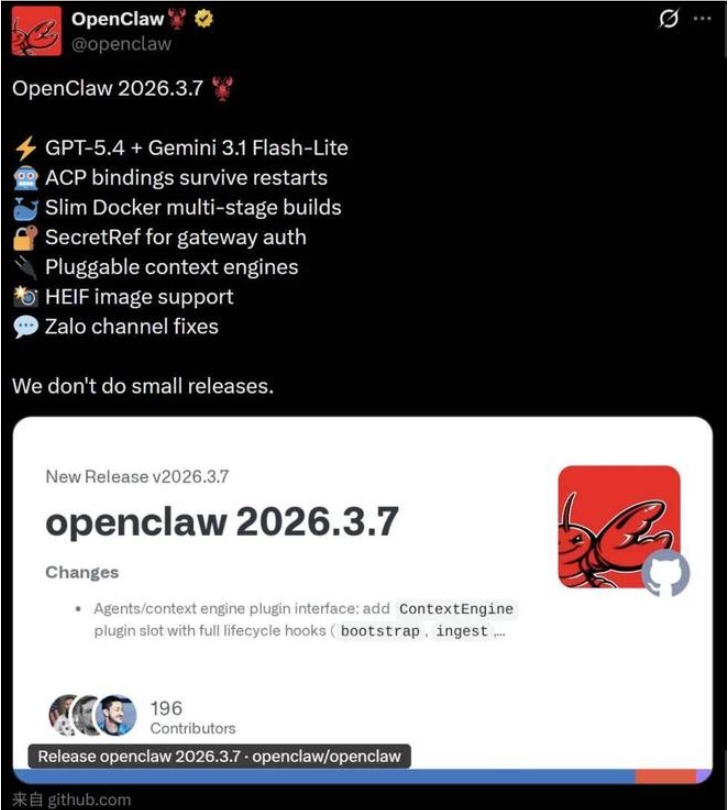
The AI community is buzzing after Sunday's major update from OpenClaw, the open-source project that's been turning heads in developer circles. Version 2026.3.7 isn't just another incremental improvement - it's the moment OpenClaw graduates from experimental framework to full-fledged "Agent Operating System."
GPT-5.4 Support That Beats the Competition
What's got everyone talking? Native support for GPT-5.4, which in benchmark tests scored a whopping 74.8 on the OOLONG scale - leaving Claude Code's 70.3 in the dust. As context length increases, OpenClaw maintains impressive stability and accuracy.
"Saying it runs well is being too conservative," one testing engineer remarked after putting the new version through its paces.
Memory That Doesn't Forget
The update tackles one of AI agents' most frustrating limitations: short memory spans. The new "Context Engine Plugin Interface" introduces game-changing "memory hot-swapping" technology. Now developers can integrate RAG or knowledge graph folding techniques, with persistent channel binding that survives service restarts.
Imagine an assistant that remembers everything - that's what this breakthrough delivers.
No More Thinking Out Loud
Local model users will appreciate how version 2026.3.7 restructures web search tools and isolates model "thinking" from final outputs. Gone are the days of watching your AI assistant scroll through its reasoning process - now you just get clean, polished answers.
From Side Project to Indispensable Tool
What started as a niche developer tool now handles everything from coding to financial analysis to presentation design. With contributions from 196 developers and enterprise-grade security features, OpenClaw has evolved into something remarkable: a truly autonomous virtual employee that keeps getting smarter.
Key Points:
- GPT-5.4 integration outperforms competing models in benchmark tests
- Memory hot-swapping solves long-term context limitations
- Cleaner outputs filter out intermediate reasoning steps
- Production-ready with security features for professional use
- Versatile applications across multiple industries