Google's Gemini Turns News Into Flood Predictions That Beat Satellites
How Reading News Helps AI Predict Deadly Floods
Flash floods strike like invisible assassins - sudden, localized, and devastating. These meteorological killers claim over 5,000 lives annually worldwide, often catching communities off guard despite advanced satellite monitoring. Now Google has developed an unconventional solution: using AI to read historical news reports as crystal balls.
Mining Stories for Survival Clues
The breakthrough came when researchers fed Gemini, Google's powerful AI system, a staggering 5 million news articles documenting flood events globally. Like a digital archivist with perfect recall, the model extracted details from 2.6 million historical floods mentioned in these reports. Each story became a data point when tagged with geographic coordinates - transforming qualitative accounts into quantitative "groundsource" intelligence.
From Words to Warnings
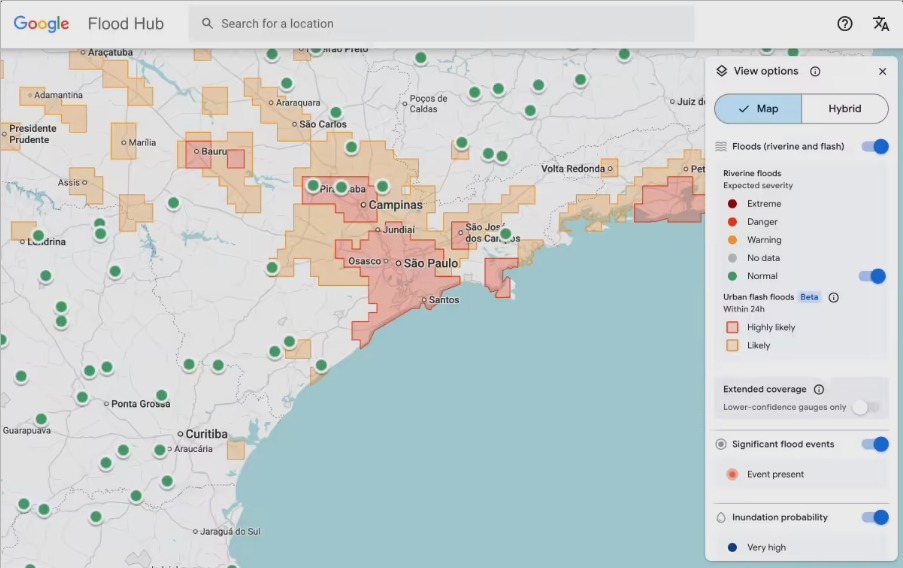
This textual treasure trove trained specialized neural networks that now power Google's Flood Hub platform, assessing risks across cities in 150 countries. Southern African emergency teams report the system gives them crucial extra minutes to evacuate vulnerable areas before waters rise.
The approach shines brightest where traditional systems fail hardest: resource-poor regions lacking radar networks. "Even without local sensors," explains a project lead, "if newspapers documented past floods there, our models can calculate future risks based on weather patterns."
Beyond Flood Forecasting
Google plans to extend this "text-to-prediction" method to other fleeting disasters like heatwaves and landslides. When AI evolves from creating art to preserving lives, it reveals technology's most humane potential - not predicting the future perfectly, but giving communities fighting chances against nature's fury.
Key Points:
- News analysis approach outperforms satellite monitoring for flash flood prediction
- System trained on 5 million articles documenting 2.6 million historical floods
- Currently deployed in 150 countries via Google Flood Hub platform
- Particularly valuable for developing regions without radar infrastructure
- Method may expand to predict heatwaves and landslides