Google's Gemini AI Now Brings Science to Life with Interactive 3D

Google's Gemini Gets Hands-On with Science

Imagine rotating a DNA helix with your fingertips or adjusting the moon's orbit with a slider. That's the new reality Google's Gemini AI brings to science education. The tech giant recently supercharged its chatbot with interactive 3D models and simulations that transform abstract concepts into tangible experiences.
Image

Beyond Textbook Diagrams

Gone are the days of static charts and dense paragraphs. When you ask Gemini to "show" rather than "tell," it generates dynamic visualizations you can manipulate:

  • Drag to rotate molecular structures like a chemist
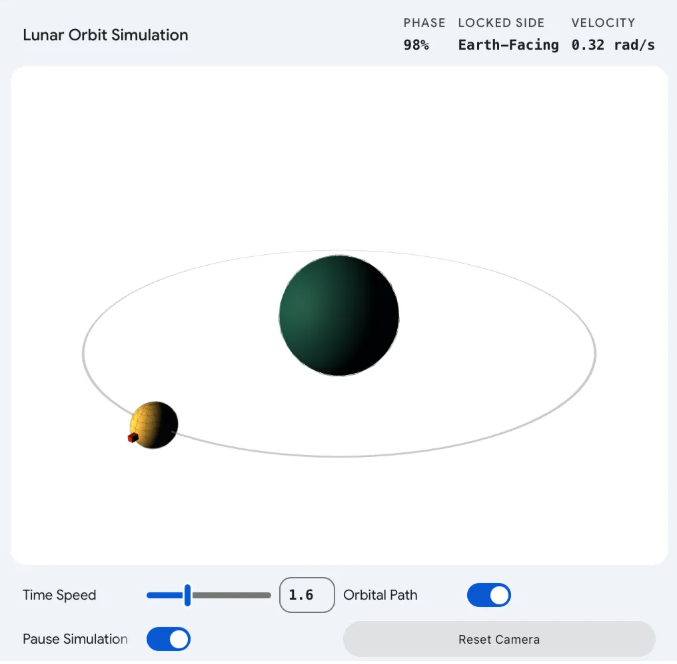
  • Slide to adjust gravity's strength in orbital simulations
  • Tweak quantum experiment parameters and watch waves interfere instantly

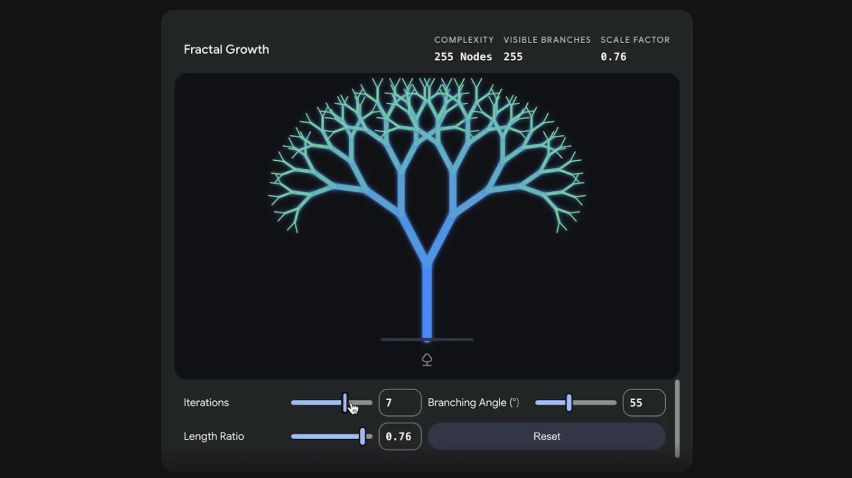
"Seeing a fractal grow as I changed its angles made the math click in a way textbooks never did," shares early tester Maria Chen, a high school physics teacher.

How to Unlock the Magic

Getting these visual treats is simple:

  1. Use action-oriented prompts like "Demonstrate how..." or "Help me visualize..."
  2. Ensure you're using the Pro model (free tier users get text-only responses)
  3. Be specific – "Show me Jupiter's storms in 3D" works better than vague requests

Google's blog reveals the feature builds on existing interactive diagrams for STEM subjects. The new 3D layer adds depth (literally) to chemistry molecular models, physics simulations, and astronomical phenomena.

Who Gets Left Out?

While rolling out globally, there's a notable exclusion:

  • Educational accounts (school emails)
  • Google Workspace users

A Google spokesperson explained this stems from enterprise security protocols rather than pedagogical concerns. They hinted at possible future integrations with Classroom tools.

Why This Changes Learning

Cognitive science shows we retain:

  • 10% of what we read
  • 30% of what we see
  • 90% of what we actively manipulate

By making variables tangible (adjust a planet's mass and immediately see its orbital change), Gemini bridges the gap between theory and intuition. As quantum computing researcher Dr. Lin puts it: "Finally, an AI that doesn't just explain the double-slit experiment – it lets you perform it."

Key Points:

  • ✨ Gemini's new 3D features make science concepts interactive and adjustable
  • 🔧 Users manipulate simulations via simple sliders and drag controls
  • 🚫 Currently unavailable for school and Workspace accounts
  • 📈 Builds on existing visual learning tools with deeper dimensionality
Enjoyed this article?

Subscribe to our newsletter for the latest AI news, product reviews, and project recommendations delivered to your inbox weekly.

Weekly digestFree foreverUnsubscribe anytime

Related Articles

Google Gemini Now Creates Interactive 3D Worlds Right Before Your Eyes
News

Google Gemini Now Creates Interactive 3D Worlds Right Before Your Eyes

Google's Gemini AI just got a major upgrade that brings learning to life. Instead of flat text explanations, it now generates fully interactive 3D models and physics simulations. Ask about planetary orbits or pendulum motions, and watch as the system creates dynamic, adjustable visualizations that respond to your inputs in real time. This breakthrough transforms abstract concepts into tangible, hands-on experiences - making complex physics as intuitive as playing with building blocks.

April 10, 2026
AI InnovationInteractive Learning3D Modeling
Google Brings AI to Gmail While Vowing to Keep Your Emails Private
News

Google Brings AI to Gmail While Vowing to Keep Your Emails Private

Google is integrating its Gemini AI into Gmail to help users manage emails more efficiently, from polishing drafts to prioritizing inboxes. What sets this apart is Google's firm promise: your personal emails won't be used to train their AI models. The company describes a 'private room' approach where Gemini only accesses emails temporarily to complete tasks, then immediately loses access. This move comes as tech firms face growing scrutiny over how they handle user data with AI tools.

April 9, 2026
GoogleAI PrivacyEmail Technology
News

Google's AI Search Results Still Get It Wrong 1 Million Times a Minute

Despite improvements, Google's AI-powered search summaries still make frequent mistakes - about 1 million incorrect answers every minute. While accuracy has climbed to 91%, more than half of these AI-generated overviews now contain information that doesn't match their source links. Recent tests show these summaries remain vulnerable to misinformation, with one journalist easily tricking the system by publishing fake content.

April 8, 2026
Google SearchAI AccuracyMisinformation
Google's Gemini Comes to Gmail with Strict Privacy Protections
News

Google's Gemini Comes to Gmail with Strict Privacy Protections

Google is bringing its Gemini AI to Gmail while making bold privacy promises. The tech giant vows never to use your personal emails for AI training, keeping all processing in isolated environments. As email becomes smarter with AI drafting and summarization features, Google aims to differentiate itself from competitors by prioritizing user trust. This move comes as the industry grapples with balancing AI convenience against growing privacy concerns.

April 8, 2026
GoogleAI PrivacyEmail Technology
News

Google's Gemini Chatbot Gets a Lifesaving Upgrade

Google has rolled out a crucial update to its Gemini chatbot, transforming it into a faster pathway to mental health support for users in crisis. The move comes after troubling incidents involving AI interactions, prompting Google to simplify access to suicide prevention resources with a one-click interface. Alongside technical improvements, the company is committing $30 million to bolster global crisis hotlines. While this represents progress, questions remain about AI's ability to truly safeguard vulnerable users.

April 8, 2026
AI SafetyMental Health TechGoogle Updates
News

Google's Live Translate Goes Cross-Platform with iOS Launch

Google has expanded its Live Translate feature to iOS, allowing users with any headphones to enjoy seamless real-time translation across 70+ languages. Powered by the Gemini AI model, the technology now delivers more natural-sounding translations that handle idioms and slang with ease. This marks a strategic shift from hardware-dependent to AI-driven accessibility in Google's translation services.

March 27, 2026
Google TranslateAI translationiOS apps