
German Court Sets Precedent: AI Comics Don't Always Violate Copyright

A German court has delivered a groundbreaking verdict that could reshape the legal landscape for AI-generated art. The Higher Regional Court of Düsseldorf ruled that transforming copyrighted photos into comic-style works using artificial intelligence doesn't automatically violate copyright laws.

The Case That Started It All

The legal battle began when a photographer specializing in underwater dog portraits sued his former business partner. The dispute centered around AI-generated comic versions of his work that appeared on social media. Image
"This wasn't just about compensation," explains intellectual property lawyer Anna Müller. "It raised fundamental questions about what constitutes original creation in the age of AI."

Why the Court Sided With AI

In their ruling, the judges made several key determinations:

  • The AI-generated works didn't directly copy protected elements like composition, perspective or lighting
  • The subject matter itself (underwater dogs) wasn't protected by copyright
  • Simply prompting AI with common instructions doesn't qualify as human creativity

The court referenced European case law, emphasizing that infringement assessments must focus on whether identifiable creative elements were used, not just overall similarity.

What This Means for Creators

Legal experts see this decision as setting an important precedent. "It draws a line between inspiration and infringement in AI art," notes copyright specialist David Berg. "The ruling suggests that transformative works—even those created with AI assistance—can stand on their own legally."

However, the court was careful to note that AI works only qualify for copyright protection if they contain "identifiable creative decisions" by humans. Random generation or basic prompts won't cut it.

The Bigger Picture

This case arrives as courts worldwide grapple with AI's impact on creative industries. From music to visual arts, generative AI is challenging traditional notions of authorship and originality.

"We're witnessing the birth of a new creative paradigm," says digital arts professor Elena Schmidt. "This ruling helps clarify where machines end and human creativity begins—at least under current law."

As AI tools become more sophisticated, legal systems will likely face even more complex questions about the nature of artistic creation and intellectual property rights.

Key Points:

  • German court rules AI comic adaptations may not violate copyright
  • Case involved underwater dog photos transformed into cartoons
  • Decision focused on lack of copied creative elements
  • AI works need human "creative decisions" for protection
  • Ruling could influence future copyright cases involving AI
Enjoyed this article?

Subscribe to our newsletter for the latest AI news, product reviews, and project recommendations delivered to your inbox weekly.

Weekly digestFree foreverUnsubscribe anytime

Related Articles

News

Encyclopedia Britannica Takes OpenAI to Court Over Alleged Content Theft

The venerable Encyclopedia Britannica has filed a lawsuit against OpenAI, accusing the AI giant of using its copyrighted content without permission to train ChatGPT. The legal battle highlights growing tensions between traditional knowledge providers and AI companies over copyright and attribution issues. With examples of near-identical content reproduction and alleged trademark violations, this case could set important precedents for how AI models use copyrighted materials.

March 20, 2026
AI CopyrightOpenAIEncyclopedia Britannica
News

OpenAI Wins Appeal: Italian Court Overturns €15 Million Privacy Fine

In a significant legal victory, OpenAI has successfully appealed a €15 million fine imposed by Italian regulators over ChatGPT's data practices. The Rome court's decision lifts financial pressure from the AI developer while raising fresh questions about balancing innovation with privacy protections across Europe. While the full reasoning remains undisclosed, this reversal could influence ongoing AI regulation debates worldwide.

March 20, 2026
OpenAIAI RegulationPrivacy Laws
News

Disney Flexes Copyright Muscle as Google Bans AI-Generated Characters

Google has quietly pulled the plug on Disney character generation in its Gemini and Nano Banana AI tools following legal pressure. The move highlights growing tensions between tech giants and copyright holders in the AI era. While Disney blocked Google's use of its characters, it's reportedly cutting deals with other AI companies - showing how intellectual property is becoming both weapon and commodity.

February 12, 2026
AI CopyrightDisneyGenerative AI
News

Amazon Bets Big on AI Content Licensing Amid Copyright Storm

Amazon is quietly developing a marketplace that could reshape how AI companies access training data. The tech giant aims to broker deals between publishers and AI firms, offering a legal alternative to today's copyright chaos. While details remain under wraps, insiders see this as Amazon's answer to Microsoft's similar initiative - and potentially a lifeline for struggling media outlets.

February 11, 2026
AI CopyrightAmazon Web ServicesContent Licensing
Blender Artists Stick to Their Tools: Survey Shows Only 7% Embrace AI
News

Blender Artists Stick to Their Tools: Survey Shows Only 7% Embrace AI

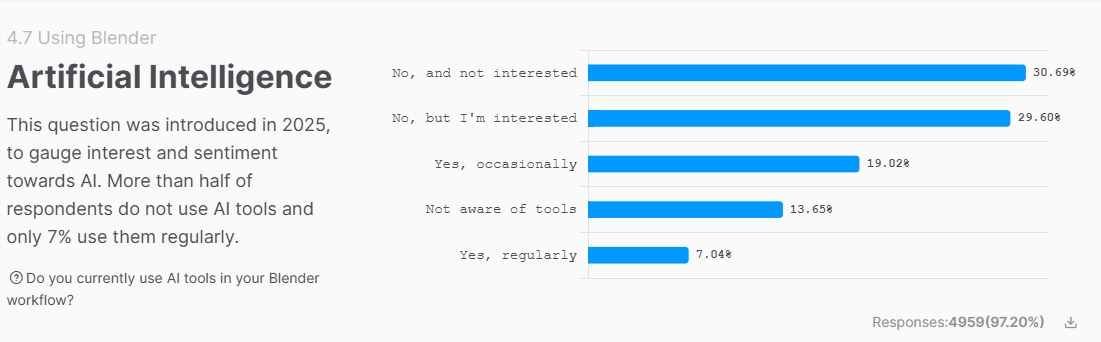
A new survey from the Blender Foundation reveals surprising trends among 3D creators. Despite AI's rapid advancement, over half of professional users avoid it entirely, with just 7% incorporating it regularly into their workflow. The findings suggest that in fields requiring artistic precision, traditional skills still reign supreme.

December 30, 2025
Blender3D ModelingDigital Art
News

Pulitzer Winners Take On AI Giants Over Alleged Book Piracy

A group of acclaimed authors, led by Pulitzer Prize winner John Carreyrou, has filed a landmark lawsuit against six major AI companies. They allege OpenAI, Google, Meta and others systematically used pirated books to train their models without permission. The case could reshape how AI systems are developed worldwide, with potential damages reaching billions.

December 24, 2025
AI CopyrightTech LawsuitsGenerative AI