Gen Z's AI Dilemma: Love It or Fear It?
The AI Generation's Growing Pains
Generation Z's romance with artificial intelligence is hitting some rough waters. What started as wide-eyed fascination has matured into a more nuanced - and sometimes tense - relationship. Recent surveys paint a picture of young people who can't live without AI but aren't sure they can fully trust it either.
Cooling Off Period
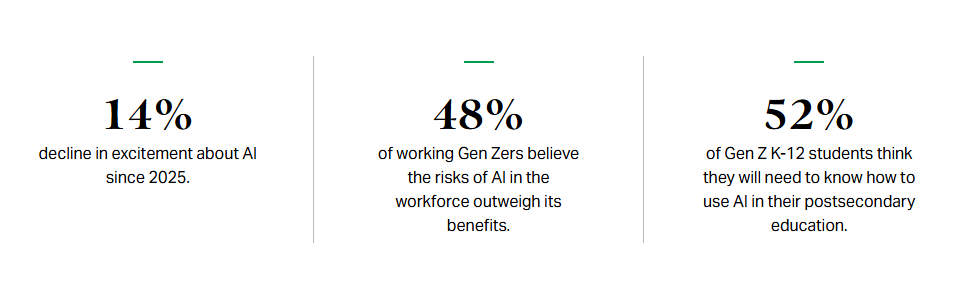
Remember when every new AI tool sparked excitement? Those days might be fading. Since 2025, enthusiasm among Gen Z has dropped by 14%. More striking is the rising frustration - about one in five young people now report feeling downright angry about certain AI applications. It's not rejection, but rather what psychologists might call an adjustment period in a complicated relationship.
Workplace Jitters
The office is where these tensions play out most dramatically. Nearly half (48%) of working Gen Zers believe AI's risks now outweigh its benefits in professional settings. "We're told to embrace these tools," shares Maya, 24, a marketing assistant, "but then we see entry-level jobs disappearing overnight." This anxiety isn't just about job security - it's about whether human skills will still matter in an AI-dominated workplace.
Classroom Concerns
The hesitation has spread to education too. While 52% of students see AI literacy as essential for college success, they're increasingly questioning how schools implement these technologies. Should ChatGPT help with essays? Can algorithms fairly grade creative work? Students want preparation without feeling like guinea pigs in an educational experiment.
The Contradiction We Can't Avoid
Here's the twist: even as doubts grow, Gen Z knows there's no turning back. They'll be the first truly AI-native workforce, using tools their parents barely understand. This creates what researchers call "the innovation paradox" - relying on technology while distrusting its long-term effects.
Key Points:
- Shifting attitudes: Gen Z's AI enthusiasm dropped 14% since 2025
- Workplace worries: 48% believe risks now outweigh benefits at work
- Education balancing act: Students want AI skills but question implementation
- The big question: How to harness AI's power without losing human control