DingTalk's AI Assistant Revolutionizes Workplace Group Chats
DingTalk Levels Up Group Collaboration with AI Assistant
Workplace messaging just got smarter. DingTalk's version 8.2.10, launched February 2nd, brings "AI Xiaoding"—a dedicated digital assistant for every group chat that works tirelessly behind the scenes.
Your Always-Available Digital Colleague
The new feature transforms group chats from chaotic message boards into streamlined workspaces. Unlike human colleagues who need sleep, AI Xiaoding responds instantly whenever tagged—whether it's midnight or midday.
"Imagine having an assistant who remembers every conversation detail," says Chen Li, a Shanghai-based project manager testing the feature. "It found a three-month-old product spec discussion in seconds when our team couldn't."
Beyond Basic Chat Bots
This isn't your typical auto-reply bot. The AI demonstrates surprising sophistication:
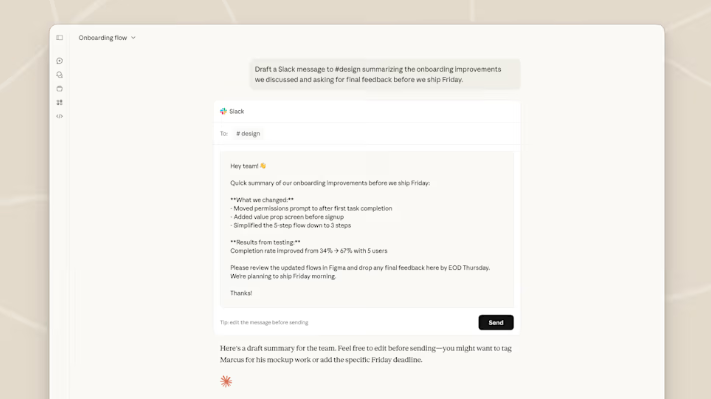
- Smart summarization of lengthy discussions
- Automatic task tracking for unfinished items
- Personalized alerts based on conversation topics
- Batch reminder setup for recurring deadlines
Sales teams report the assistant cuts meeting times by automatically compiling client requirements. R&D groups use it to track competitor product updates without manual searches.
The Future of Team Coordination?
The technology addresses modern workplace pain points:
- Information overload: Filters key details from chatter
- Task slippage: Proactively follows up on action items
- Knowledge retention: Archives and retrieves past discussions effortlessly
- Time zone challenges: Bridges gaps in global teams' working hours
- Meeting reduction: Makes some status updates unnecessary
- Onboarding acceleration: Helps new members catch up quickly
- Decision tracking: Logs rationale behind past choices 8.Deadline management: Visualizes upcoming milestones 9.Documentation automation: Creates meeting notes autonomously 10.Cross-team alignment: Shares relevant updates between groups 11.Priority identification: Highlights urgent matters automatically 12.Feedback collection: Structures input from multiple contributors 13.Progress visualization: Generates completion dashboards 14.Resource allocation tracking: Monitors workload distribution 15.Risk flagging: Alerts about potential bottlenecks early