DeepMind AI Outperforms Forecasters in Predicting Monster Hurricane
DeepMind Revolutionizes Hurricane Forecasting
When Hurricane Melissa barreled toward Jamaica as a Category 5 monster last season, it wasn't just another storm—it became a watershed moment for artificial intelligence in meteorology. Google's DeepMind model demonstrated uncanny accuracy in predicting Melissa's path, outperforming even seasoned human forecasters at the National Hurricane Center (NHC).
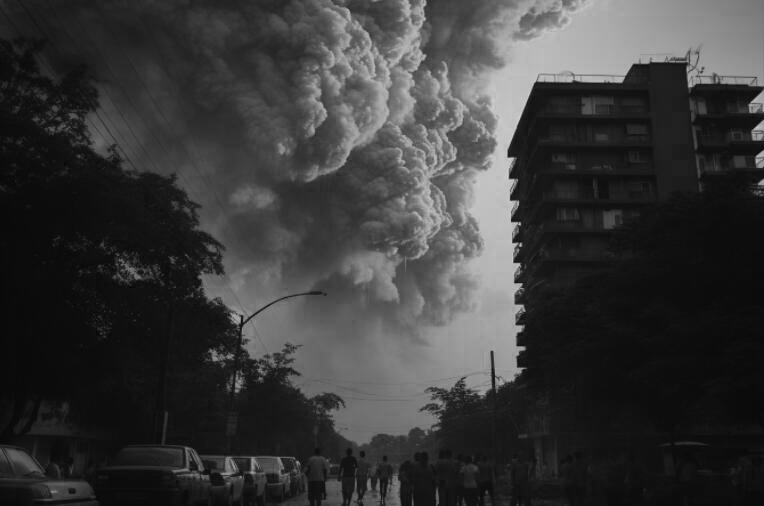
Image source note: The image is AI-generated, and the image licensing service provider is Midjourney.
The Forecast That Changed Everything
NHC chief forecaster Philip Papin made history when he predicted Melissa would rapidly intensify from tropical storm to Category 4 hurricane within 24 hours. "We've never been this confident about rapid intensification before," Papin admitted. "But seeing DeepMind's projections gave us the confidence to make that call."
The AI didn't just confirm Papin's prediction—it refined it. While human forecasters anticipated Category 4 strength, DeepMind suggested Melissa might reach Category 5 status before landfall. Tragically, the AI proved correct when winds peaked at 160 mph before slamming into Jamaica.
How DeepMind Sees Storms Differently
Traditional forecasting relies on physics-based models that simulate atmospheric conditions. These computationally intensive methods can take hours to run. DeepMind takes a radically different approach:
- Pattern recognition: The AI analyzes thousands of historical storms to identify developing patterns
- Lightning-fast predictions: Computations that took hours now happen in minutes
- Cost efficiency: Requires significantly less computing power than conventional models
"It's like having hundreds of veteran forecasters analyzing every possible scenario simultaneously," explains Google Climate AI lead Dr. Elena Rodriguez. "The speed and accuracy improvements are game-changing."
Not Perfect—But Getting Better Fast
The model isn't infallible yet. While excelling at track prediction, DeepMind still struggles with:
- Intensity fluctuations during rapid strengthening periods
- Small-scale storm structure details
Predicting rainfall totals precisely
Papin and Google researchers are now collaborating to address these limitations. "We're feeding it more intensity data from past storms," says Papin. "Each hurricane season makes the model smarter."
The partnership aims to make DeepMind more transparent too—helping forecasters understand how it reaches conclusions rather than treating it as a black box.
What This Means For Future Storms
The success with Melissa suggests we're entering a new era of hurricane forecasting:
- Earlier warnings for vulnerable communities
- More accurate evacuation decisions
- Better resource allocation before landfall
Potential applications for other extreme weather events
As climate change increases hurricane intensity, such advances couldn't come at a more critical time.
Key Points:
- 🌪️ Path prediction breakthrough: DeepMind accurately tracked Hurricane Melissa's devastating course better than human experts
- ⚡ Speed advantage: Provides forecasts faster and cheaper than traditional methods
- 🔮 Room for improvement: Still working on perfecting intensity predictions during rapid changes