Cohere Takes on AI Giants with Open-Source Speech Model for Everyday Devices

Cohere Disrupts Speech AI with Lightweight Open-Source Alternative

In a bold challenge to industry heavyweights, Cohere unveiled Transcribe on March 26 - an open-source speech recognition model designed to bring enterprise-grade accuracy to everyday devices. Unlike cloud-dependent alternatives, this 2-billion-parameter solution runs directly on smartphones, computers, and industrial hardware.

Small Package, Big Performance

The model punches above its weight class, supporting 14 languages including Chinese, Japanese, and Hebrew. Independent benchmarks show it outperforming established players like ElevenLabs Scribe and Alibaba's Qwen3 in accuracy tests. What makes this achievement remarkable? Transcribe delivers these results while being compact enough for edge deployment - no constant cloud connectivity required.

"We're seeing a paradigm shift," explains industry analyst Maria Chen. "Businesses want AI that works offline - especially in banking and healthcare where data privacy can't be compromised."

From Text to Talk: Cohere's Strategic Pivot

Best known for its text generation tools, Cohere's speech recognition debut reveals broader ambitions. The company confirmed Transcribe will soon integrate with North, its AI agent orchestration platform. This positions Cohere against IBM and Zoom in the race to build conversational AI assistants.

Why the sudden focus on voice? As smart assistants become our primary interface with technology, speech capabilities have evolved from nice-to-have features to essential components. Cohere's open-source approach cleverly leverages developer communities to accelerate ecosystem growth - a playbook borrowed from Meta's success with Llama models.

The Edge Computing Advantage

Traditional speech AI struggles with latency as audio travels to cloud servers for processing. Transcribe eliminates this bottleneck by handling everything locally. Early adopters report response times under 300 milliseconds - fast enough for natural conversations without awkward pauses.

The model's efficiency comes from architectural innovations that reduce computational overhead while maintaining accuracy. Engineers achieved this through novel training techniques that optimize for real-world conditions rather than just benchmark performance.

What This Means for Developers

Available under the permissive Apache 2.0 license, Transcribe gives startups and enterprises alike a powerful alternative to proprietary solutions. Developers can:

  • Customize the model for specific accents or industry terminology
  • Integrate it into existing applications without expensive cloud dependencies
  • Build hybrid systems that only use cloud resources when absolutely necessary

The open-source nature also addresses growing concerns about vendor lock-in as AI becomes critical infrastructure.

Key Points:

  • Offline capability: Processes speech directly on devices without cloud dependence
  • Multilingual support: Covers 14 languages with benchmark-beating accuracy
  • Privacy focused: Ideal for healthcare and financial applications where data can't leave premises
  • Strategic play: Positions Cohere as full-stack AI provider beyond text generation
Enjoyed this article?

Subscribe to our newsletter for the latest AI news, product reviews, and project recommendations delivered to your inbox weekly.

Weekly digestFree foreverUnsubscribe anytime

Related Articles

News

Tech Titans Unite to Tackle AI-Generated Security Spam in Open Source

Six major tech companies have pooled $12.5 million to help open-source developers combat the flood of low-quality AI-generated security reports. The funding will support Linux Foundation projects developing better tools to filter out false alarms, allowing maintainers to focus on genuine threats. As AI makes vulnerability scanning easier, projects like cURL have struggled with overwhelming volumes of unreliable reports.

March 18, 2026
AI securityopen sourcetech investment
HKU's CLI-Anything Turns Any Software into AI-Friendly Tools with One Command
News

HKU's CLI-Anything Turns Any Software into AI-Friendly Tools with One Command

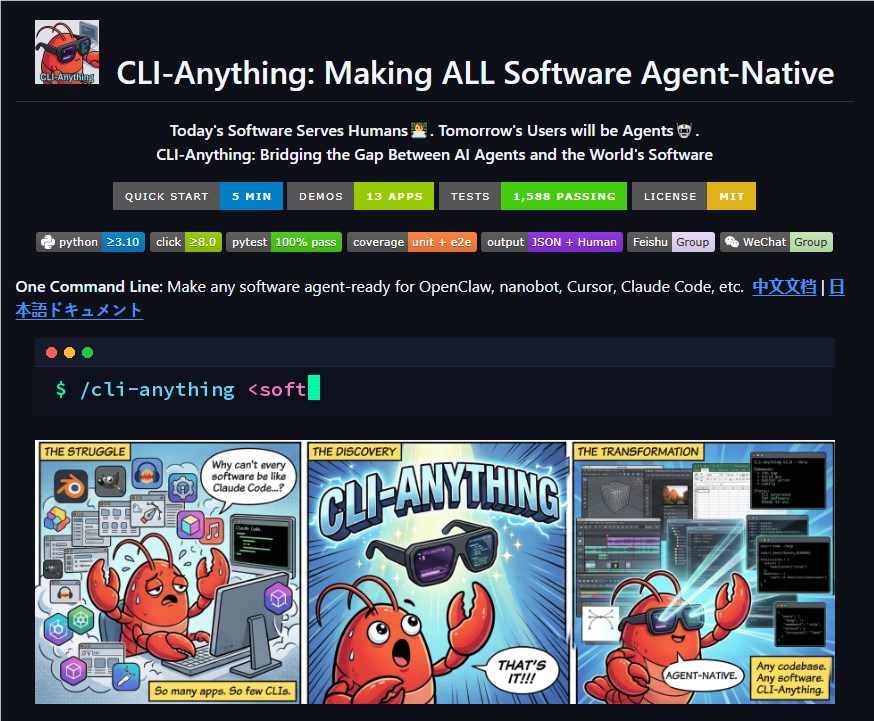
The University of Hong Kong's Data Intelligence Lab has released CLI-Anything, an open-source tool that transforms any software into an AI agent-friendly command-line interface. This breakthrough eliminates the frustrations of unreliable UI automation, offering developers a robust way to integrate professional tools like GIMP, Blender, and LibreOffice with AI systems. The project has already gained significant traction, surpassing 17,000 GitHub stars shortly after launch.

March 17, 2026
AI developmentsoftware automationopen source
News

Mistral AI's Small4: A Triple-Threat Open Source Model Arrives

Mistral AI has unveiled its latest open-source marvel - the Small4 model. This isn't just another incremental update; it combines three powerful capabilities into one package: logical reasoning, multimodal processing, and coding assistance. With its efficient 128-expert architecture and configurable performance modes, developers now have a versatile tool that adapts to different needs while cutting computational costs.

March 17, 2026
AI modelsopen sourceMistral AI
Tsinghua's AI Classroom Brings Learning to Life
News

Tsinghua's AI Classroom Brings Learning to Life

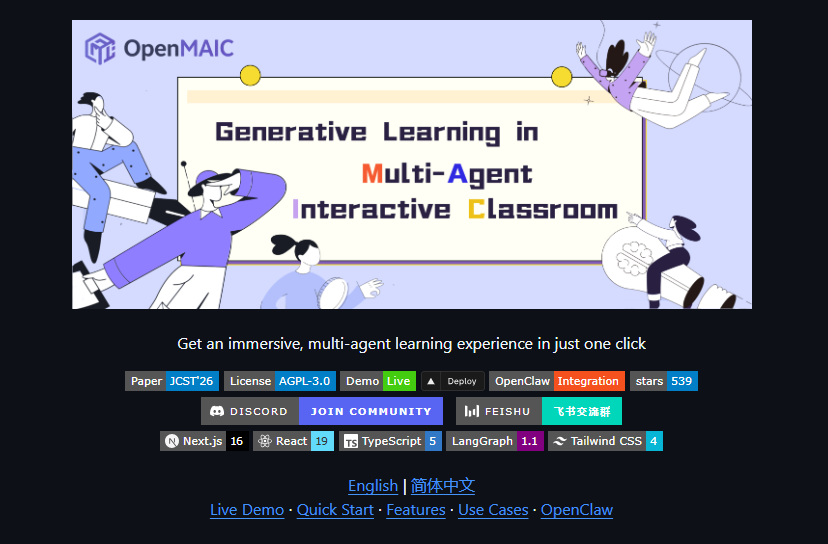
Tsinghua University has unveiled OpenMAIC, an innovative open-source platform that transforms any topic into a dynamic virtual classroom. Unlike traditional AI tutors, this system creates a complete learning ecosystem with multiple AI roles - from teachers to classmates - making education more interactive and engaging. Already tested with 500 students, the technology promises to democratize quality education globally.

March 16, 2026
AI educationvirtual classroomopen source
IBM's Granite 4.0 Speech Model: Smaller Size, Bigger Performance
News

IBM's Granite 4.0 Speech Model: Smaller Size, Bigger Performance

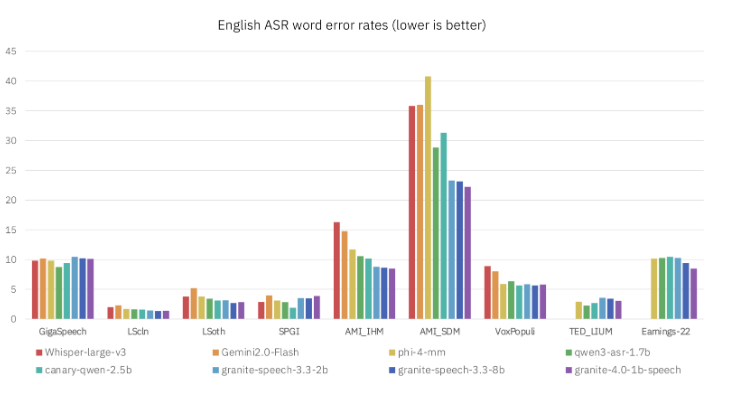
IBM has unveiled Granite 4.0 1B Speech, a compact yet powerful multilingual speech recognition model designed for edge computing. Half the size of its predecessor, it delivers improved accuracy while supporting Japanese ASR and English-Chinese translation. The innovative two-stage architecture allows flexible deployment on resource-constrained devices, topping benchmarks with an impressive 5.52% word error rate.

March 16, 2026
IBMspeech recognitionedge computing
News

NVIDIA shakes up AI with open-source NemoClaw platform

NVIDIA is making waves with its new open-source AI agent platform NemoClaw, breaking free from hardware dependencies. Meanwhile, China celebrates a milestone in industrial communication standards, and Apple gears up for its foldable iPhone launch with boosted production targets. The tech world is buzzing with innovation as these developments signal major shifts across industries.

March 11, 2026
AI innovationtech trendsopen source