Coca-Cola's AI-Generated Holiday Ad Sparks Debate

Coca-Cola's AI-Generated Holiday Ad Sparks Debate

Coca-Cola has once again leveraged artificial intelligence technology to revamp its iconic holiday advertisement, this time featuring animal characters instead of humans. However, the new ad titled "The Holidays Are Coming" has faced criticism for its disjointed visual style and unnatural animations.

Mixed Reactions to Animal-Centric Approach

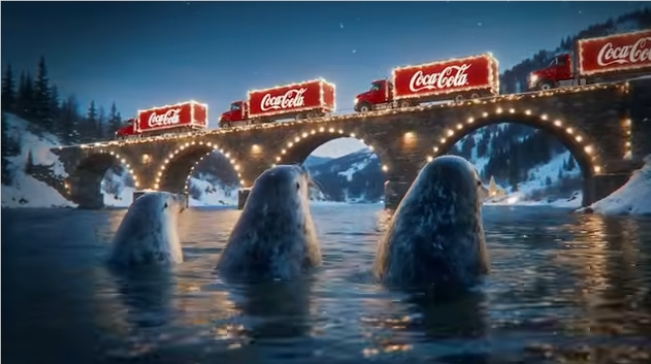
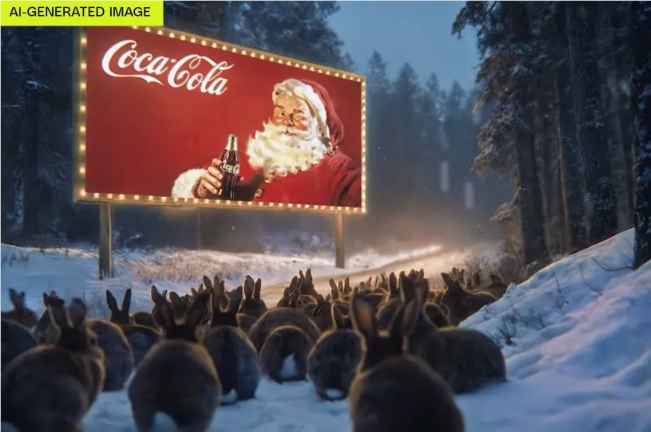
Following last year's backlash over "sliding wheels and eerie faces" in its AI-generated ad, Coca-Cola opted for animal characters—polar bears, pandas, and sloths—to avoid the uncanny valley effect often associated with AI-generated humans. Yet, viewers found the animation quality lacking.

The ad alternates between realistic and exaggerated styles, with movements described as "very unnatural." Critics noted it resembled rough 2D animation rather than polished 3D CGI. Compared to advanced tools like OpenAI's Sora or Google's Veo, Coca-Cola's output appeared outdated.
Image

The sole improvement noted was that the iconic Coca-Cola truck’s wheels finally rotated properly, unlike previous versions where they slid unnaturally across snowy landscapes.

Behind the Scenes: Significant Human Involvement

According to The Wall Street Journal, Coca-Cola partnered with AI studios Silverside and Secret Level for this campaign. While the company declined to disclose costs, approximately 100 people worked on the project—a scale comparable to traditional productions.

The team included five AI specialists tasked with prompting and refining over 70,000 AI-generated clips. This highlights that even AI-driven projects require substantial human oversight.
Image

Coca-Cola Defends Efficiency Gains

Despite ongoing controversies—including April’s fictional book scandal involving writer J.G. Ballard—Coca-Cola remains committed to AI. Chief Marketing Officer Manolo Arroyo emphasized the technology’s advantages:

"Previously, we would start shooting ads a year in advance. Now, it can be done in about a month," Arroyo told The Wall Street Journal. He cited lower costs and faster production as key benefits.

The company views past missteps as part of the learning curve toward refining AI-assisted advertising.

Key Points:

  • Coca-Cola’s new AI-generated holiday ad features animal characters but faces criticism for "chaotic" visuals.
  • The campaign involved 100 personnel and 70,000 AI-generated clips despite being marketed as an automated process.
  • Executives argue AI reduces production time from a year to a month while cutting costs.

Enjoyed this article?

Subscribe to our newsletter for the latest AI news, product reviews, and project recommendations delivered to your inbox weekly.

Weekly digestFree foreverUnsubscribe anytime

Related Articles

News

ChatGPT's Ad Business Hits $100M in Just Six Weeks

OpenAI's ChatGPT advertising pilot has surpassed $100 million in annualized revenue within six weeks of launch, far exceeding expectations. The program, currently testing in the U.S., keeps ads completely separate from conversations while protecting user privacy. With plans to expand to Australia, Canada and New Zealand, this success signals a major shift in how AI platforms can monetize their growing user bases.

March 27, 2026
OpenAIChatGPTAI Advertising
News

ChatGPT Ads Launch at Premium $60 CPM, Betting on High Intent

OpenAI is rolling out advertising on ChatGPT with a bold pricing strategy - $60 per thousand impressions, triple Meta's average rate. The premium cost reflects ChatGPT's unique advantage: users often come with clear purchase intent, making ads more effective. Surprisingly, OpenAI is taking a privacy-first approach, providing minimal data to advertisers while blocking ads for minors automatically. This move could redefine how AI platforms balance monetization with user trust.

January 27, 2026
AI AdvertisingChatGPTDigital Marketing
News

TitanTech's Marketing AI Outshines Tech Giants in National Rankings

Guangzhou-based TitanTech has pulled off an impressive feat - their Titanic marketing AI model just topped SuperCLUE's commercial rankings, beating out industry heavyweights like Alibaba and iFLYTEK. Scoring 85.82 points, Titanic excelled in real-world marketing applications from consumer insights to targeted campaigns. The win highlights how specialized AI models are gaining ground against general-purpose alternatives.

January 27, 2026
AI RankingsMarketing TechnologyChinese Tech
Blue Focus Teams Up With Volcano Engine to Revolutionize Marketing Content Creation
News

Blue Focus Teams Up With Volcano Engine to Revolutionize Marketing Content Creation

Marketing giant Blue Focus has partnered with Volcano Engine to transform how brands create content. Their AI-powered platform now churns out text, images and videos at unprecedented speed - cutting production time from hours to minutes while maintaining quality. Early results show over 100 intelligent agents already boosting output and slashing costs.

January 5, 2026
Generative AIMarketing TechnologyContent Creation
ChatGPT May Soon Serve Ads Alongside Answers
News

ChatGPT May Soon Serve Ads Alongside Answers

OpenAI is quietly testing ways to integrate advertisements into ChatGPT responses, potentially revolutionizing how brands reach consumers through AI. While initially delayed due to competition concerns, sources reveal sponsored content could appear as prioritized answers or sidebar placements. The move raises questions about balancing monetization with user trust in AI assistants.

December 29, 2025
ChatGPTAI AdvertisingOpenAI
AI Ads Grab Eyes But Lose Clicks When Labeled
News

AI Ads Grab Eyes But Lose Clicks When Labeled

A new study reveals a paradox in AI-powered advertising: while AI-generated ads attract 19% more clicks than human-made ones, slapping an 'AI-made' label on them causes click-through rates to plunge by 31%. Researchers found consumers prefer the creativity of AI visuals but distrust their authenticity once identified. The findings suggest marketers face tough choices between transparency and effectiveness in the age of AI content.

December 22, 2025
AI AdvertisingMarketing PsychologyConsumer Behavior