
China's Spark Medical AI Takes Leap Forward with New Health Assistant

China's Medical AI Breakthrough: Spark X2 Outperforms Global Rivals

In a significant stride for healthcare technology, Chinese artificial intelligence company iFLYTEK launched its Spark Medical Large Model X2 on February 12, 2026. This specialized AI system represents China's latest achievement in applying domestic computing power to medical challenges.

Smarter Than the Competition

The X2 model demonstrates impressive capabilities that surpass several prominent international systems:

  • Report Interpretation: Shows greater accuracy than DeepSeek V3.2, GPT-5.2, and Qwen3-Max when analyzing test results and health screenings
  • Holistic Health Support: Provides comprehensive analysis of patient records along with personalized diet and exercise recommendations
  • Verified Performance: Earned certification from Shanghai's Medical Large Model Application Testing Center

"What sets this apart isn't just raw processing power," explains Dr. Li Wei, a Beijing-based healthcare analyst. "It's how effectively the system understands and responds to complex medical scenarios."

From Assistant to Health Partner

The upgraded technology transforms how patients interact with AI:

For Individuals: Evolves from simple question-answering to proactive health monitoring and lifestyle guidance

For Professionals: Enhances family doctors' capabilities through improved diagnostic support and medication review functions

The system maintains particular strengths in extended consultations where it can ask follow-up questions much like human practitioners.

Homegrown Technology Makes Its Mark

The X2 model's development highlights China's strategic focus on specialized AI applications. By combining domestic computing infrastructure with extensive medical datasets, researchers have created a system that addresses specific healthcare needs while reducing reliance on foreign technology.

Shanghai Tech University professor Chen Ming observes: "We're seeing Chinese AI move beyond imitation to genuine innovation in fields where precision really matters."

The launch comes as global competition intensifies in medical AI applications, with systems increasingly judged by their practical impact rather than just technical specifications.

Key Points:

  • Advanced Interpretation: More accurate than leading models at analyzing medical reports
  • Complete Care Approach: Offers end-to-end health management rather than isolated answers
  • Certified Performance: Validated by independent medical evaluation standards
  • Domestic Development: Demonstrates China's growing capability in specialized AI systems
Enjoyed this article?

Subscribe to our newsletter for the latest AI news, product reviews, and project recommendations delivered to your inbox weekly.

Weekly digestFree foreverUnsubscribe anytime

Related Articles

Qwen and Ant Afu Dominate App Store Charts Amid Health Campaigns
News

Qwen and Ant Afu Dominate App Store Charts Amid Health Campaigns

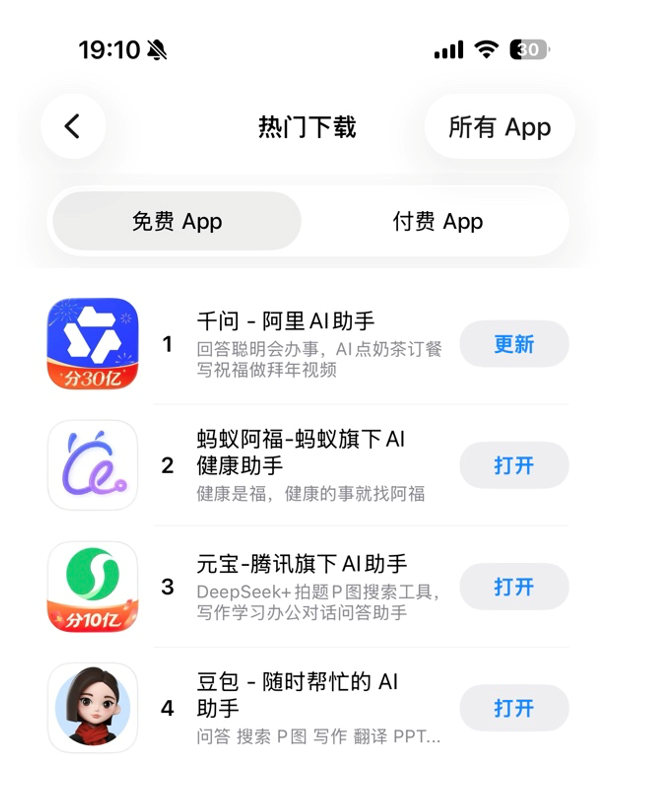
China's Apple App Store witnessed a dramatic surge in downloads for Qwen and Ant Afu this week, propelling both apps to the top spots. The sudden popularity comes as Qwen runs a tea-ordering promotion while Ant Afu partners with CCTV's Healthy Life program. Since its December update, Ant Afu has expanded its healthcare network to connect users with 300,000 doctors nationwide.

February 11, 2026
mobile appsdigital healthChina tech
News

China Unveils Groundbreaking AI Models for Pear and Soybean Farming

China's agricultural sector takes a leap forward with the launch of two specialized AI models - 'Lixiang' for pear cultivation and 'Fengshu' for soybean farming. Developed by Anhui Agricultural University, these tools promise to revolutionize traditional farming methods by applying cutting-edge technology to age-old challenges. From speeding up breeding cycles to predicting crop traits with 90% accuracy, these innovations could reshape how we grow staple crops.

February 11, 2026
agricultural technologyAI innovationfood security
News

UN Forms AI Safety Panel with Chinese Experts on Board

The United Nations has taken a significant step toward global AI governance by establishing an International Scientific Expert Group on AI Safety. Two prominent Chinese scientists specializing in AI ethics and technical safety have been selected for this inaugural panel. The group will assess emerging AI risks and provide policy recommendations, marking China's growing influence in shaping international AI standards.

February 6, 2026
AI governanceUnited NationsChina tech
News

China Unveils Massive 30,000-Card AI Supercluster

China has taken a giant leap in AI computing power with the launch of its first 30,000-card supercluster at Zhengzhou's National Supercomputing Internet hub. This massive computing pool, developed by Sunway in record time, supports trillion-parameter models and promises revolutionary breakthroughs across scientific fields. The system's open architecture makes it surprisingly accessible while offering unprecedented scalability.

February 6, 2026
AI infrastructurehigh-performance computingChina tech
News

Zhiyuan Robotics Plants Flag in Chengdu with AI Hardware Venture

Chinese robotics firm Zhiyuan has launched a new AI-focused subsidiary in Chengdu, signaling ambitious expansion plans. The wholly-owned unit will specialize in AI hardware sales and platform development, capitalizing on Chengdu's growing tech ecosystem. This strategic move comes as demand surges for AI solutions across Chinese industries.

February 2, 2026
AI hardwareindustrial roboticsChina tech
News

AI's False Promise Backfires: Court Rules Platform Not Liable for Hallucinated Info

A Chinese court has dismissed the country's first AI hallucination lawsuit, setting important legal precedents. When an AI bot confidently gave wrong university info and even promised 100,000 yuan compensation if incorrect, the user took it to court. The Hangzhou Internet Court ruled that AI platforms can't be held strictly liable for hallucinations if they've taken reasonable precautions. The case highlights growing pains as society adapts to AI's limitations - and its occasional overconfidence.

January 27, 2026
AI regulationlegal precedentgenerative AI