
China Rolls Out Nationwide AI Education Plan for All Ages

China's Sweeping AI Education Initiative Takes Shape

In a significant move to prepare citizens for the AI era, five key government departments unveiled the "Artificial Intelligence + Education Action Plan" on April 10. The coordinated effort between education, industry and technology authorities represents China's most ambitious attempt yet to integrate AI learning across all levels of society.

From classrooms to careers, the plan establishes AI education pathways spanning:

  • Primary and secondary schools: AI will become a mandatory local curriculum subject focused on developing computational thinking and practical applications
  • Higher education: Universities will incorporate AI fundamentals into core requirements while offering specialized micro-degrees
  • Vocational training: Programs will emphasize real-world industry applications and digital transformation skills

"We're not just teaching students about AI - we're preparing them to thrive in an AI-driven world," explains an education ministry official who worked on the plan. "This is about creating equal opportunities for everyone, from kindergarten students to mid-career professionals."

Breaking Down Barriers

The initiative particularly aims to address China's urban-rural education divide through the National Smart Education Platform, which will offer:

  • Free AI courses for the public
  • Personalized learning paths using intelligent recommendation systems
  • AI-powered tutoring companions to support independent learners

Early pilot programs in remote provinces have shown promising results. In Gansu's rural schools, AI-assisted learning tools helped students achieve math scores comparable to their urban peers within two academic years.

What This Means for China's Future Workforce

Vocational education reforms under the plan focus squarely on employment needs. "We're seeing factories transform overnight with automation," notes a manufacturing trainer in Guangdong. "Workers who understand AI systems will have clear advantages."

Higher education changes reflect similar priorities. Twenty leading universities will launch new "AI+X" interdisciplinary programs this fall, combining artificial intelligence with fields like medicine, agriculture and finance.

Key Points:

  • Nationwide AI curriculum rollout across all education levels
  • Special emphasis on equitable access through digital platforms
  • Strong industry alignment in vocational training programs
  • New interdisciplinary degree options at universities
  • Public education component for lifelong learners
Enjoyed this article?

Subscribe to our newsletter for the latest AI news, product reviews, and project recommendations delivered to your inbox weekly.

Weekly digestFree foreverUnsubscribe anytime

Related Articles

News

China Sets Ground Rules for AI Ethics with New Review Framework

China's Ministry of Industry and Information Technology has introduced comprehensive guidelines for ethical AI development. The new measures establish clear review procedures, risk prevention protocols, and consequences for violations - creating a structured approach to ensure AI technologies align with societal values while fostering innovation.

April 8, 2026
AI ethicstechnology regulationChina tech policy
News

Fudan University Rolls Out 100+ AI Courses to Future-Proof Students

Fudan University is making waves in higher education by launching over 100 AI courses across all disciplines. From humanities to medicine, students can now learn how to harness AI tools like professionals. The university has also introduced practical platforms and guidelines to bridge classroom learning with real-world research applications, preparing students for an AI-driven future.

March 19, 2026
AI educationhigher education reformgenerative AI
News

Beijing Cracks Down on AI Misuse with Month-Long 'AI for Good' Campaign

Beijing has launched a targeted campaign to clean up AI misuse online. The one-month initiative aims to tackle everything from deepfake scams to AI-generated pornography, focusing on five key problem areas. Authorities will work with platforms to strengthen content moderation while cracking down on illegal services that exploit AI technology.

March 18, 2026
AI regulationdeepfake crackdowncontent moderation
Tsinghua's AI Classroom Brings Learning to Life
News

Tsinghua's AI Classroom Brings Learning to Life

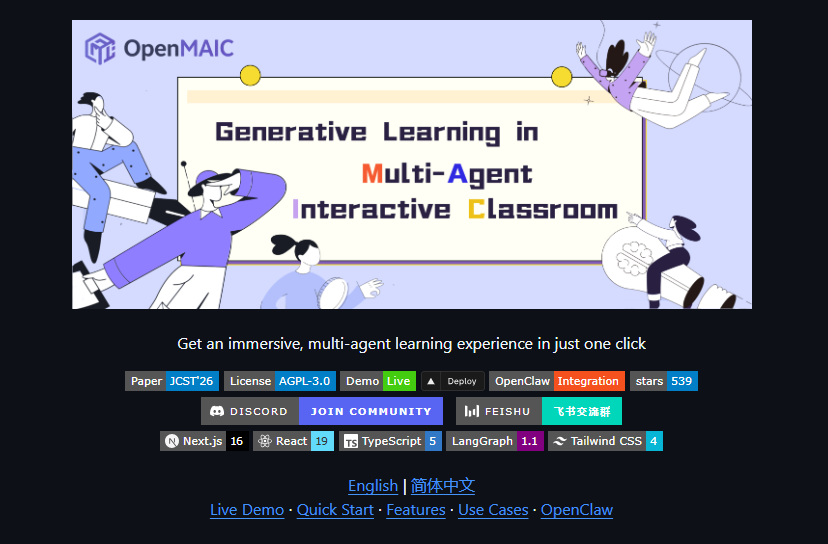
Tsinghua University has unveiled OpenMAIC, an innovative open-source platform that transforms any topic into a dynamic virtual classroom. Unlike traditional AI tutors, this system creates a complete learning ecosystem with multiple AI roles - from teachers to classmates - making education more interactive and engaging. Already tested with 500 students, the technology promises to democratize quality education globally.

March 16, 2026
AI educationvirtual classroomopen source
News

Teens Embrace AI Chatbots: Study Shows Over 60% Now Regular Users

A new Pew Research Center report reveals that AI chatbots have become a staple in American teens' lives, with 64% regularly using tools like ChatGPT. While many see AI as a study aid, concerns linger about cheating and critical thinking skills. The study also highlights a surprising gap between parents' awareness and teens' actual AI usage.

February 25, 2026
AI educationteen technology usedigital parenting
News

Former Google Exec's AI Platform Aims to Cultivate Young Scientists, Not Just Answer Machines

A new AI education platform called Fermi.ai is taking a different approach to student learning. Founded by ex-Google executive Piyush Ranjan, it focuses on developing deep thinking skills in STEM subjects rather than simply providing answers. Early results show students becoming more independent learners as they use the system's intelligent canvas and adaptive tutoring features. With headquarters in Singapore and initial launches in the U.S. and India, this innovative approach might just change how we think about AI in education.

February 9, 2026
AI educationSTEM learningeducational technology