China Leads Global Medical AI with 70% of Large Models

China Accounts for 70% of Global Medical Large Model Releases

According to a recent KPMG China report titled "First Health Tech 50," China has emerged as the global leader in medical large model development, contributing over 70% of worldwide releases. This milestone underscores the country's rapid advancements in AI-powered healthcare solutions and the expanding role of large language models (LLMs) in medical applications.

Dominance in Medical AI Innovation

The report highlights that approximately 65% of released medical large models are LLMs, which excel in processing natural language for tasks like medical data analysis, patient interaction, and clinical research. China's dominance in this space not only surpasses other nations but also positions it as a critical player in shaping the future of global healthcare technology.

Image

Image source note: The image was generated by AI, and the licensing provider is Midjourney.

Market Growth and Projections

KPMG projects robust growth for China's intelligent medical equipment market, estimating it will reach ¥24.23 billion by 2025. The sector is expected to maintain high growth rates through 2026–2027, driven by:

  • Government policies promoting digital health initiatives.
  • Increased R&D investments from tech firms.
  • Rising demand for AI-enhanced diagnostic tools and telemedicine solutions.

Key Drivers of Expansion

  1. Policy Support: National strategies prioritize AI integration in healthcare.
  2. Corporate Innovation: Companies are launching cutting-edge products to meet market needs.
  3. Technological Evolution: Advances in LLMs and data analytics are unlocking new applications.

Global Implications

China's leadership in medical AI is reshaping international competition, offering both opportunities and challenges for global stakeholders. The report suggests that continued innovation will further solidify China's role as a hub for healthcare technology development.

Key Points

  • 70% of global medical large models originate from China.
  • LLMs dominate 65% of these models, enhancing diagnostics and patient care.
  • Market to hit ¥24.23 billion by 2025, with sustained growth ahead.
  • Success stems from policy backing, corporate R&D, and AI breakthroughs.

Enjoyed this article?

Subscribe to our newsletter for the latest AI news, product reviews, and project recommendations delivered to your inbox weekly.

Weekly digestFree foreverUnsubscribe anytime

Related Articles

News

AI's Medical Diagnosis Shortcomings Revealed in New Study

A revealing study from Massachusetts General Hospital shows AI's limitations in clinical reasoning. While models like ChatGPT excel at providing correct diagnoses with complete information, they struggle with the nuanced thinking doctors use when information is incomplete. The research highlights how AI currently serves better as an assistant than a standalone diagnostician, scoring just 64-78% on comprehensive clinical evaluations.

April 14, 2026
Medical AIClinical ReasoningAI Diagnosis
News

Douyin's AI Model Hits 12 Trillion Daily Tokens - A 1000x Surge in Two Years

ByteDance's Doubao large language model has smashed records with over 12 trillion tokens processed daily - a staggering 1000-fold increase since 2024. This explosive growth signals China's AI sector moving from experimental models to real-world applications. As domestic models outperform foreign counterparts in some areas, cloud providers are scrambling to capitalize on the token economy boom.

April 2, 2026
AI TrendsByteDanceLarge Language Models
China's AI Models Outperform Global Rivals as OpenClaw Fuels Demand Surge
News

China's AI Models Outperform Global Rivals as OpenClaw Fuels Demand Surge

For the first time, Chinese-developed large language models have consistently outperformed their international counterparts in global usage for an entire month. The latest data reveals domestic models now dominate six of the top nine positions, with OpenClaw emerging as the unexpected market leader. This seismic shift comes as AI agents transform how we interact with technology, creating unprecedented demand for computational power and prompting major price adjustments across China's tech sector.

March 31, 2026
Artificial IntelligenceChinese TechLarge Language Models
News

Xiaomi Bets Big on AI with $830M Investment, Unveils New Model Family

Xiaomi founder Lei Jun has unveiled an ambitious $830 million AI investment plan over the next three years, with $220 million earmarked for 2026 alone. The tech giant launched its MiMo-V2 model series, including an agent-focused flagship and multimodal versions, while demonstrating AI integration across smartphones and electric vehicles. This move signals Xiaomi's strategic shift from hardware to becoming a comprehensive AI player.

March 27, 2026
XiaomiArtificial IntelligenceTech Investment
China's Qwen3.5-Max Outperforms Global Rivals in AI Benchmark Test
News

China's Qwen3.5-Max Outperforms Global Rivals in AI Benchmark Test

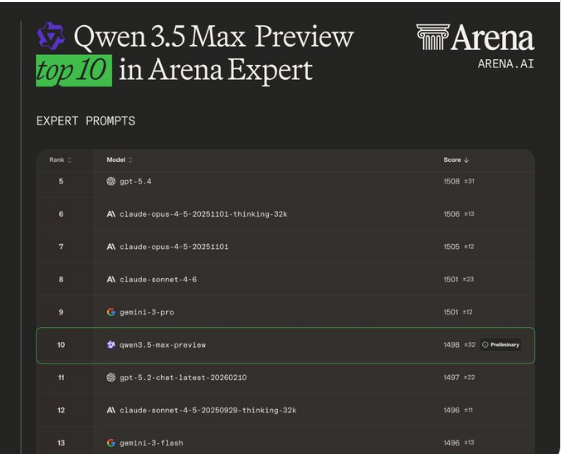
Alibaba's latest AI model, Qwen3.5-Max-Preview, has topped the LMArena benchmark with a record-breaking score of 1464 points, surpassing international competitors like GPT5.4 and Claude4.5. The achievement signals China's growing dominance in AI development, with five Chinese companies now ranking in the global top ten for large language models.

March 20, 2026
Artificial IntelligenceAlibabaLarge Language Models
News

Xiaomi Bets Big on AI with Trillion-Parameter Models and $2.3 Billion Investment

Xiaomi has unveiled three powerful new AI models, including a trillion-parameter flagship, as part of its aggressive push into artificial intelligence. Founder Lei Jun announced an additional $2.3 billion investment in AI development, signaling the company's serious ambitions in this space. The new models promise to revolutionize how devices interact with users through advanced reasoning, multimodal understanding, and emotionally-aware speech capabilities - all offered at surprisingly competitive prices.

March 19, 2026
XiaomiArtificial IntelligenceLarge Language Models