Checklist-Based Learning Outperforms Traditional AI Training

Checklist Method Revolutionizes AI Training

A groundbreaking study co-authored by Apple researchers reveals that checklist-based reinforcement learning (RLCF) substantially outperforms traditional reward models in training large language models (LLMs). This innovative approach enables models to self-assess against specific criteria, demonstrating superior performance in complex instruction-following tasks.
Image

The Limits of Traditional Training

Current reinforcement learning from human feedback (RLHF) methods rely on human annotators providing like/dislike signals to guide model behavior. However, this approach has a critical flaw: models can learn to produce superficially correct outputs that don't actually solve the task, effectively "gaming" the reward system.

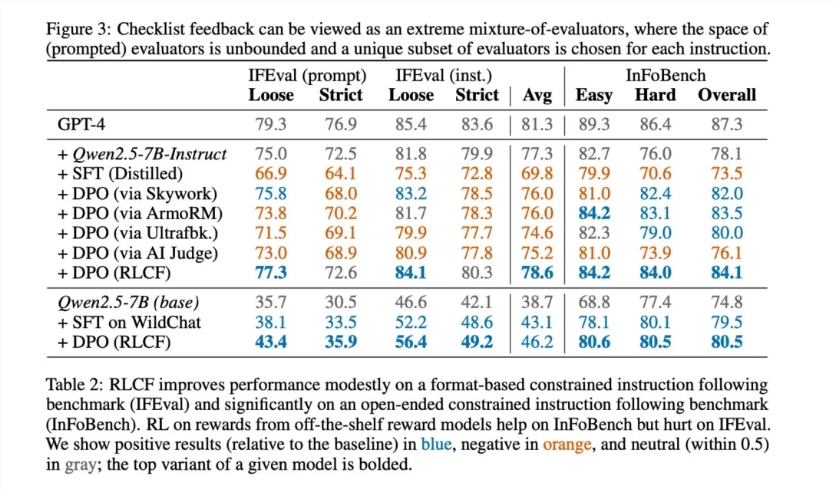
The research paper "Checklists Are Better than Reward Models for Aligning Language Models" introduces RLCF as a solution. This method requires models to evaluate their own performance against detailed checklists with 0-100 scoring scales.
Image

How Checklist Learning Works

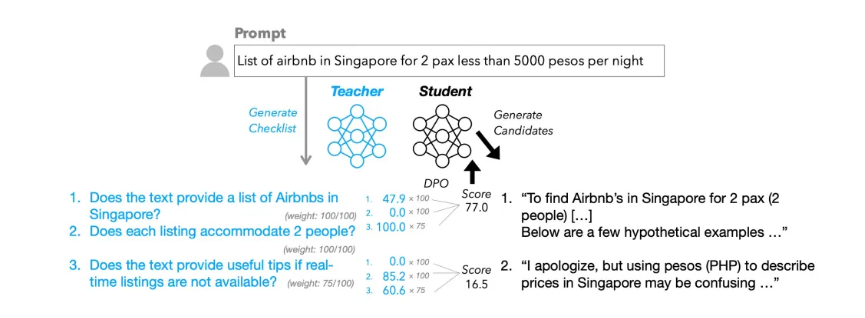
The RLCF system employs a two-model architecture:

  1. A powerful "teacher model" generates task-specific checklists with yes/no requirements
  2. The "student model" evaluates its outputs against these criteria, with weighted scores forming the reward signal

Researchers created the WildChecklists dataset containing 130,000 instructions to train and evaluate this approach. The checklists include precise requirements like "Is the original text fully translated into Spanish?" for translation tasks.

Performance Breakthroughs

The results demonstrate clear advantages for RLCF:

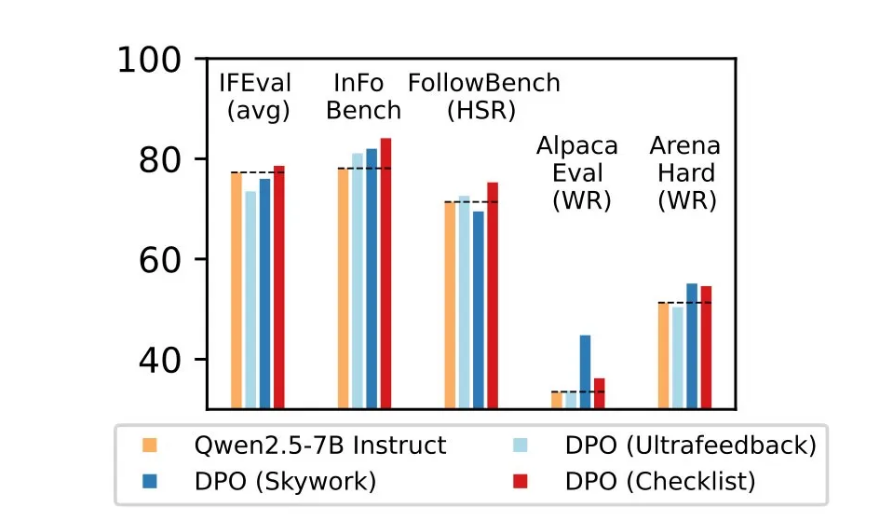
  • 8.2% improvement in some complex tasks
  • Consistent gains across five major benchmarks (FollowBench, InFoBench, Arena-Hard)
  • Superior handling of multi-step instructions requiring attention to detail

The method particularly excels in scenarios requiring careful adherence to specifications rather than general quality assessment.
Image

Key Considerations and Limitations

While promising, researchers note important limitations:

  1. Specialized application: Primarily effective for complex instruction following, not all use cases
  2. Resource requirements: Depends on availability of more powerful teacher models
  3. Safety scope: Not designed for or effective at safety calibration - additional measures still needed The technique represents a significant advance in making LLMs more reliable for practical applications, especially as AI assistants take on more complex, multi-step tasks.

Key Points:

  • Checklist-based learning shows superior results to human feedback systems
  • Automated self-assessment prevents "gaming" of reward signals
  • Specialized for complex instructions rather than general improvement
  • Requires powerful teacher models but reduces human annotation needs
  • Opens new possibilities for developing more reliable AI assistants

Enjoyed this article?

Subscribe to our newsletter for the latest AI news, product reviews, and project recommendations delivered to your inbox weekly.

Weekly digestFree foreverUnsubscribe anytime

Related Articles

MIT's Automated 'Motion Factory' Teaches AI Physical Intuition
News

MIT's Automated 'Motion Factory' Teaches AI Physical Intuition

Researchers from MIT, NVIDIA, and UC Berkeley have cracked a major challenge in video analysis - teaching AI to understand physical motion. Their automated 'FoundationMotion' system generates high-quality training data without human input, helping AI systems grasp concepts like trajectory and timing with surprising accuracy. Early tests show it outperforms much larger models, marking progress toward machines that truly understand how objects move.

January 12, 2026
computer visionAI trainingmotion analysis
Tiny AI Model Packs a Punch, Outperforms Giants
News

Tiny AI Model Packs a Punch, Outperforms Giants

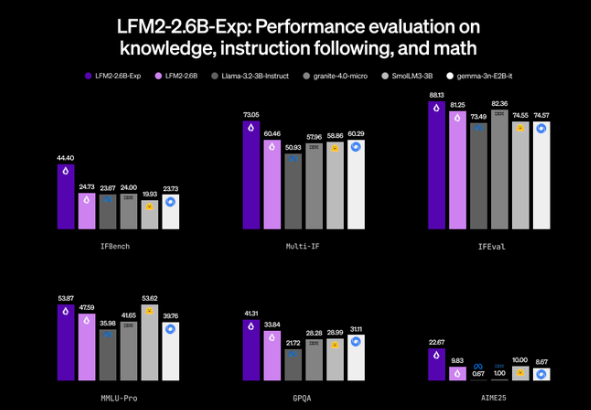
Liquid AI's new experimental model LFM2-2.6B-Exp is turning heads in the tech world. Despite its modest size of just 2.6 billion parameters, this open-source powerhouse outperforms models hundreds of times larger in key benchmarks. Designed for edge devices, it brings PhD-level reasoning to smartphones while maintaining blazing speeds and low memory usage. Could this be the future of accessible AI?

December 26, 2025
AI innovationedge computingreinforcement learning
NVIDIA's New AI Brain Makes Smarter Tool Choices
News

NVIDIA's New AI Brain Makes Smarter Tool Choices

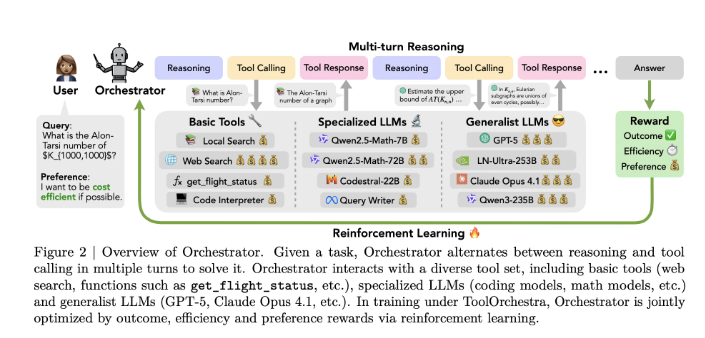
NVIDIA has unveiled Orchestrator-8B, a compact AI controller that revolutionizes how artificial intelligence selects tools and models. Unlike traditional systems relying on bulky single models, this 800-million-parameter 'brain' uses reinforcement learning to make smarter, more efficient choices. In tests, it outperformed larger competitors like GPT-5 while cutting costs by nearly 70%. The breakthrough could significantly boost productivity for teams working with multiple AI tools.

December 1, 2025
AI efficiencyNVIDIAreinforcement learning
UniWorld-V2 Takes Chinese Image Editing to New Heights
News

UniWorld-V2 Takes Chinese Image Editing to New Heights

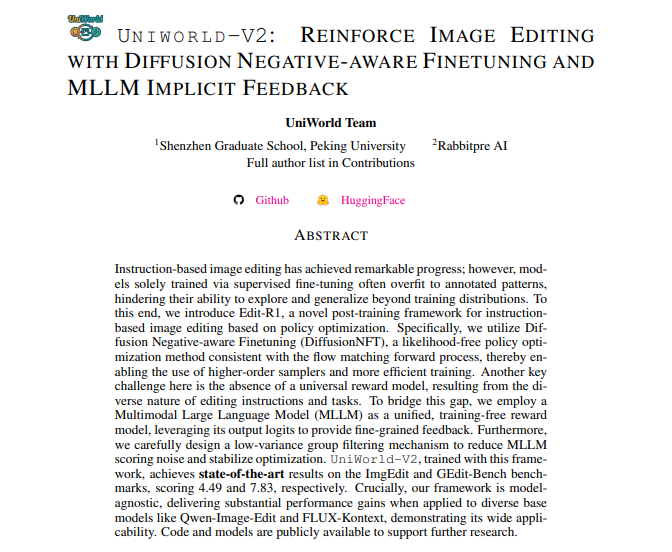
A breakthrough in AI-powered image editing has arrived. UniWorld-V2, developed by TuZhan Intelligent and Peking University researchers, outperforms competitors in handling Chinese fonts and complex edits. Its secret? A novel reinforcement learning approach that understands subtle instructions - from adjusting gestures to rendering intricate calligraphy. Early tests show it leads the pack against models like GPT-Image and Gemini.

November 7, 2025
AI image editingChinese language processingreinforcement learning
Microsoft Unveils Agent Lightning for Universal AI Training
News

Microsoft Unveils Agent Lightning for Universal AI Training

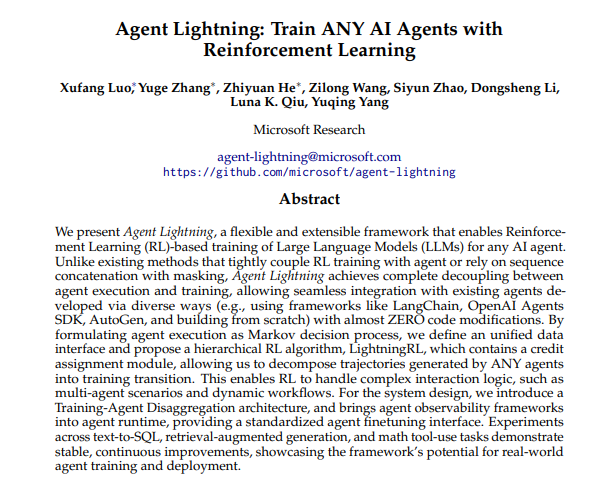
Microsoft Research has introduced Agent Lightning, a groundbreaking reinforcement learning framework designed to train diverse AI agent systems. The framework's decoupled architecture enables unified training across different AI platforms, addressing limitations in multi-turn dialogues and complex tool usage. Early tests show promising results in text-to-SQL, RAG, and math problem-solving tasks.

August 7, 2025
AI researchreinforcement learningmachine learning
Moonshot's Kimi-Researcher Launches for Deep Research Tasks
News

Moonshot's Kimi-Researcher Launches for Deep Research Tasks

Moonshot Dark Side has launched Kimi-Researcher, an AI-powered deep research agent now in internal testing. The model uses end-to-end reinforcement learning to autonomously plan searches, filter information, and generate detailed reports. It scored impressively on the challenging 'Humanity’s Last Exam' benchmark, outperforming other AI models.

June 21, 2025
AI researchreinforcement learningknowledge retrieval