Cambricon Boosts DeepSeek-V4 Performance with Open-Source Optimizations

Cambricon Delivers Day-One Support for DeepSeek-V4 AI Model

In a significant move for China's AI ecosystem, Cambricon announced complete "Day0" compatibility with DeepSeek's newly released open-source model series. The hardware specialist has optimized both the compact 285B-parameter Flash version and the heavyweight 1.6T-parameter Pro variant to run smoothly on Cambricon platforms right from launch.

Technical Breakthroughs

The engineering team faced unique challenges adapting to DeepSeek-V4's sparse attention architecture and compressed structure. Their solution? A custom-built vector fusion operator library called Torch-MLU-Ops that specifically accelerates core components like the Compressor module.

Using BangC, Cambricon's high-performance programming language, developers created optimized kernels for critical operations including:

  • Sparse Attention processing
  • GroupGemm computations
  • Five-dimensional hybrid parallel strategies (TP/PP/SP/DP/EP)

The implementation fully supports low-precision quantization and PD separation deployment within the vLLM framework, significantly boosting token throughput while maintaining strict latency requirements.

Hardware Advantages

Cambricon's MLU processors bring specialized capabilities to the table:

  • Memory access optimization handles DeepSeek-V4's complex indexing patterns
  • Sorting acceleration improves processing efficiency
  • High-bandwidth interconnects minimize communication overhead

These features prove particularly valuable during both Prefill and Decode phases, where they help maintain high inference utilization rates.

Industry Impact

DeepSeek-V4 represents a formidable challenge for computing platforms with its:

  • Million-token context window (1M words)
  • State-of-the-art reasoning capabilities
  • Massive parameter counts

Cambricon's ability to deliver full support immediately upon release signals two important developments:

  1. Domestic hardware can now compete in supporting ultra-large, complex AI models
  2. China's AI industry has reached maturity in software-hardware co-design

By open-sourcing their adaptation code, Cambricon invites broader community participation in optimizing these cutting-edge models.

Key Points:

  • Instant compatibility with both Flash (285B) and Pro (1.6T) versions of DeepSeek-V4
  • Open-source release of optimized code on GitHub for community access
  • Specialized acceleration for sparse attention architecture using Torch-MLU-Ops library
  • Hardware advantages including memory optimization and high-speed interconnects
  • Industry milestone demonstrating China's progress in AI infrastructure
Enjoyed this article?

Subscribe to our newsletter for the latest AI news, product reviews, and project recommendations delivered to your inbox weekly.

Weekly digestFree foreverUnsubscribe anytime

Related Articles

News

Cambrian Tech Powers DeepSeek-V4 for Lightning-Fast AI Performance

Cambricon has achieved seamless compatibility with DeepSeek's cutting-edge V4 model right from launch day. Their proprietary Torch-MLU-Ops technology turbocharges key components, while vLLM framework optimizations deliver blazing-fast processing. What really sets this apart? DeepSeek-V4's million-character memory capacity - a game-changer for complex AI tasks. Developers can now tap into these advancements through updated APIs, marking a significant leap in accessible AI power.

April 24, 2026
AI accelerationDeepSeek-V4Cambricon
Tencent Cloud's DeepSeek-V4 Breaks New Ground with Million-Token Context
News

Tencent Cloud's DeepSeek-V4 Breaks New Ground with Million-Token Context

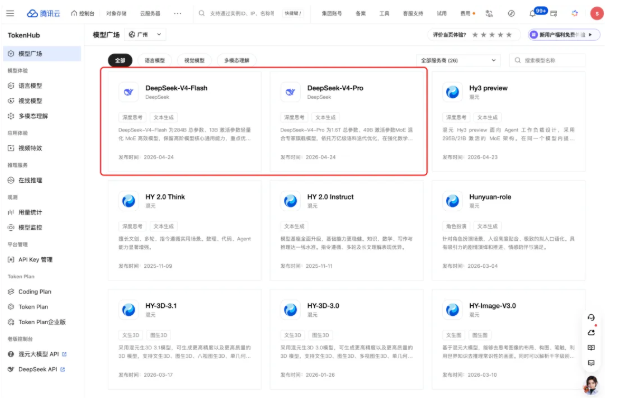
Tencent Cloud has unveiled the preview version of DeepSeek-V4 on its TokenHub platform, pushing boundaries with support for up to one million tokens of context. This advancement promises to revolutionize natural language processing while maintaining competitive pricing. The service is now globally accessible through Tencent's Singapore node, with seamless integration across their ADP and EdgeOne platforms. Enterprises can leverage this technology through Tencent's complete ecosystem, from model training to deployment.

April 24, 2026
AI InnovationCloud ComputingNatural Language Processing
Lenovo Brings AI to Your Desk with New Edge Computing Lineup
News

Lenovo Brings AI to Your Desk with New Edge Computing Lineup

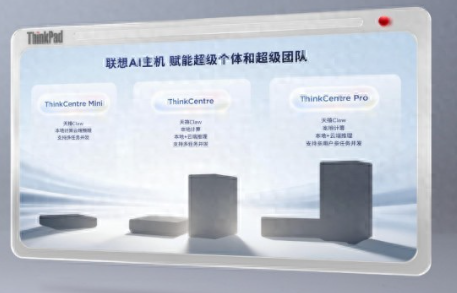
Lenovo has unveiled a trio of AI-powered desktops designed to run artificial intelligence locally rather than relying on cloud services. The ThinkCentre Mini, ThinkCentre, and ThinkCentre Pro models offer tiered computing power for individuals, teams, and enterprises. This move signals a shift toward edge computing in AI, promising faster response times and better data privacy by keeping information on local devices rather than sending it to the cloud.

April 23, 2026
Edge ComputingAI HardwareLenovo
Google's AI Power Play: New TPUs and Agent Platform Reshape Business Tech
News

Google's AI Power Play: New TPUs and Agent Platform Reshape Business Tech

Google just dropped game-changing AI hardware and software at Cloud Next '26. Their new TPU chips split into specialized training and inference versions, while the Gemini Enterprise platform turns AI agents into true digital coworkers. It's not just about raw power anymore - Google's betting big on making AI actually useful for everyday business tasks.

April 23, 2026
GoogleAI HardwareEnterprise Tech
News

Alibaba Steps into Robotics: AutoNavi Introduces Its First Four-Legged Robot

Alibaba's mapping subsidiary AutoNavi is venturing into physical robotics with its first quadruped robot, marking a significant expansion from digital to embodied AI. The move follows the company's recent breakthroughs in navigation and operation base models, positioning it to compete in the growing robotics market. This development represents Alibaba's strategic push into 'spatial intelligence' applications.

April 14, 2026
Alibaba RoboticsEmbodied AIQuadruped Robots
AI Goes Physical: 145 Million Smart Devices to Ship by 2035
News

AI Goes Physical: 145 Million Smart Devices to Ship by 2035

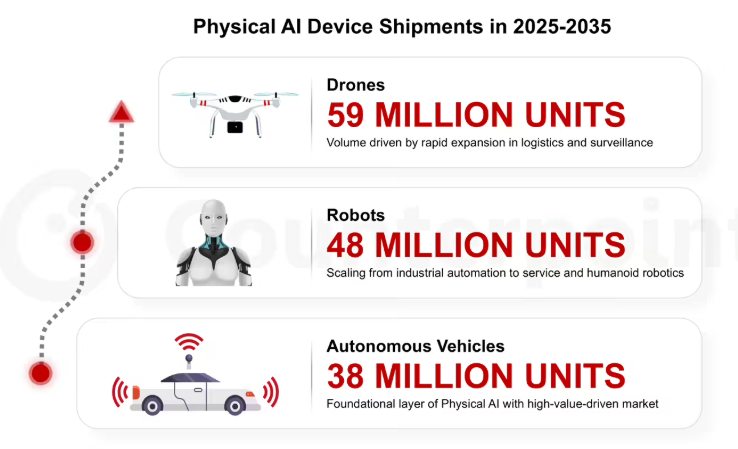
The next decade will see AI step out of our screens and into the physical world in a big way. According to new projections, drones, robots and self-driving vehicles will combine for 145 million shipments by 2035. Humanoid robots are showing especially explosive growth, while drones lead the charge in real-world deployments. These numbers suggest we're moving beyond AI assistants and chatbots to machines that work alongside us in factories, warehouses and city streets.

April 10, 2026
AI HardwareRoboticsAutonomous Systems