CAICT Unveils Fangsheng 3.0 AI Benchmark System
China Advances AI Evaluation with Fangsheng 3.0 Benchmark
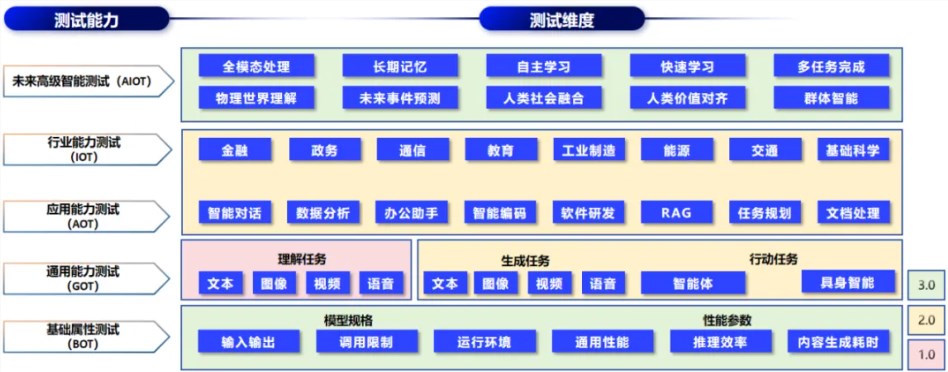
The China Academy of Information and Communications Technology (CAICT) has officially released Fangsheng 3.0, marking a significant upgrade to China's AI evaluation capabilities. This new benchmarking system introduces comprehensive assessments of model fundamentals while expanding testing for advanced intelligent features.
Enhanced Evaluation Framework
The upgraded system now evaluates:
- Model basic attributes including parameter scale and inference efficiency
- Ten advanced capabilities such as full-modal understanding and self-learning
- Industry-specific applications for manufacturing, science, and finance
Infrastructure Improvements
To support Fangsheng 3.0, CAICT is:
- Expanding test data by 3 million entries
- Developing new testing methodologies
- Building simulation environments for multi-agent interaction
- Creating dynamic scenario testing capabilities
Latest Benchmark Results
The most recent evaluation assessed:
- 141 large language models
- 7 agent systems
Across four key dimensions:
- Basic abilities
- Reasoning capabilities
- Code application
- Multi-modal understanding
Performance Highlights:
- OpenAI's GPT-5 maintained overall leadership
- Domestic models like Alibaba's Qwen3-Max-Preview performed strongly
- Image understanding showed notable improvements
- Code application skills remain stronger in simple tasks than complex projects
The results indicate ongoing intense competition between international and domestic AI developers.
Future Development Plans
CAICT commits to:
- Conducting bi-monthly benchmark tests starting in 2024
- Enhancing evaluation credibility and authority
- Supporting AI innovation and industrial development
The organization emphasizes that while current models excel in specific areas, challenges remain in complex reasoning and real-world application scenarios.
Key Points:
- Fangsheng 3.0 represents China's most advanced AI evaluation system yet
- Testing now covers both fundamental attributes and future-oriented capabilities
- Domestic Chinese models are closing the gap with international leaders
- Significant work remains in developing practical application skills