Bevel Raises $10M to Revolutionize Health Data with AI

Bevel Secures $10M Series A Funding for AI-Powered Health Integration

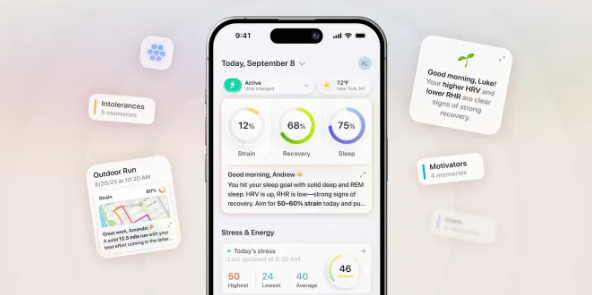
New York-based health tech startup Bevel has announced a $10 million Series A funding round, led by General Catalyst, to expand its AI-driven health assistant platform. The company's innovative approach integrates data from existing wearable devices to provide users with actionable health insights—eliminating the need for expensive proprietary hardware.
Image

Explosive Growth Metrics

Founded just two years ago, Bevel has seen 8x user growth in the past year, surpassing 100,000 daily active users. Most impressively, the platform maintains a 90-day retention rate of over 80%, with users opening the app an average of 8 times daily—a rarity in an industry plagued by short-term engagement.

"We view health as a continuous journey, not a phase," said co-founder and CEO Grey Nguyen. "Our AI learns from daily habits to drive sustainable behavioral changes."

Hardware-Agnostic Approach

Unlike competitors such as Whoop or Oura Ring that require proprietary devices, Bevel operates purely through software. Users connect existing wearables (Apple Watch, Garmin) and continuous glucose monitors (Dexcom, Libre) via Apple Health integration.

"People generate vast health data that remains siloed," explained co-founder Aditya Agarwal, former Dropbox CTO. "We're making holistic health intelligence truly accessible." At just $6/month ($50 annually), Bevel significantly lowers adoption barriers compared to hardware-dependent solutions.

Founder-Led Problem Solving

The startup originated from Nguyen's personal struggle with chronic back pain during his entrepreneurial journey. Manual correlation of sleep, diet, and activity data revealed interconnected factors:

  • Prolonged sitting causing muscle stiffness
  • Poor mattress quality disrupting sleep
  • High-sodium diet exacerbating inflammation

Agarwal similarly recovered from burnout through meticulous data tracking. These experiences shaped Bevel's core philosophy: health optimization requires systemic understanding, not isolated metric chasing.

Investor Confidence in Active Health Management

The Series A follows a $4 million seed round from South Park Commons and General Catalyst. Investors champion Bevel's shift from passive treatment to proactive health management—evidenced by its exceptional retention rates indicating seamless daily integration.

The company plans to expand health services and partnerships while maintaining its no-hardware stance, focusing instead on enhancing AI analysis capabilities across more data sources.

Key Points:

  • $10M Series A funding led by General Catalyst
  • Integrates existing wearables via software-only model
  • 8x YoY growth with 80%+ retention rate
  • Founded based on personal health struggles
  • Plans deeper AI analysis without hardware development

Enjoyed this article?

Subscribe to our newsletter for the latest AI news, product reviews, and project recommendations delivered to your inbox weekly.

Weekly digestFree foreverUnsubscribe anytime

Related Articles

Mugen3D Turns Single Photos Into Stunning 3D Worlds
News

Mugen3D Turns Single Photos Into Stunning 3D Worlds

A groundbreaking AI tool called Mugen3D is transforming how we create 3D content. Using advanced 3D Gaussian Splatting technology, it can generate remarkably realistic models from just one image - capturing textures, lighting, and materials with astonishing accuracy. This innovation promises to democratize 3D creation across industries from gaming to e-commerce.

January 12, 2026
AIComputerGraphicsDigitalCreation
News

Qualcomm and Google Join Forces to Revolutionize Car Tech with AI

Qualcomm and Google are teaming up to tackle one of the automotive industry's biggest headaches: fragmented in-car systems. Their new 'Automotive AI Agent' combines Qualcomm's Snapdragon Digital Chassis with Google's Android Automotive OS, promising smoother development and smarter features like facial recognition. The partnership also introduces cloud-based development tools that could cut R&D time significantly. This collaboration marks a major step toward more unified, intelligent vehicle systems.

January 9, 2026
automotive-techAIsmart-cars
News

Bosch Bets Big on AI with €2.5 Billion Push Into Smart Cars

At CES 2026, automotive giant Bosch unveiled plans to invest over €2.5 billion in AI development by 2027, targeting smarter cockpits and safer autonomous driving systems. The German supplier aims to transform from hardware specialist to software leader, projecting its tech division could hit €10 billion in sales by the mid-2030s.

January 7, 2026
BoschAIautonomous vehicles
MiniMax IPO Fever: Hong Kong Investors Flock to China's AI Pioneer
News

MiniMax IPO Fever: Hong Kong Investors Flock to China's AI Pioneer

MiniMax, China's rising star in AI technology, has concluded its Hong Kong IPO with staggering investor enthusiasm. The offering saw subscriptions oversubscribed by 1,209 times, raising over HK$253 billion. Backed by heavyweight investors like Alibaba and Abu Dhabi Investment Authority, MiniMax is set to become one of the fastest-growing AI companies ever to go public when it lists on January 9.

January 6, 2026
AIIPOHongKongMarkets
NVIDIA CEO Hails Open-Source AI Breakthroughs at CES 2026
News

NVIDIA CEO Hails Open-Source AI Breakthroughs at CES 2026

At CES 2026, NVIDIA's Jensen Huang made waves by championing open-source AI development, singling out DeepSeek-R1 as a standout success. The tech leader revealed NVIDIA's plans to open-source training data while showcasing their new Vera Rubin chip. Huang outlined four key areas where AI is transforming industries, predicting these changes will define future technological paradigms.

January 6, 2026
AIOpen SourceNVIDIA
Atlas Robots Take Their First Factory Jobs in Landmark AI Deployment
News

Atlas Robots Take Their First Factory Jobs in Landmark AI Deployment

Boston Dynamics' famous dancing robot has grown up. The fully electric Atlas humanoid is now rolling off production lines, with Hyundai and Google DeepMind getting the first units. These industrial-strength robots can lift 50kg, withstand extreme temperatures, and may soon be assembling your next car. It's a turning point for robotics that once seemed decades away.

January 6, 2026
roboticsAIindustrial automation