Beijing Team Unveils World's First Humanoid Robot 3D Vision System

Beijing Researchers Pioneer Humanoid Robot Vision Breakthrough

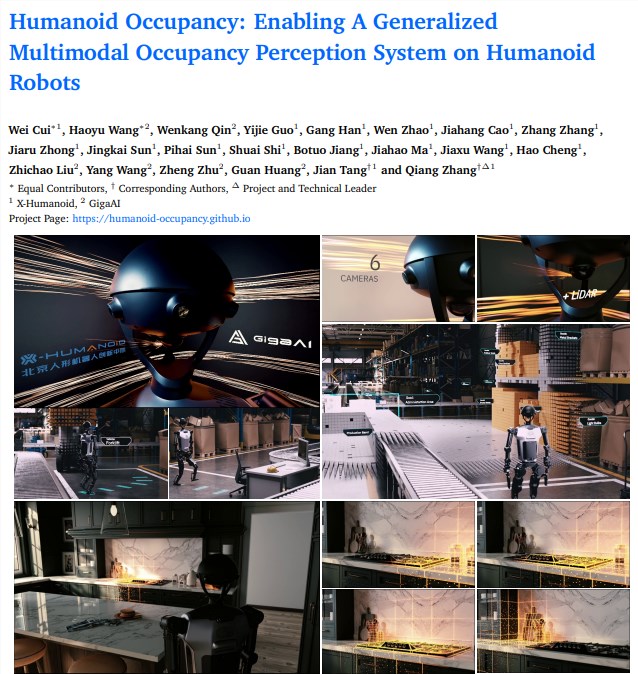
Humanoid robots have taken a significant leap forward with the development of a revolutionary visual perception system by the Beijing Humanoid Robot Innovation Center. The "Humanoid Occupancy" system represents a major advancement in robotic environmental understanding capabilities.

Overcoming Perception Challenges

For years, robot perception systems have struggled with significant limitations:

  • Limited adaptability to single or specific scenarios
  • Poor performance in complex, changing environments
  • Ineffective sensor integration, leading to wasted data and perceptual blind spots

These issues have directly impacted robots' mobility, navigation accuracy, and operational precision.
Image

Core Innovation: Semantic Occupancy Representation

The breakthrough lies in the system's use of semantic occupancy representation technology, which enables:

  • Detailed 3D space modeling through voxel units
  • Direct description of spatial occupancy status and object categories
  • More comprehensive environmental information than traditional top-down representations

Technical Advantages

The system demonstrates three key improvements:

  1. Spatial Information Processing: Complete 3D environment encoding with precise identification and classification of spatial units
  2. Data Fusion: Natural support for multi-modal sensor collaboration (RGB cameras, depth sensors, LiDAR)
  3. System Architecture: Optimized sensor configurations with a dedicated panoramic occupancy perception dataset and efficient multi-modal fusion network

The development team also addressed the critical industry challenge of data scarcity by creating a large-scale dataset covering various application scenarios like home life and industrial production, complete with detailed semantic annotations.

Industry Impact and Future Applications

Industry experts view this development as marking a new stage in humanoid robot perception technology. As the technology matures, potential applications include:

  • Household services
  • Industrial manufacturing
  • Healthcare assistance

The breakthrough not only solves current perception challenges but also lays groundwork for future intelligent robot applications on a larger scale.

The research paper is available at: https://arxiv.org/pdf/2507.20217

Key Points:

  • World's first humanoid robot 3D vision system developed in Beijing
  • Uses semantic occupancy representation for detailed environmental modeling
  • Solves key challenges in sensor integration and data processing
  • Includes comprehensive dataset for training and research
  • Potential applications across multiple industries
Enjoyed this article?

Subscribe to our newsletter for the latest AI news, product reviews, and project recommendations delivered to your inbox weekly.

Weekly digestFree foreverUnsubscribe anytime

Related Articles

AI Visionary Xie Saining Unveils Solaris: A $3.5 Billion Leap in Multiplayer Video Worlds
News

AI Visionary Xie Saining Unveils Solaris: A $3.5 Billion Leap in Multiplayer Video Worlds

Xie Saining, creator of DiT, has launched Solaris - the first multiplayer video world model that enables real-time interaction between multiple users in virtual environments. Backed by a $1 billion seed round and valued at $3.5 billion, this breakthrough promises to transform gaming, VR, and AI training by solving complex challenges like visual consistency during multiplayer interactions.

March 11, 2026
AIVirtualRealityTechInnovation
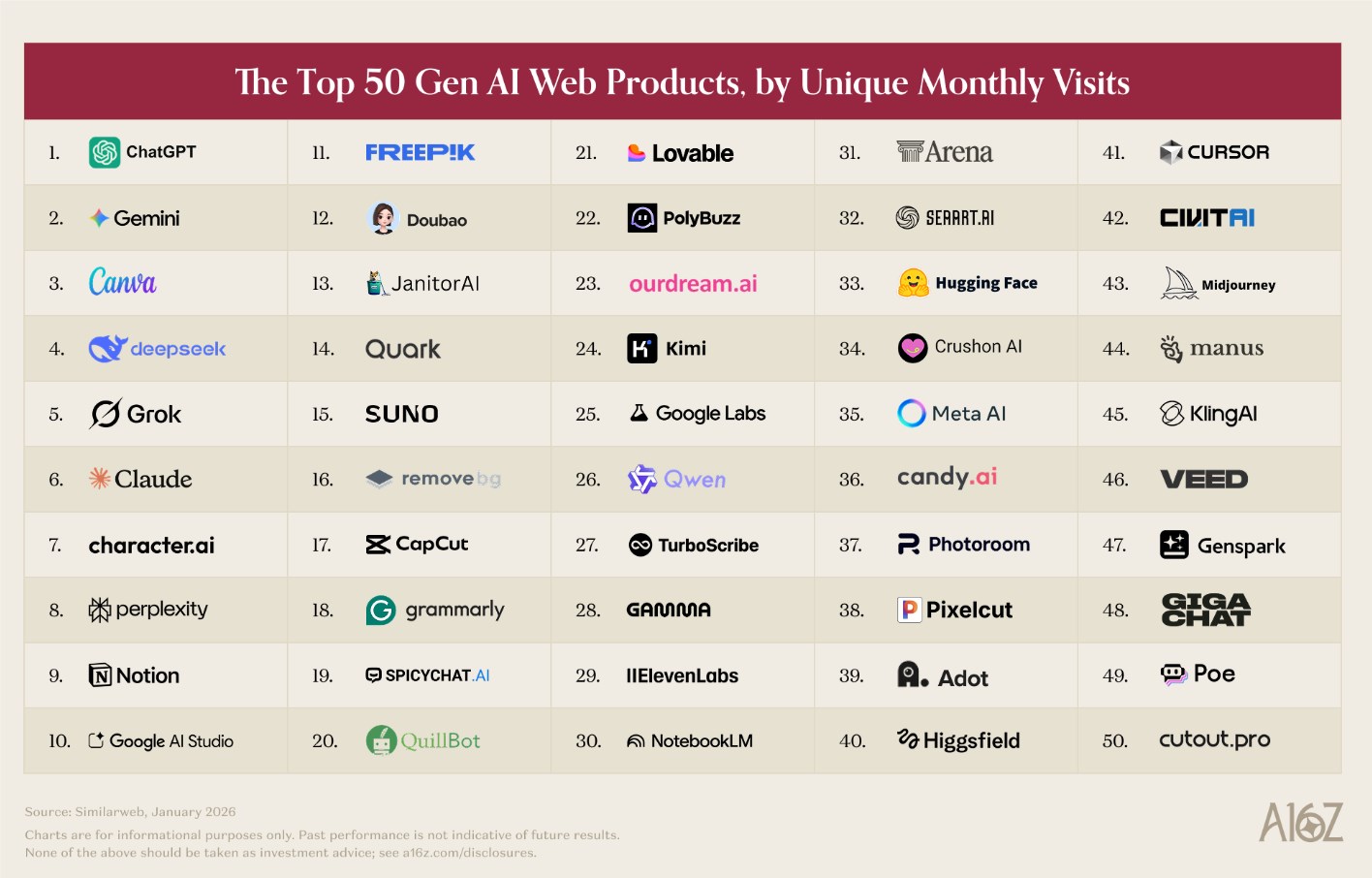
ChatGPT Leads Global AI Race as Market Splits Along Regional Lines
News

ChatGPT Leads Global AI Race as Market Splits Along Regional Lines

Silicon Valley's a16z has unveiled its ranking of top AI apps, revealing ChatGPT's continued dominance with over 500 million new weekly users. While competitors like Gemini and Claude show rapid growth, the market is fracturing into regional ecosystems - with China's DeepSeek and Russia's Yandex emerging as key players outside Western strongholds.

March 11, 2026
AIChatGPTTechTrends
News

MiniMax Surpasses Baidu: China's AI Landscape Gets a Shake-Up

In a stunning market reversal, AI unicorn MiniMax has overtaken tech giant Baidu with a HK$382.6 billion valuation. The company's stock surged 22% amid strong financials showing 158.9% revenue growth, with 70% coming from international markets. This milestone signals shifting priorities in China's AI sector - from technical benchmarks to real-world profitability and global competitiveness.

March 11, 2026
AITechStocksMarketTrends
Xie Saining's Team Unveils Solaris: A Breakthrough in Multi-User Video AI
News

Xie Saining's Team Unveils Solaris: A Breakthrough in Multi-User Video AI

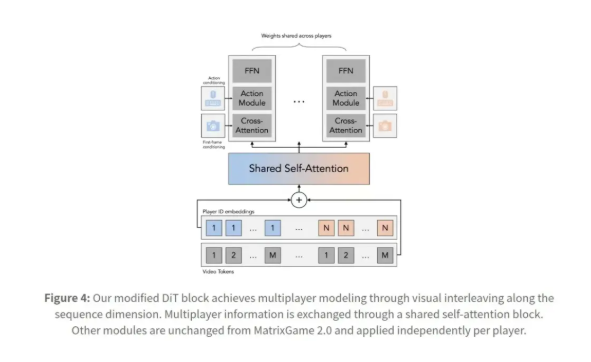
Xie Saining's research team has launched Solaris, the world's first multi-user video world model, powered by Kunlun Wanzhi's Matrix-Game2.0. This innovative technology enhances player interaction in environments like Minecraft, outperforming previous solutions. The release coincides with a major funding milestone for Xie's AI company, AMI, highlighting the growing importance of world models in advancing artificial general intelligence.

March 11, 2026
AIMachine LearningVirtual Worlds
ChatGPT Now Recognizes Songs Like Shazam - Here's How It Works
News

ChatGPT Now Recognizes Songs Like Shazam - Here's How It Works

OpenAI has teamed up with Shazam to bring music recognition directly into ChatGPT. No more switching apps when you hear that catchy tune - just ask ChatGPT what's playing and get instant results. The integration lets users identify songs through simple voice or text commands, complete with artist info and preview clips. It's like having a music-savvy friend in your chat.

March 10, 2026
OpenAIChatGPTShazam
Qualcomm and Arduino Unveil Ventuno Q: A Powerhouse for AI Robotics
News

Qualcomm and Arduino Unveil Ventuno Q: A Powerhouse for AI Robotics

Qualcomm makes its first major move since acquiring Arduino with the launch of Ventuno Q, a cutting-edge development board packing serious AI muscle. Designed for robotics enthusiasts and professionals alike, this hardware promises to bring cloud-level AI processing to your workbench. While pricing remains under wraps, its specs - including a dedicated NPU and industrial-grade processor - suggest Qualcomm means business in the maker market.

March 10, 2026
roboticsedge computingAI hardware