Beijing Greenlights 15 New AI Services in Latest Tech Push

Beijing Expands AI Ecosystem with 15 New Services

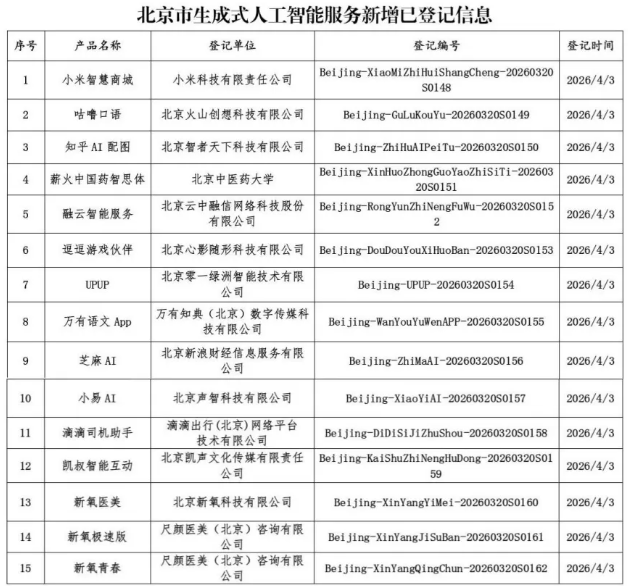
China's capital has taken another leap forward in artificial intelligence development, approving 15 new generative AI services for public use. The Beijing Internet Information Office announced the registrations on April 3, 2026, continuing the city's careful balancing act between technological advancement and regulatory oversight.
Image

A Framework for Responsible Innovation

The newly registered services operate under China's "Interim Measures for the Administration of Generative AI Services", which establishes clear guidelines for developers. Rather than stifling innovation, these rules create a structured environment where companies can deploy their technologies while maintaining transparency.

"What we're seeing is the maturation of China's AI sector," explains tech analyst Li Wei. "These regulations give both developers and users clearer expectations about how these powerful tools should operate."

Transparency at the Core

Under the current system:

  • All registered services must prominently display their approval numbers
  • AI-generated content requires clear identification markers
  • Services using existing large models through APIs still need separate registration

This approach mirrors similar efforts worldwide to address growing concerns about misinformation while allowing beneficial applications to flourish. From creative tools to business assistants, these new services promise to make AI more accessible to Beijing's residents.

The Human Factor in AI Adoption

The latest batch of approvals suggests Chinese authorities are finding their rhythm in managing emerging technologies. By requiring disclosure without banning innovation outright, they aim to build public trust in these rapidly evolving tools.

As one Beijing resident told us: "Knowing which services are officially recognized helps me decide what to use. It's like seeing a health inspection certificate at a restaurant - not flashy, but important."

What Comes Next?

The registrations represent just one piece of China's broader AI strategy. Observers expect more services to gain approval as developers adapt to the regulatory framework. For now, these 15 newcomers join an expanding ecosystem where technology and governance evolve together.

Key Points:

  • 15 new generative AI services approved in Beijing as of April 2026
  • All operate under China's interim management measures for AI development
  • Mandatory registration numbers and content labeling required for transparency
  • Part of ongoing effort to balance innovation with consumer protection
  • Signals continued expansion of China's regulated AI marketplace
Enjoyed this article?

Subscribe to our newsletter for the latest AI news, product reviews, and project recommendations delivered to your inbox weekly.

Weekly digestFree foreverUnsubscribe anytime

Related Articles

News

AI Startup Takes Apple to Court Over App Store Ban and Missing Funds

Ex-Human, an AI company known for its controversial chatbots, has filed a lawsuit against Apple after the tech giant removed its apps from the App Store. The startup claims Apple failed to provide clear reasons for the ban while withholding $500,000 in revenue. The case highlights growing tensions between app developers and Apple's opaque review process, especially as the company expands into AI services that could compete with third-party offerings.

April 3, 2026
App Store ControversyAI RegulationTech Lawsuits
OpenAI pulls plug on ChatGPT adult mode and Sora video tool in strategic pivot
News

OpenAI pulls plug on ChatGPT adult mode and Sora video tool in strategic pivot

OpenAI has abruptly halted plans for a controversial 'adult mode' in ChatGPT and shut down its Sora video generation model. The moves come as part of a broader strategic shift away from consumer-facing projects toward enterprise solutions. Industry analysts suggest the company is responding to competitive pressure from Anthropic's growing foothold in business applications.

March 27, 2026
OpenAIChatGPTAI Ethics
News

OpenAI Wins Appeal: Italian Court Overturns €15 Million Privacy Fine

In a significant legal victory, OpenAI has successfully appealed a €15 million fine imposed by Italian regulators over ChatGPT's data practices. The Rome court's decision lifts financial pressure from the AI developer while raising fresh questions about balancing innovation with privacy protections across Europe. While the full reasoning remains undisclosed, this reversal could influence ongoing AI regulation debates worldwide.

March 20, 2026
OpenAIAI RegulationPrivacy Laws
News

Apple's AI Gold Rush: How the iPhone Maker Is Cashing In Without Leading the Tech Race

While Apple may not be winning the AI arms race, it's certainly winning where it counts - the bottom line. The tech giant is projected to rake in over $1 billion from AI-related services by 2026, primarily through its App Store ecosystem. ChatGPT leads the pack as Apple's biggest AI cash cow, contributing to nearly $900 million in fees last year alone. What's Apple's secret? Instead of pouring billions into data centers like competitors, it's leveraging its existing device dominance and focusing on privacy-conscious edge computing.

March 19, 2026
AppleArtificial IntelligenceTech Business
Midjourney V8 Turbocharges AI Art with 5x Speed Boost and 2K Resolution
News

Midjourney V8 Turbocharges AI Art with 5x Speed Boost and 2K Resolution

Midjourney's new V8 model is turning heads with its lightning-fast image generation—five times quicker than before. The update brings native 2K rendering and smarter text interpretation, though it still struggles with complex abstract concepts. While the speed boost is impressive, users should brace for higher costs when pushing the system to its limits with HD modes.

March 19, 2026
AI ArtMidjourneyGenerative AI
Google's Genie 3 AI Stumbles at GDC: Game Worlds Collapse in Minutes
News

Google's Genie 3 AI Stumbles at GDC: Game Worlds Collapse in Minutes

Google DeepMind's latest AI, Genie 3, made waves at GDC 2026 - but not for the reasons they hoped. The generative AI creates game worlds that crash within minutes, revealing significant limitations in automated content creation. While the technology shows rapid improvement (from seconds to minutes of stability), Google's candid admission serves as a reality check for an industry nervous about AI replacing human developers.

March 17, 2026
AI GamingGoogle DeepMindGame Development