Arduino's New Powerhouse: VENTUNO Q Brings AI Muscle to Edge Devices

Arduino Levels Up With Game-Changing AI Board

The maker community just got a serious upgrade. Arduino chose the eve of Embedded World conference to drop its most ambitious hardware yet - the VENTUNO Q single-board computer. Named after the Italian word for "21," this isn't just an anniversary tribute; it's a quantum leap for edge computing.

Qualcomm Muscle Under the Hood

What makes tech enthusiasts' hearts race? Raw power paired with elegant design. The VENTUNO Q delivers both, featuring Qualcomm's Dragonwing IQ-8275 processor that pumps out an eye-watering 40 TOPS of AI performance. That's enough computational muscle to run large language models locally - no internet required.

But here's where Arduino shows its engineering smarts: they've paired this powerhouse with an STM32H5 microcontroller dedicated solely to motion control. Think of it like having a Formula One engine with ABS brakes - all that power stays precisely controlled.

Real-World Superpowers

So what can you actually build with this kind of firepower in your pocket? The possibilities read like a sci-fi wishlist:

  • Smart terminals that understand your voice commands offline
  • Service robots capable of recognizing and following their owners
  • Industrial inspectors spotting microscopic defects in real-time

The board even supports ROS 2 and Raspberry Pi HAT standards, meaning makers can tap into existing ecosystems while pushing boundaries.

Democratizing Advanced AI

Arduino knows developers hate wrestling with software setups almost as much as hardware limitations. Their new Arduino App Lab environment lets creators switch seamlessly between classic sketches and Python scripts, all running on Ubuntu/Debian foundations.

"When we combined Arduino's accessibility with Qualcomm's processing might," explains lead engineer Marco Rizzuto, "we realized we weren't just making another dev board - we're handing makers the keys to tomorrow's AI applications."

The VENTUNO Q hits shelves Q2 2026, potentially changing how we prototype everything from smart cities to personal robotics. In an era where AI often means "cloud required," Arduino bets heavily on local intelligence - and judging by these specs, they might just be right.

Key Points:

  • 40 TOPS performance enables offline LLM/VLM operation
  • Dual-core design separates AI processing from real-time control
  • Supports CAN-FD, ROS 2, and Raspberry Pi HAT standards
  • Unified development environment reduces setup headaches
  • Expected availability: Q2 2026

Enjoyed this article?

Subscribe to our newsletter for the latest AI news, product reviews, and project recommendations delivered to your inbox weekly.

Weekly digestFree foreverUnsubscribe anytime

Related Articles

News

Tesla Could Pioneer Humanoid AI, Says Musk

Elon Musk predicts Tesla will lead in developing general artificial intelligence for humanoid robots. The billionaire envisions Optimus robots evolving into self-replicating space explorers, powered by AGI breakthroughs. His companies Tesla, xAI and SpaceX may integrate their technologies to achieve this ambitious goal.

March 9, 2026
Artificial IntelligenceTeslaRobotics
News

OpenAI Robotics Chief Quits Over Military AI Concerns

Caitlin Kalinowski, OpenAI's hardware and robotics lead, resigned abruptly this week citing ethical concerns about the company's military partnerships. The former Meta AR glasses developer warned about unchecked surveillance and autonomous weapons in social media posts. Her departure exposes growing tensions within OpenAI as it navigates defense contracts while trying to maintain ethical boundaries.

March 9, 2026
OpenAIAI EthicsMilitary Tech
Unitree's Open-Source Breakthrough Gives Humanoid Robots Smooth Moves
News

Unitree's Open-Source Breakthrough Gives Humanoid Robots Smooth Moves

Unitree Robotics has unveiled OmniXtreme, an innovative open-source architecture that solves key movement challenges for humanoid robots. Their two-stage training system combines flow-based pretraining with real-world motor awareness, achieving remarkable 96% success rates on complex maneuvers like backflips. This breakthrough could accelerate development across the robotics industry.

March 5, 2026
RoboticsMotionControlOpenSourceTech
Xiaomi's CyberOne Robot Shows Off Factory Skills in New Video
News

Xiaomi's CyberOne Robot Shows Off Factory Skills in New Video

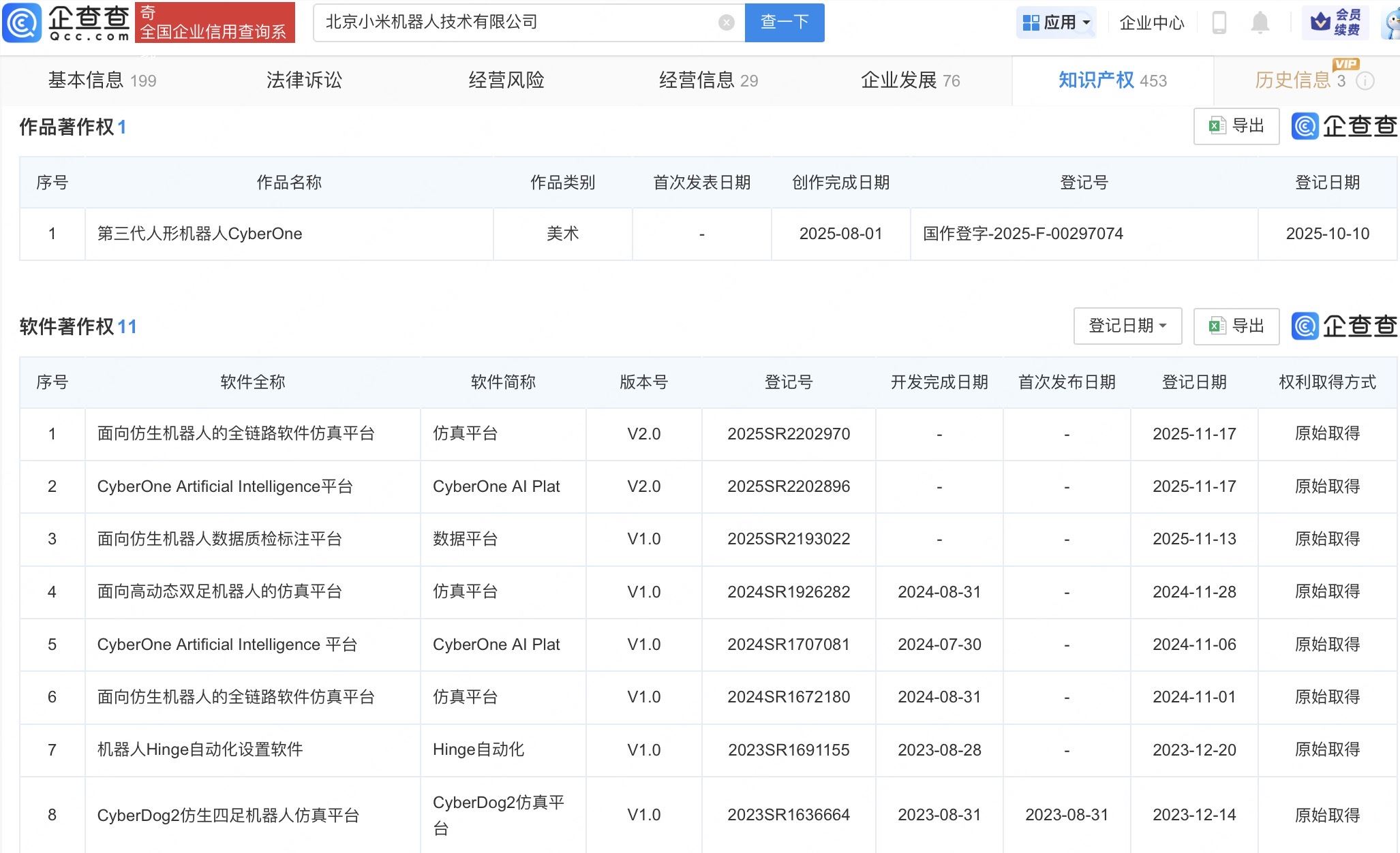
Xiaomi has unveiled impressive new capabilities for its third-generation humanoid robot CyberOne, showcasing it working autonomously in an automobile factory for up to three hours. The tech giant recently secured copyright protection for the robotic system, classified as an 'artwork,' along with several related software platforms. This development marks another step forward in China's growing robotics industry.

March 3, 2026
RoboticsArtificialIntelligenceTechInnovation
News

Hyundai Bets Big on AI and Robots with $6.1 Billion Korean Hub

Hyundai Motor Group is making a massive $6.1 billion push into AI and robotics, announcing plans for a cutting-edge innovation hub in South Korea. The project will feature one of the world's largest AI data centers with 50,000 GPUs, a robot factory producing 30,000 units annually, and ambitious hydrogen energy initiatives. This strategic move signals Hyundai's transformation from carmaker to future mobility leader while boosting local jobs and technology development.

March 3, 2026
Artificial IntelligenceRoboticsGreen Technology
Qualcomm's X105 Modem Pushes 5G and AI to New Heights
News

Qualcomm's X105 Modem Pushes 5G and AI to New Heights

At MWC 2026, Qualcomm unveiled its groundbreaking X105 modem and RF system, designed to power the next generation of AI devices. This cutting-edge technology combines 5G Advanced architecture with deep AI integration, delivering better power efficiency, compact design, and even satellite connectivity. From smarter industrial IoT to more precise navigation, the X105 is setting new standards for mobile communication.

March 2, 2026
5G technologyAI hardwaremobile innovation