
America's Aging Power Grid Threatens AI Boom

Power Crisis Looms Over AI Revolution

The U.S. tech industry faces an unexpected roadblock in its artificial intelligence race - the nation's aging electrical grid can't keep up with Silicon Valley's soaring power demands.

The Numbers Behind the Shortage

Recent analysis reveals a startling gap: While AI data centers will require about 44 gigawatts of additional electricity by 2028, current infrastructure upgrades can only deliver 25 gigawatts. That leaves companies staring down a 40% power deficit right as they're betting billions on AI development.

"This isn't just an inconvenience - it's existential," says one industry insider who requested anonymity. "No power means no large language models, no generative AI, and no returns on these massive investments."

Tech Titans Scramble for Solutions

Major players aren't waiting around:

  • OpenAI secured $1.4 trillion in infrastructure deals to lock down future capacity
  • Microsoft explores restarting Pennsylvania's Three Mile Island nuclear plant
  • Elon Musk's xAI already deployed unpermitted gas turbines in Tennessee

The rush reflects growing desperation as eight-year wait times plague conventional grid connection requests.

Infrastructure Stuck in the Past

The deeper problem? Much of America's electrical backbone dates back to the Nixon era. Transformers and transmission lines from the 1960s weren't designed for today's cloud computing demands. Regulatory red tape makes modernization painfully slow - when developers submit multiple applications just to hedge their bets, queues grow longer still.

"We're trying to run ChatGPT on a grid built for rotary phones," quipped one energy analyst.

Alternative Power Plays Emerge

The crisis sparks creative (and controversial) workarounds:

  • Natural gas turbines gain popularity despite environmental concerns
  • Some companies consider building dedicated microgrids
  • Others explore locating data centers near renewable energy sites

The stakes couldn't be higher: Without reliable electricity, America risks losing its AI leadership position to countries with more modern infrastructure.

Key Points:

  • 19 gigawatt shortfall expected by 2028 threatens AI development
  • $400 billion+ already committed to data center construction
  • Eight-year waits common for grid connections
  • Gas turbines and nuclear options emerge as stopgap solutions
Enjoyed this article?

Subscribe to our newsletter for the latest AI news, product reviews, and project recommendations delivered to your inbox weekly.

Weekly digestFree foreverUnsubscribe anytime

Related Articles

News

a16z Bets Big on AI's Backbone With $1.7 Billion Infrastructure Fund

Silicon Valley heavyweight Andreessen Horowitz is doubling down on AI's foundational technologies, earmarking $1.7 billion from its latest fundraise specifically for infrastructure plays. The move signals a strategic shift toward powering the next wave of artificial intelligence innovation rather than just chasing applications. With past investments in OpenAI and ElevenLabs, a16z aims to control the 'pipes' of AI development - from computing power to talent pipelines.

February 5, 2026
venture capitalAI infrastructureSilicon Valley
News

NVIDIA Defies Skeptics with Stellar $120 Billion Profit Year

Silencing doubts about an AI slowdown, NVIDIA just posted financial results that crushed expectations. The chipmaker's quarterly revenue hit $68.13 billion, powered by a 75% surge in its data center business. With annual profits reaching $120 billion, NVIDIA continues to dominate as tech's most valuable company while reshaping global AI infrastructure.

February 26, 2026
NVIDIAAI chipstech earnings
Meta's New Tool Spots Sneaky GPU Failures Before They Crash AI Training
News

Meta's New Tool Spots Sneaky GPU Failures Before They Crash AI Training

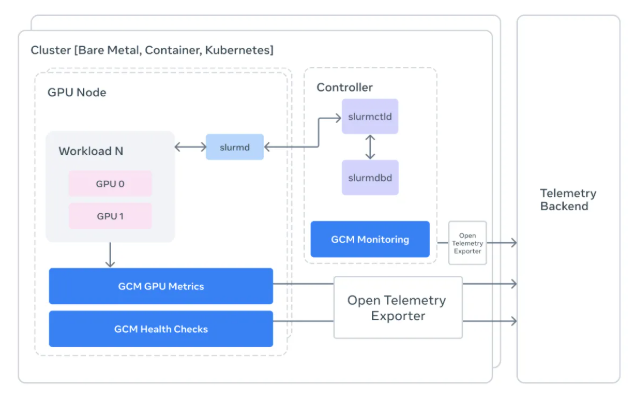
Meta has released an open-source toolkit called GCM that helps detect subtle hardware failures in massive GPU clusters used for AI training. Unlike traditional server monitoring, GCM can pinpoint performance drops in individual GPUs that might otherwise go unnoticed but could ruin weeks of computational work. The tool integrates with popular scheduling systems and provides detailed health reports, potentially saving companies millions in wasted computing resources.

February 25, 2026
AI infrastructureGPU monitoringMeta research
News

France's Mistral Bets Big on European AI Independence with $1.4B Swedish Data Center

French AI startup Mistral is making its boldest move yet for European tech sovereignty, investing €1.2 billion to build Sweden's largest AI data center. The facility, set to open in 2027, aims to reduce Europe's reliance on US cloud services while powering next-generation AI models with clean energy. Backed by investors like ASML and NVIDIA, Mistral's gamble could reshape Europe's position in the global AI race.

February 12, 2026
AI sovereigntyEuropean techdata centers
News

China Unveils Massive 30,000-Card AI Supercluster

China has taken a giant leap in AI computing power with the launch of its first 30,000-card supercluster at Zhengzhou's National Supercomputing Internet hub. This massive computing pool, developed by Sunway in record time, supports trillion-parameter models and promises revolutionary breakthroughs across scientific fields. The system's open architecture makes it surprisingly accessible while offering unprecedented scalability.

February 6, 2026
AI infrastructurehigh-performance computingChina tech
News

OpenAI Eyes Pharma Breakthroughs With AI Drug Development Push

OpenAI CEO Sam Altman revealed plans to potentially invest in pharmaceutical companies using its AI technology for drug discovery. Speaking at a San Francisco tech conference, Altman outlined a revenue-sharing model where OpenAI could recoup costs through royalties on successful treatments. While no deals are finalized, this move signals OpenAI's ambition to monetize its AI expertise beyond traditional tech applications.

February 4, 2026
AI pharmaceuticalsOpenAI strategydrug discovery