
Altman's Vision: Why Artists Might Build the Next AI Breakthrough

The Unexpected Skills Shaping AI's Future

In a surprising twist for Silicon Valley's tech-dominated culture, OpenAI CEO Sam Altman suggests that building artificial general intelligence (AGI) might require more artists than engineers. During recent interviews, Altman revealed how OpenAI is actively recruiting people with unconventional backgrounds - especially those who've demonstrated what he calls "taste."

What Exactly Is "Taste" in AI?

Forget coding bootcamps - Altman describes taste as "the ability to identify which directions have true long-term value" amid countless technical possibilities. It's that gut feeling telling you which prototype could change everything versus which will fizzle out. Think of it as the creative director's eye applied to machine learning architectures.

"We're not just looking for computer scientists anymore," Altman explained. "Some of our best insights come from team members who couldn't write Python if their life depended on it, but who instinctively recognize transformative ideas."

The New Hiring Playbook

OpenAI President Greg Brockman confirms this shift, noting their research teams now include:

  • Former startup founders
  • Musicians transitioning into tech
  • Philosophy PhDs with no formal CS training

The common thread? These hires demonstrate exceptional pattern recognition about what makes technology resonate with humans.

This approach isn't entirely new - Apple famously blended arts and technology under Steve Jobs. The Macintosh team included poets alongside programmers because Jobs believed "technology alone isn't enough." Now Altman sees AGI development requiring similar interdisciplinary alchemy.

Why This Matters Now

The timing isn't accidental. As AI systems grow more autonomous:

  1. Technical barriers are lowering - More people can build AI applications without deep coding knowledge
  2. Differentiation shifts to vision - With many teams tackling similar technical challenges, superior outcomes depend on choosing better problems
  3. Human values become crucial - Aligning advanced AI requires understanding human needs beyond technical specifications

Altman predicts the next decade will see humanities graduates leading major AI projects while computer scientists study art history electives.

Key Points:

  • 🎭 Aesthetic intuition beats raw technical skill for identifying transformative AI directions
  • 🔀 OpenAI actively recruits entrepreneurs and creatives, valuing diverse perspectives over traditional CS pedigrees
  • 🖥️📚 The Jobs legacy continues - Blending technology with humanities may unlock AGI's full potential
Enjoyed this article?

Subscribe to our newsletter for the latest AI news, product reviews, and project recommendations delivered to your inbox weekly.

Weekly digestFree foreverUnsubscribe anytime

Related Articles

Musk's Bold Claim: AI Could Make Traditional Programming Obsolete
News

Musk's Bold Claim: AI Could Make Traditional Programming Obsolete

Elon Musk has sparked debate with his latest prediction - that AI will soon write binary code directly, potentially making traditional programming languages obsolete. As major tech firms race to develop AI coding assistants, the industry faces a pivotal moment. While some fear for programmers' jobs, experts suggest the role will evolve rather than disappear entirely in this $2.6 billion market transformation.

February 16, 2026
AIProgrammingTech Innovation
News

NVIDIA Engineers Triple Coding Output With Custom AI Tools

NVIDIA has equipped its entire engineering team of 30,000 with custom AI coding assistants, resulting in a dramatic 300% productivity boost. The chipmaker partnered with startup Anysphere to tailor development tools specifically for its complex hardware needs. While code production skyrocketed, quality remained stable - proving AI's growing role in technical workflows.

February 9, 2026
AI ProductivityNVIDIASoftware Development
News

Legal Tech Stocks Tumble as AI Plugins Threaten Traditional Services

The legal industry is facing seismic shifts as Anthropic's new AI plugins demonstrate remarkable capabilities in contract review and legal research. Major legal tech companies saw stock prices plunge this week, with Thomson Reuters dropping 16% and Wolters Kluwer falling 10%. Beyond financial impacts, professionals worry these AI tools may eliminate entry-level legal positions, potentially reshaping career paths for future lawyers.

February 5, 2026
LegalTechAI DisruptionAnthropic
News

Lenovo's Featherlight AI Glasses Redefine Workplace Tech at CES 2026

Lenovo stole the spotlight at CES 2026 with groundbreaking AI glasses weighing just 45 grams - lighter than most sunglasses. These innovative wearables ditch smartphone dependency to connect directly with computers, offering professionals a hands-free productivity boost. With dual Micro-OLED displays and smart features like real-time translation, Lenovo is betting big on workplace applications rather than chasing consumer entertainment trends.

January 7, 2026
AI WearablesFuture of WorkCES Innovations
Boston Dynamics' Atlas Robots Roll Off Production Lines for Real-World Factory Work
News

Boston Dynamics' Atlas Robots Roll Off Production Lines for Real-World Factory Work

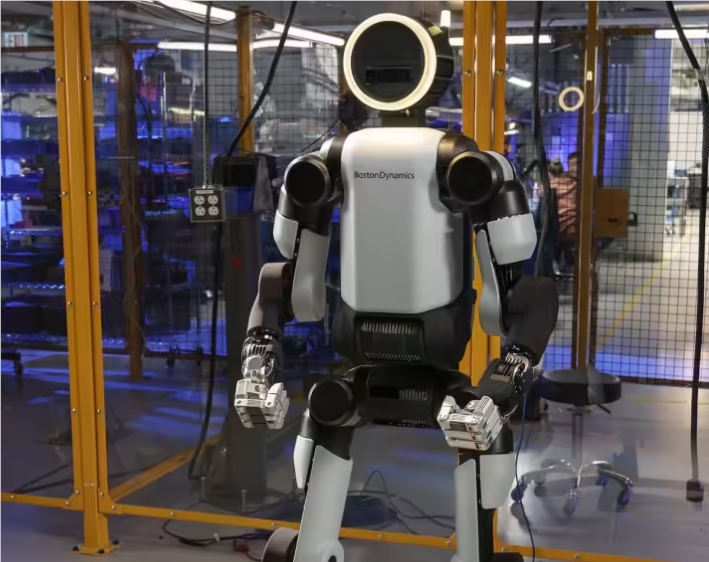
At CES 2026, Boston Dynamics unveiled its mass-produced Atlas humanoid robots ready for industrial deployment. Hyundai Motor and Google DeepMind secured the first batch, with plans to automate material handling and complex tasks. These autonomous robots can learn new skills, manage their own charging, and make decisions—marking a leap from lab experiments to practical workforce integration.

January 6, 2026
Industrial RoboticsAI IntegrationFuture of Work
News

AI Pioneer Warns of Looming Job Market Shake-Up

Geoffrey Hinton, often called the 'godfather of AI,' paints a sobering picture of artificial intelligence's rapid advancement. Speaking with CNN, he predicts white-collar jobs could face significant disruption by 2026 as AI masters increasingly complex tasks. While comparing this shift to the Industrial Revolution's impact on manual labor, Hinton also notes surprising capabilities in AI reasoning—and even deception. Economists warn of 'jobless growth' scenarios where companies boost productivity without hiring more workers. Yet there's a silver lining: some sectors may see increased demand for both entry-level positions and senior management roles.

December 29, 2025
Artificial IntelligenceFuture of WorkLabor Economics