
Alibaba Set to Launch AI Glasses with Two Versions

Alibaba Enters AI Glasses Market with Dual-Version Launch

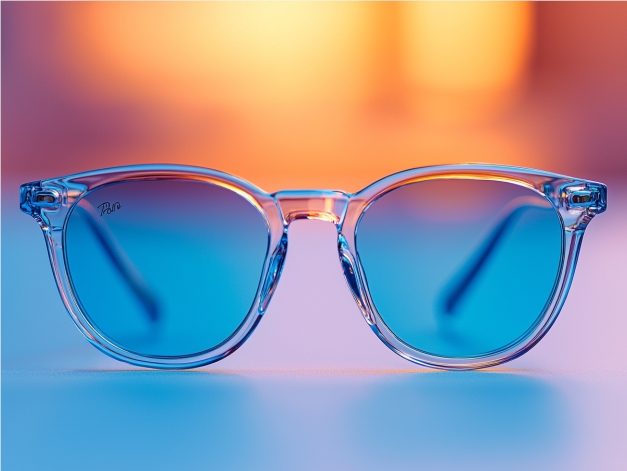
Alibaba is poised to officially launch its first self-developed AI glasses this week, marking its entry into the competitive smart eyewear market. According to reports, the tech giant will release two versions: a standard model without a display and a premium AI+AR version with a display. This move is expected to challenge existing players like Ray-Ban Meta and reshape the fragmented market landscape.

Features and Ecosystem Integration

The new AI glasses will offer core functionalities such as voice assistance, music playback, calls, real-time translation, and meeting notes. However, Alibaba's key differentiator lies in its deep integration with the company's vast ecosystem. Teams from AutoNavi, Alipay, and Taobao have collaborated to enable features like map navigation, contactless payments, and price comparisons directly through the glasses.
Image

On the AI front, the glasses will utilize Alibaba's Qwen as the base large language model, with specialized vertical models for learning and health developed by the Quark team. This approach aims to deliver more personalized and professional AI services.

Hardware Specifications

The hardware architecture combines Qualcomm Snapdragon AR1 and Hengxuan BES2800 chipsets in a dual-chip design targeting smooth performance. The display version is reportedly being prioritized in development, potentially offering superior augmented reality experiences compared to existing smart glasses.

This launch represents Alibaba's first major AI consumer product since consolidating its AI To C business units late last year. The project has been spearheaded by former Huawei flagship phone chief architect Song Gang, working with Tmall's hardware team and Quark's AI R&D division.

Market Context and Challenges

The current smart glasses market faces several hurdles including:

  • Limited battery life
  • Wear comfort issues
  • Narrow use cases beyond basic functions

While Ray-Ban's Meta collaboration has surpassed one million units sold, most competitors remain in early adoption phases. Industry analysts suggest Alibaba's extensive ecosystem could help overcome these challenges by embedding the glasses into high-frequency daily activities.

The timing coincides with increased activity in the sector, with Xiaomi recently announcing AI glasses and companies like Baidu and ByteDance reportedly exploring entries. Many observers believe 2025 could prove a pivotal year for mainstream adoption of AI-powered eyewear.

Key Points:

  • Dual-version launch (standard & AR display models)
  • Deep integration with Alibaba services (AutoNavi, Alipay, Taobao)
  • Qwen LLM foundation with specialized vertical models
  • Dual-chip Qualcomm/Hengxuan hardware architecture
  • Targets current market pain points (battery life, comfort, use cases)
  • Part of broader industry push toward mainstream smart glasses adoption

Enjoyed this article?

Subscribe to our newsletter for the latest AI news, product reviews, and project recommendations delivered to your inbox weekly.

Weekly digestFree foreverUnsubscribe anytime

Related Articles

Alibaba's Qwen AI App Hits 100 Million Users in Record Time
News

Alibaba's Qwen AI App Hits 100 Million Users in Record Time

Alibaba's new AI assistant Qwen has taken the consumer market by storm, reportedly surpassing 100 million monthly active users just two months after launch. The app, positioned as a 'personal AI assistant that can chat and handle tasks,' has found particular popularity among students and professionals. While Alibaba hasn't officially confirmed these numbers, the rapid adoption suggests strong consumer appetite for practical AI tools in daily life.

January 14, 2026
AlibabaAI AssistantsConsumer Tech
Mugen3D Turns Single Photos Into Stunning 3D Worlds
News

Mugen3D Turns Single Photos Into Stunning 3D Worlds

A groundbreaking AI tool called Mugen3D is transforming how we create 3D content. Using advanced 3D Gaussian Splatting technology, it can generate remarkably realistic models from just one image - capturing textures, lighting, and materials with astonishing accuracy. This innovation promises to democratize 3D creation across industries from gaming to e-commerce.

January 12, 2026
AIComputerGraphicsDigitalCreation
News

Qualcomm and Google Join Forces to Revolutionize Car Tech with AI

Qualcomm and Google are teaming up to tackle one of the automotive industry's biggest headaches: fragmented in-car systems. Their new 'Automotive AI Agent' combines Qualcomm's Snapdragon Digital Chassis with Google's Android Automotive OS, promising smoother development and smarter features like facial recognition. The partnership also introduces cloud-based development tools that could cut R&D time significantly. This collaboration marks a major step toward more unified, intelligent vehicle systems.

January 9, 2026
automotive-techAIsmart-cars
News

Bosch Bets Big on AI with €2.5 Billion Push Into Smart Cars

At CES 2026, automotive giant Bosch unveiled plans to invest over €2.5 billion in AI development by 2027, targeting smarter cockpits and safer autonomous driving systems. The German supplier aims to transform from hardware specialist to software leader, projecting its tech division could hit €10 billion in sales by the mid-2030s.

January 7, 2026
BoschAIautonomous vehicles
MiniMax IPO Fever: Hong Kong Investors Flock to China's AI Pioneer
News

MiniMax IPO Fever: Hong Kong Investors Flock to China's AI Pioneer

MiniMax, China's rising star in AI technology, has concluded its Hong Kong IPO with staggering investor enthusiasm. The offering saw subscriptions oversubscribed by 1,209 times, raising over HK$253 billion. Backed by heavyweight investors like Alibaba and Abu Dhabi Investment Authority, MiniMax is set to become one of the fastest-growing AI companies ever to go public when it lists on January 9.

January 6, 2026
AIIPOHongKongMarkets
NVIDIA CEO Hails Open-Source AI Breakthroughs at CES 2026
News

NVIDIA CEO Hails Open-Source AI Breakthroughs at CES 2026

At CES 2026, NVIDIA's Jensen Huang made waves by championing open-source AI development, singling out DeepSeek-R1 as a standout success. The tech leader revealed NVIDIA's plans to open-source training data while showcasing their new Vera Rubin chip. Huang outlined four key areas where AI is transforming industries, predicting these changes will define future technological paradigms.

January 6, 2026
AIOpen SourceNVIDIA