Alibaba's New FIPO Algorithm Gives AI Models a Reasoning Boost

Alibaba's Breakthrough in AI Reasoning

Researchers at Alibaba's Tongyi Lab have developed a game-changing algorithm that helps artificial intelligence systems think more like humans. The new approach, called Future-KL Influenced Policy Optimization (FIPO), specifically addresses one of the biggest headaches in AI development: getting machines to recognize which pieces of information actually matter when solving complex problems.
Image

Why Current Methods Fall Short

Traditional reinforcement learning techniques treat every piece of data equally when processing information chains - like giving equal attention to every word in a long sentence. "Imagine trying to solve a math problem where you can't tell which numbers actually affect the answer," explains one researcher. "That's essentially the challenge current models face."

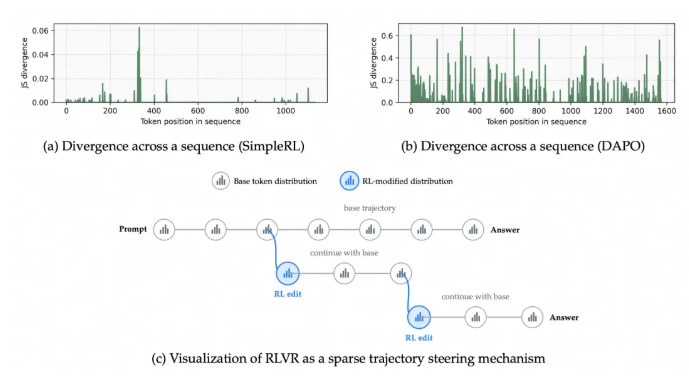
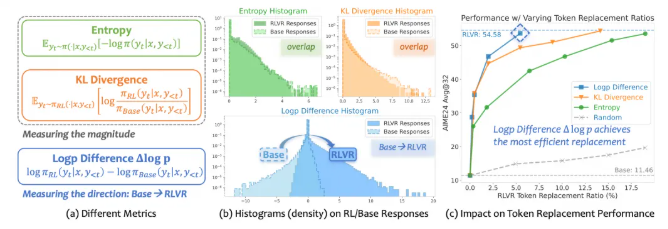
The team discovered that most tokens (the basic units of data processed by AI) show minimal changes during training, making it incredibly difficult for models to identify which ones are truly important. Standard evaluation metrics like entropy and KL divergence proved too blunt for this delicate task.

How FIPO Changes the Game

The breakthrough came when researchers introduced what they call the Future-KL mechanism. This innovative approach gives the AI system a way to "look ahead" and determine which pieces of information will have lasting importance for solving the problem at hand.
Image

In practical terms, FIPO works by:

  • Rewarding tokens that prove important for later reasoning steps
  • Using a novel measurement called Δlog p (difference in log probability) to track meaningful changes
  • Helping models maintain focus through longer reasoning chains without losing track

Real-World Performance

The results speak for themselves. When tested on the Qwen2.5-32B-Base model, FIPO enabled:

  • Average reasoning lengths exceeding 10,000 tokens (far beyond previous limits)
  • Significant accuracy improvements in complex mathematical reasoning
  • Better performance than comparable models like o1-mini and DeepSeek-Zero-MATH

"What excites us most is how this solves the 'reasoning length stagnation' problem," says one team member. "It's like giving the model better working memory - it can now follow longer trains of thought without getting distracted or confused."

What This Means for AI Development

The implications extend far beyond mathematical problems. This advancement could lead to:

  • More reliable AI assistants capable of complex multi-step reasoning
  • Improved performance in fields requiring long-chain thinking like scientific research and financial analysis
  • Better understanding of how AI systems process and prioritize information

The Tongyi Lab team continues to refine FIPO, with plans to explore applications in various domains where robust reasoning capabilities are crucial.

Key Points:

  • 🚀 Future-aware learning: FIPO helps AI models identify information with lasting importance
  • 📏 Length breakthrough: Enables processing of reasoning chains over 10,000 tokens long
  • 🧮 Math mastery: Shows significant accuracy gains in complex mathematical problems
  • 🔍 Better understanding: Provides new insights into how AI systems process information

Enjoyed this article?

Subscribe to our newsletter for the latest AI news, product reviews, and project recommendations delivered to your inbox weekly.

Weekly digestFree foreverUnsubscribe anytime

Related Articles

News

Alibaba's Qwen 3.6 Plus Shatters Records with Trillion-Token Milestone

Alibaba's Qwen 3.6 Plus has made history by becoming the first AI model to surpass 10 trillion tokens in daily usage on OpenRouter, securing the top spot in global rankings for four consecutive days. This breakthrough signals Chinese AI models' growing dominance in international markets, with applications ranging from autonomous driving to content creation. Meanwhile, contrasting fortunes in the AI sector highlight shifting investment trends as Chinese models gain traction worldwide.

April 7, 2026
Artificial IntelligenceChinese TechMachine Learning
Google's Gemma 4: Small AI Models Pack a Big Punch
News

Google's Gemma 4: Small AI Models Pack a Big Punch

Google has open-sourced its Gemma 4 AI models, and they're turning heads in the tech world. What makes them special? Some of these compact models outperform giants 20 times their size, bringing powerful AI capabilities to everyday devices like smartphones. With optimized versions for mobile and IoT devices, Gemma 4 could change how we interact with AI in our daily lives.

April 7, 2026
AIMachine LearningGoogle
News

Google's Gemma 4: A Powerhouse AI Model Set to Shake Up Open-Source Landscape

Google is gearing up to unveil Gemma 4, its next-generation open-source AI model that promises four times the parameters of its predecessor. With a rumored 120 billion parameters and innovative MoE architecture, this release marks Google's strategic move to reclaim influence in the open-source AI space. The tech world watches closely as this development could redefine the balance between commercial and open-source AI models.

April 2, 2026
AI DevelopmentOpen Source TechMachine Learning
ClawHub's China Mirror Site Goes Live - AI Developers Rejoice!
News

ClawHub's China Mirror Site Goes Live - AI Developers Rejoice!

ClawHub, the popular 'npm for AI Agents,' has launched its official Chinese mirror site, bringing faster access and better stability for domestic developers. The new mirror at https://mirror-cn.clawhub.com solves previous network latency issues, making it easier than ever to share and discover AI skills. Sponsored by ByteDance's VolcanoEngine, this move signals growing localization in the AI Agent ecosystem.

April 1, 2026
AI DevelopmentOpen SourceMachine Learning
China's AI Models Make Global Waves: Doubao Nears GPT-5, Xiaomi Shines in Math
News

China's AI Models Make Global Waves: Doubao Nears GPT-5, Xiaomi Shines in Math

The latest SuperCLUE rankings reveal China's AI models are closing the gap with global leaders. ByteDance's Doubao now trails GPT-5 by less than one point, while Xiaomi's MiMo surprises with standout math performance. In open-source categories, Chinese models dominate completely, signaling a shift from language specialists to all-around competitors.

March 30, 2026
AIChinese TechMachine Learning
News

Moonshot AI's Stunning Pivot: From Tech Demo to Revenue Powerhouse

In a dramatic shift, Moonshot AI has transformed from a promising tech startup to a commercial juggernaut. The company's recent K2.5 model release generated more revenue in 20 days than all of last year, prompting a rush toward IPO preparations. With valuations soaring to $18 billion and overseas revenue surpassing domestic for the first time, China's AI landscape is witnessing a fundamental transformation from speculative investment to proven business models.

March 30, 2026
Artificial IntelligenceTech IPOMoonshot AI