Alibaba's AI Security Team Uncovers Critical Flaws in OpenClaw Framework

Security Alert: Major Vulnerabilities Found in OpenClaw AI Framework

Alibaba's elite AI Security Lab has sounded the alarm after uncovering multiple serious vulnerabilities in OpenClaw, a widely-used open-source framework for autonomous AI agents. The findings come from an intensive three-day audit that exposed potential security risks affecting countless organizations relying on this technology.

The Discovery Process

The research team employed advanced penetration testing techniques to probe OpenClaw's defenses. "We approached this like hackers would," explained lead researcher Zhang Wei. "Our goal wasn't just to find bugs, but to understand how attackers might exploit them in real-world scenarios."

Their efforts revealed 33 distinct security flaws ranging from minor configuration issues to critical system vulnerabilities. The most severe could have allowed attackers to take complete control of AI agents built on the framework.

Rapid Response and Fixes

OpenClaw's development team responded with remarkable speed, releasing patches for eight high-risk vulnerabilities within days of being notified. The fixed issues included:

  • One critical severity vulnerability (Level 1)
  • Four high-risk flaws
  • Three medium-risk weaknesses

"This kind of collaboration between security researchers and developers is exactly what our industry needs," commented cybersecurity analyst Lisa Chen. "When vulnerabilities are found and fixed this quickly, everyone benefits."

Why This Matters

The incident highlights several important trends:

  1. Growing attack surfaces as AI systems become more complex and interconnected
  2. The vital role of corporate security teams in open-source ecosystem protection
  3. Industry-wide challenges in securing autonomous agent frameworks

Alibaba has pledged to continue monitoring OpenClaw's security posture, offering technical support to help maintain the framework's stability. "AI safety isn't a competitive issue—it's something we all need to work on together," a company spokesperson noted.

Key Points:

  • Alibaba researchers identified 33 vulnerabilities in OpenClaw framework
  • Eight critical fixes already implemented in latest version (2026.3.28)
  • One flaw rated as maximum severity (Level 1)
  • Highlights need for ongoing security audits of AI infrastructure
  • One Level 1 (critical) vulnerability was among those patched
  • Incident demonstrates importance of public-private security cooperation
  • Autonomous agent frameworks require ongoing security attention

Enjoyed this article?

Subscribe to our newsletter for the latest AI news, product reviews, and project recommendations delivered to your inbox weekly.

Weekly digestFree foreverUnsubscribe anytime

Related Articles

News

How AI is Powering the Rise of One-Person Businesses in China

China's entrepreneurial landscape is witnessing a quiet revolution as AI tools enable solo founders to run entire businesses. Alibaba International's GM Zhang Kuo reveals 30-40% of their clients now operate without employees, relying on AI 'digital workers' for everything from customer service to tax filing. The open-source OpenClaw platform has fueled this trend, while cities compete to attract these lean startups with million-yuan incentive packages.

March 30, 2026
AI entrepreneurshipDigital workforceSolo founders
AI Adoption Divide: How China and the U.S. Approach AI Tools Differently
News

AI Adoption Divide: How China and the U.S. Approach AI Tools Differently

OpenClaw founder Peter Steinberger reveals stark contrasts in AI adoption between China and the U.S. While Chinese companies mandate AI tool usage, some American firms restrict them over security concerns. Steinberger shares insights on workplace impacts and his vision for personal AI agents that could reshape how we work and interact with technology.

March 27, 2026
AI adoptionOpenClawtech policy
Tencent Unveils 'Shrimp Farm' AI Agent Platform with Multi-Model Support
News

Tencent Unveils 'Shrimp Farm' AI Agent Platform with Multi-Model Support

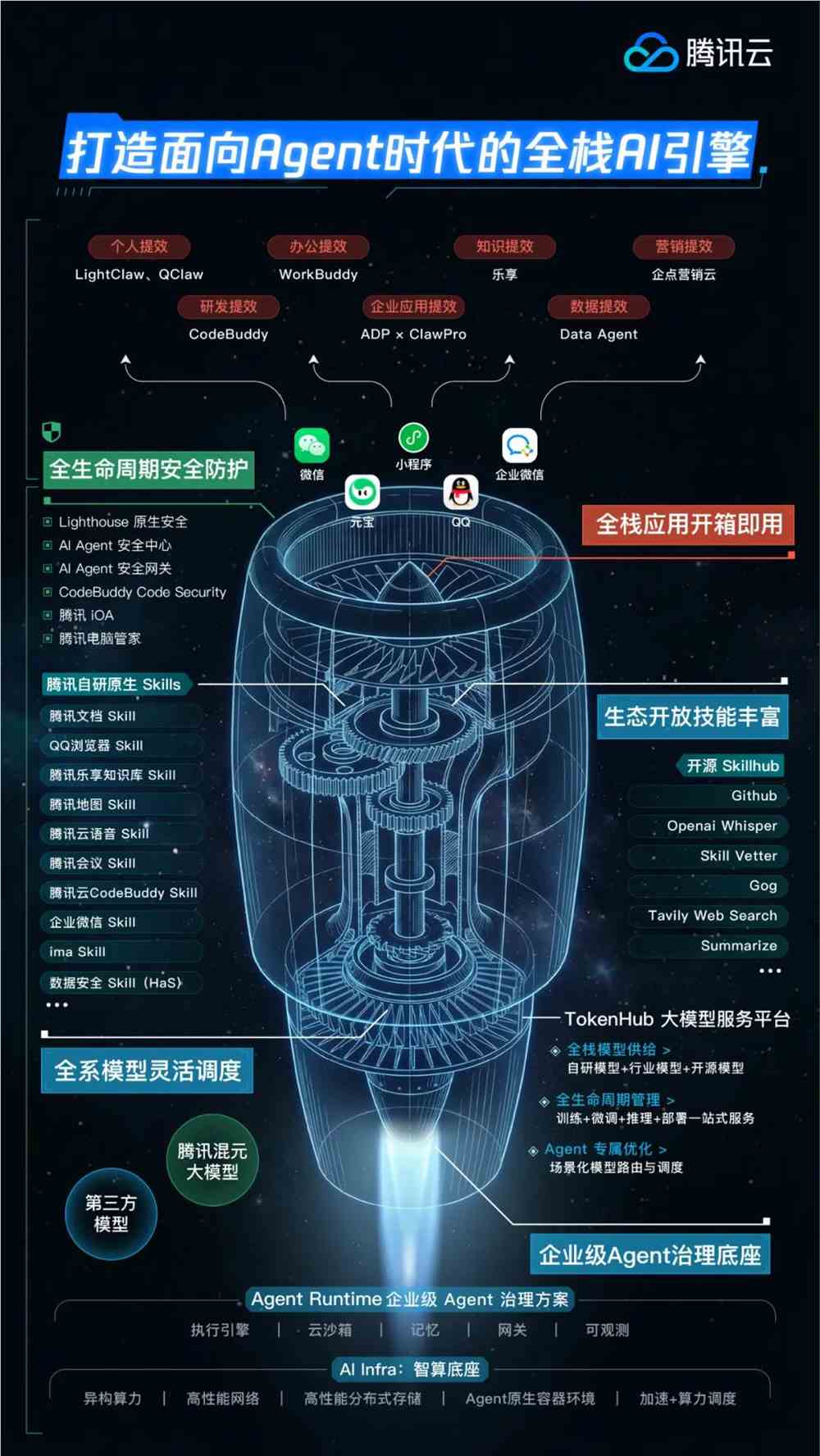
Tencent has pulled back the curtain on its ambitious Agent product ecosystem, playfully nicknamed 'Shrimp Farm'. This comprehensive platform combines Tencent's homegrown Hunyuan model with support for popular alternatives like MiniMax and Kimi. Beyond just chatting, the system integrates deeply with Tencent's productivity tools and WeChat ecosystem, allowing AI assistants to actually complete tasks. Security gets serious attention too, with multiple layers of protection against AI-related risks.

March 27, 2026
TencentAI AgentsEnterprise AI
News

AI's 'Lobster Craze' Sparks Industry Transformation as Tech Giants Rush In

The AI world is buzzing with excitement over OpenClaw, an open-source framework nicknamed 'lobster' that's revolutionizing how we interact with technology. Major players like Baidu and Tencent are racing to develop their own AI agents, signaling a potential turning point for commercialization. As these digital assistants move into finance and management, experts predict 2026 could be the year when AI investments finally pay off - though challenges around security and usability remain.

March 27, 2026
AI AgentsTech InnovationCommercialization
China's Qwen3.5-Max Outperforms Global Rivals in AI Benchmark Test
News

China's Qwen3.5-Max Outperforms Global Rivals in AI Benchmark Test

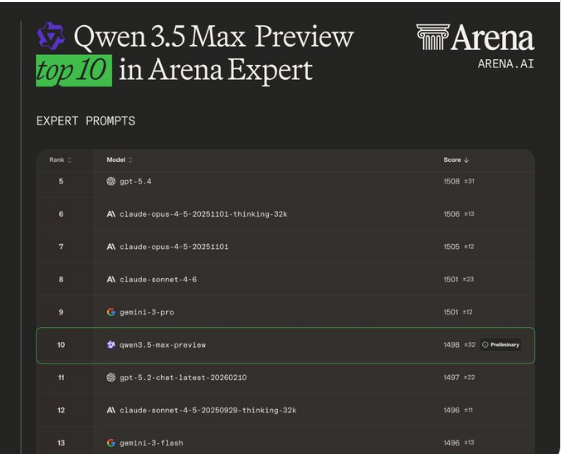
Alibaba's latest AI model, Qwen3.5-Max-Preview, has topped the LMArena benchmark with a record-breaking score of 1464 points, surpassing international competitors like GPT5.4 and Claude4.5. The achievement signals China's growing dominance in AI development, with five Chinese companies now ranking in the global top ten for large language models.

March 20, 2026
Artificial IntelligenceAlibabaLarge Language Models
News

Alibaba Sets Sights on $100 Billion AI and Cloud Revenue by 2030

Alibaba has unveiled an ambitious five-year plan to grow its cloud and AI commercial revenue to $100 billion annually. The tech giant's latest financials show strong momentum, with cloud revenue jumping 36% and AI products maintaining triple-digit growth. CEO Wu Yongming revealed Alibaba's full-stack AI strategy, from self-developed chips to its 300 million-user Tongyi Qianwen platform, positioning the company as a key player in the AI revolution.

March 20, 2026
AlibabaArtificial IntelligenceCloud Computing