AI's 'Lobster Craze' Sparks Industry Transformation as Tech Giants Rush In

The Lobster Effect: How a Playful Nickname Ignited AI's Next Big Wave

What started as a humorous play on words - comparing an open-source AI framework to a lobster - has grown into something much bigger. OpenClaw, affectionately dubbed "lobster" by Chinese developers for its phonetic similarity, is now at the center of an industry-wide transformation that's seeing tech giants scramble to develop their own AI agents.

Tech Titans Dive Into the Lobster Tank

Baidu, ByteDance, and Tencent aren't just dipping their toes in the water - they're doing cannonballs into the lobster tank. Each company is developing its own version of these AI assistants, betting big on what they see as the future of intelligent services. From smarter search functions to more intuitive social media interactions, these digital lobsters are being trained to handle increasingly complex tasks.

"What we're seeing isn't just another tech trend," observes industry analyst Li Wei. "It's a fundamental shift in how companies approach AI development. The focus has moved from pure research to creating tools people actually want to use."

From Novelty to Necessity: The Commercialization Push

The initial excitement around these AI agents is giving way to serious business considerations. Hong Kong-listed firms like MiniMax and Zhipu are being closely watched as investors look for signs that the massive investments in large language models will finally pay off.

Financial sectors have been particularly quick to adopt these technologies. "An AI assistant that can analyze market trends while you sleep? That's not science fiction anymore," says Shanghai-based fintech developer Zhang Ying. "But making these tools reliable enough for high-stakes decisions is where the real challenge lies."

Growing Pains in the Lobster Farm

The path hasn't been entirely smooth. A recent OpenClaw update caused unexpected disruptions, highlighting the delicate balance between innovation and stability. Meanwhile, business leaders are grappling with how to integrate these powerful tools without disrupting existing workflows.

Chen Gang, CEO of a Shenzhen-based logistics firm, puts it bluntly: "Buying an AI solution is easy. Changing your entire company's DNA to use it effectively? That's the hard part."

What Comes After the Feeding Frenzy?

As the initial hype settles, three key questions remain:

  1. Can these technologies deliver consistent value beyond novelty applications?
  2. Will security concerns slow adoption in sensitive industries?
  3. When - if ever - will investors see returns on their massive bets?

The answers may determine whether this lobster boom becomes sustainable aquaculture or just another tech bubble.

Key Points:

  • OpenClaw framework has sparked widespread adoption of AI agent technology
  • Major Chinese tech firms are developing competing implementations
  • Financial applications show particular promise for commercialization
  • System failures highlight ongoing technical challenges
  • Industry watchers predict 2026 could be pivotal year for profitability

Enjoyed this article?

Subscribe to our newsletter for the latest AI news, product reviews, and project recommendations delivered to your inbox weekly.

Weekly digestFree foreverUnsubscribe anytime

Related Articles

Anthropic Eyes October IPO in High-Stakes AI Race
News

Anthropic Eyes October IPO in High-Stakes AI Race

AI powerhouse Anthropic is gearing up for what could be one of tech's biggest IPOs this October, potentially beating rival OpenAI to the public markets. With Wall Street giants lining up to underwrite and tech titans like Google and Amazon backing it, the company just cleared a major legal hurdle that had threatened its billion-dollar government contracts. This move signals how quickly the AI gold rush is moving from labs to Wall Street.

March 27, 2026
Artificial IntelligenceIPOTech Industry
Apple taps Google's Gemini to supercharge its AI ambitions
News

Apple taps Google's Gemini to supercharge its AI ambitions

In a strategic move that could reshape the mobile AI landscape, Apple has secured full access to Google's powerful Gemini model. The tech giant plans to use this access to accelerate development of its own lightweight AI systems through an advanced technique called model distillation. While maintaining its independent research path, Apple aims to blend Gemini's capabilities with its own innovations - potentially unveiling the results at this year's WWDC. This collaboration signals a shift in the AI arms race from raw computing power to smarter training methods.

March 27, 2026
Artificial IntelligenceTech PartnershipsMobile Computing
China Sets First Standard for Embodied AI Systems
News

China Sets First Standard for Embodied AI Systems

China has taken a major step in regulating the fast-growing field of embodied intelligence. A new industry standard, developed by over 40 organizations led by the China Academy of Information Communication Technology, will take effect June 1, 2026. The framework establishes comprehensive testing methods and capability requirements for AI systems that interact with physical environments, marking a shift from unregulated growth to standardized development.

March 27, 2026
Artificial IntelligenceIndustry StandardsTechnology Regulation
News

Xiaomi bets big on AI with $6 billion investment and new model family

Xiaomi founder Lei Jun has unveiled ambitious AI plans, committing 60 billion yuan ($6 billion) over three years to transform the company into an AI powerhouse. The tech giant introduced its MiMo-V2 model family, including an agent-capable flagship model and multimodal systems, while demonstrating AI integration across smartphones and smart cars. This massive investment signals Xiaomi's determination to compete in the increasingly AI-driven tech landscape.

March 27, 2026
XiaomiArtificial IntelligenceTech Investment
News

Apple's Siri Overhaul: Opening the Gates to Third-Party AI Assistants

Apple is set to transform Siri into an open platform, allowing third-party AI assistants like Claude to integrate seamlessly with its ecosystem. This strategic shift, expected in iOS 27, marks a departure from Apple's traditionally closed approach. By embracing external AI technologies, Apple aims to enhance Siri's capabilities while maintaining its position as the primary gateway to AI services on iPhones. The move could redefine how users interact with their devices, offering more choice and flexibility in digital assistance.

March 27, 2026
AppleSiriAI Assistants
China's Qwen3.5-Max Outperforms Global Rivals in AI Benchmark Test
News

China's Qwen3.5-Max Outperforms Global Rivals in AI Benchmark Test

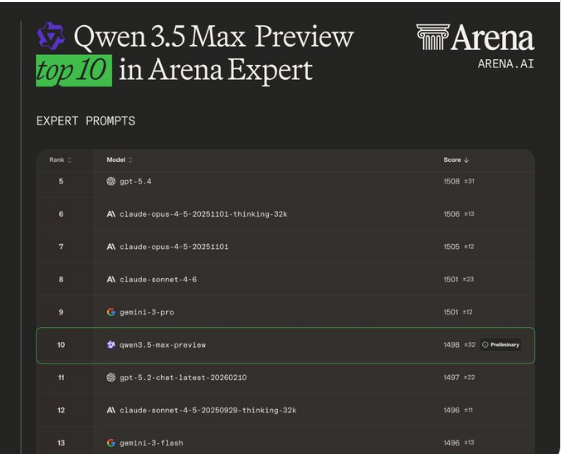
Alibaba's latest AI model, Qwen3.5-Max-Preview, has topped the LMArena benchmark with a record-breaking score of 1464 points, surpassing international competitors like GPT5.4 and Claude4.5. The achievement signals China's growing dominance in AI development, with five Chinese companies now ranking in the global top ten for large language models.

March 20, 2026
Artificial IntelligenceAlibabaLarge Language Models