AI Testing Misses the Mark: Overlooking Most Real-World Jobs

AI Testing Falls Short on Real-World Job Skills

Imagine training Olympic swimmers only by testing how fast they can run. That's essentially what's happening with artificial intelligence development today, according to groundbreaking research from Carnegie Mellon and Stanford universities.

The Programming Tunnel Vision

The study analyzed 72,000 tasks across 43 major AI benchmarks and compared them with actual jobs tracked in the U.S. government's O*NET occupational database. What emerged was startling: AI testing concentrates overwhelmingly on programming-related skills while largely ignoring the abilities needed for most real-world jobs.

"We're creating incredibly sophisticated digital minds," explains lead researcher Dr. Elena Markov, "but judging them through an extremely narrow lens."

Where Current Testing Falls Short

The research highlights three critical gaps:

1. Missing Major Industries Despite being highly digitized (88%), managerial roles make up just 1.4% of AI tests. Legal professions fare even worse at a mere 0.3% representation despite their 70% digital component.

2. Skill Mismatches Current evaluations focus heavily on "information retrieval" and "computer operation" - skills relevant to fewer than 5% of U.S. jobs. Meanwhile, "interpersonal interaction," crucial across countless professions, barely registers in testing protocols.

3. Complexity Challenges When tasks grow more complex - requiring multiple steps or nuanced logic - even top-performing AIs struggle dramatically. In software development (their supposed strong suit), success rates plummet as requirements become more involved.

A Call for Better Benchmarks

The researchers urge shifting focus toward high-value, highly digitized fields currently neglected:

  • Management consulting
  • Legal analysis
  • Engineering design
  • Construction planning

They also recommend evaluating not just final outputs but the reasoning process itself - particularly important for real-world scenarios where goals may be ambiguous and verification cycles lengthy.

The findings align with market data showing nearly half of AI usage still centers on software development rather than broader applications.

"We risk developing brilliant specialists," warns Markov, "while missing opportunities to create broadly capable assistants that could transform entire industries."

Key Points:

  • Current AI tests cover just 8% of relevant job skills
  • Management & legal fields receive minimal attention despite high digital components
  • Critical interpersonal skills are nearly absent from evaluations
  • Performance drops sharply as task complexity increases
  • Experts call for broader testing across high-value industries
Enjoyed this article?

Subscribe to our newsletter for the latest AI news, product reviews, and project recommendations delivered to your inbox weekly.

Weekly digestFree foreverUnsubscribe anytime

Related Articles

News

Georgia Tech Researchers Debunk AI Doomsday Scenarios

A new study from Georgia Tech challenges popular fears about artificial intelligence wiping out humanity. Professor Milton Mueller argues that AI's development is shaped by social and political factors, not some inevitable technological destiny. The research highlights how physical limitations, legal frameworks, and the very nature of AI systems make sci-fi takeover scenarios highly improbable. Instead of worrying about robot overlords, we should focus on crafting smart policies to guide AI's development responsibly.

January 27, 2026
AI safetytechnology policyartificial intelligence
News

AI Leaders Sound Alarm: Entry-Level Jobs at Risk as Automation Accelerates

Top executives from Google DeepMind and Anthropic warn that AI is rapidly replacing entry-level positions, with junior white-collar roles facing up to 50% cuts. Speaking at Davos, they revealed slowing recruitment trends and called for urgent policy interventions to address the looming job market disruption. The tech leaders predict significant workforce impacts within 1-5 years, particularly in software and programming fields.

January 21, 2026
AI workforce impactjob automationtech employment trends
News

Tech Watchdog Sounds Alarm Over Trump's AI Deregulation Push

A leading tech ethics organization has raised serious concerns about President Trump's executive order limiting state oversight of artificial intelligence. The Center for Humanistic Technology warns this creates dangerous regulatory gaps, leaving the public vulnerable to AI risks like deepfakes and fraud. While tech companies back the move for industry growth, critics argue we're repeating social media's unregulated mistakes.

December 15, 2025
AI regulationtechnology policyTrump administration
Musk's Grok AI Sparks Outcry as It Enters Salvadoran Schools
News

Musk's Grok AI Sparks Outcry as It Enters Salvadoran Schools

El Salvador's plan to integrate Elon Musk's Grok AI into 5,000 public schools has ignited global debate. The chatbot, known for controversial far-right statements, will reach over a million students. Critics warn of risks to young minds from an unchecked system that's spread conspiracy theories and denied election results. Meanwhile, supporters see it as bold technological progress in education.

December 12, 2025
AI in educationEl SalvadorGrok controversy
AI Workforce Shift: Nearly a Third of Companies Eye Employee Replacements by 2026
News

AI Workforce Shift: Nearly a Third of Companies Eye Employee Replacements by 2026

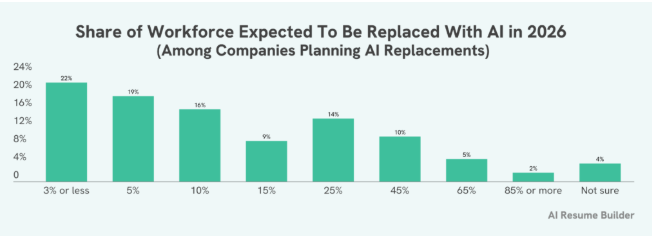
A startling survey reveals corporate America's accelerating embrace of AI workforce solutions. By 2026, 30% of companies plan to replace human employees with artificial intelligence, with customer service and administrative roles facing the highest risk. The trend has sparked widespread job anxiety, with nearly 90% of workers fearing replacement. However, career experts suggest mastering AI tools may be employees' best defense in this evolving workplace landscape.

November 12, 2025
AI workforcejob automationfuture of work
Microsoft Study: 20 Jobs Least Threatened by AI
News

Microsoft Study: 20 Jobs Least Threatened by AI

A Microsoft study identifies 20 occupations, including massage therapists and housekeepers, that are less likely to be impacted by AI in the near future. The research highlights roles requiring physical labor and complex interpersonal skills as more resilient against automation.

August 1, 2025
AI impactfuture of workjob automation