AI-Powered Devices Poised for Explosive Growth: 145 Million Units Forecast by 2035
The Coming Wave of AI Hardware
The next decade will see artificial intelligence step off our screens and into our physical world in a big way. According to fresh projections from Counterpoint Research, global shipments of AI-powered devices [1] are expected to hit a staggering 145 million units between 2025 and 2035. 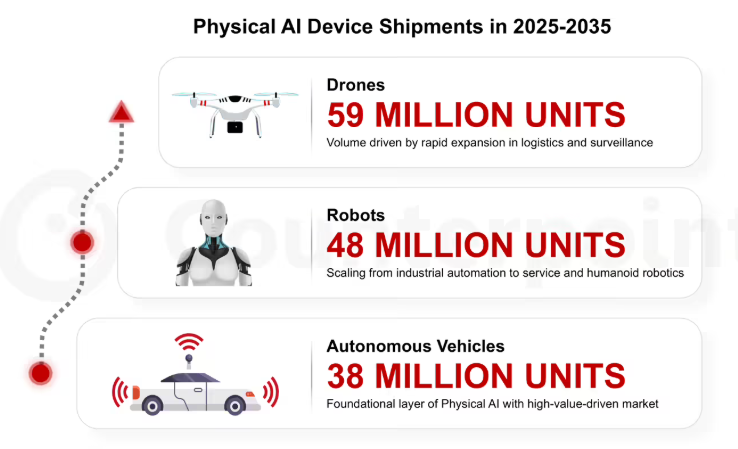
Drones lead the charge with 59 million projected shipments, followed by robots at 48 million. Autonomous vehicles aren't far behind at 38 million - impressive numbers suggesting our roads and skies will soon be buzzing with smart machines.
Humanoid Robots: The Rising Stars
Among these technologies, humanoid robots stand out as the fastest-growing segment. Counterpoint's numbers show installations skyrocketing sevenfold by 2028, surpassing 100,000 units. "What's fascinating," notes Peter Richardson, Counterpoint's VP of Research, "is how quickly these once-futuristic concepts are becoming viable commercial products."
From factory floors to customer service roles, these versatile machines are finding their niche. Their ability to navigate human environments gives them an edge in applications where traditional robots struggle.
The Autonomous Revolution
Self-driving vehicles continue to anchor the physical AI ecosystem. Richardson describes them as "the foundation layer" of current development. Continuous improvements in real-time connectivity and onboard computing power are overcoming early technical hurdles, though practical implementation challenges remain.
"The technology keeps surprising us," Richardson admits. "But the real test comes when these systems need to make split-second decisions in unpredictable environments."
Drones Take Flight
Meanwhile, drones are proving to be physical AI's first breakout success. Their rapid adoption in delivery networks, infrastructure inspection, and security operations has created a thriving market. Logistics companies in particular have embraced drone technology, using fleets to revolutionize last-mile delivery in hard-to-reach areas.
As battery life extends and payload capacities increase, these flying workhorses are taking on ever more sophisticated tasks. Some industry watchers believe drone applications have barely scratched the surface of their potential.
Key Points:
- 145 million AI devices expected to ship 2025-2035
- Humanoid robots forecast to grow 7x by 2028
- Drones lead adoption with 59 million projected shipments
- Autonomous vehicles continue steady technological progress