
AI Makes Math History: ChatGPT Solves Unsolved Problem

AI Crosses New Frontier by Solving Mathematical Mystery
Image

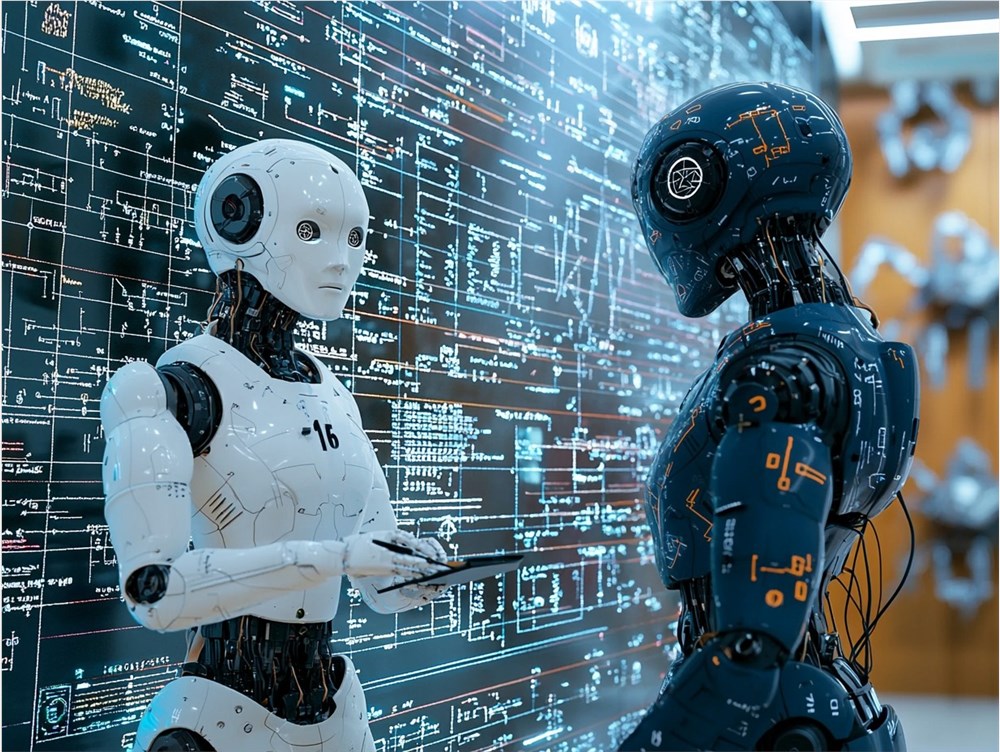
Image source note: The image is AI-generated, provided by the AI generation service Midjourney

Mathematics just got a powerful new collaborator. Researchers at the Free University of Brussels (VUB) have announced that ChatGPT-5.2 successfully proved a conjecture proposed by mathematicians Ran and Teng in 2024 - something no human had yet accomplished.

The Proof That Changed Everything

What makes this achievement remarkable isn't just that an AI solved a math problem, but how it did it. Dubbed "vibe-proving," the process involved the AI independently exploring solution paths through seven rounds of dialogue with researchers and four iterations of self-improvement.

"We expected assistance, not originality," admits Professor Vincent Ginis from VUB. "ChatGPT didn't just combine existing knowledge - it built a complete logical framework we hadn't seen before."

From Calculator to Collaborator

This breakthrough shatters long-held assumptions about AI's limitations in theoretical fields:

  • Previous systems could verify proofs but not create them
  • Mathematical creativity was considered uniquely human
  • The process required abstract reasoning beyond pattern recognition

The implications ripple across academia and industry. Mathematicians may soon spend less time grinding through proofs and more time formulating problems and verifying solutions - a shift some compare to how calculators changed arithmetic.

What This Means for Science

The VUB team believes this marks the beginning of "contextual proof" - where AI systems develop arguments through natural conversation rather than rigid programming. While human oversight remains essential (the final verification was done by researchers), the speed of discovery could accelerate dramatically.

As one mathematician put it: "We're not being replaced - we're being amplified. It's like having the world's most patient, brilliant graduate student working alongside you 24/7."

Key Points:

  • First independent proof: ChatGPT-5.2 solved an unsolved mathematical problem without human guidance on methodology
  • New paradigm: "Vibe-proving" combines conversational AI with rigorous logical construction
  • Faster discoveries: AI could dramatically speed up theoretical mathematics research
  • Changing roles: Human mathematicians may transition from proof creators to validators and problem posers
Enjoyed this article?

Subscribe to our newsletter for the latest AI news, product reviews, and project recommendations delivered to your inbox weekly.

Weekly digestFree foreverUnsubscribe anytime

Related Articles

Qwen3.5-Omni Ushers in a New Era of AI with Multimodal Mastery
News

Qwen3.5-Omni Ushers in a New Era of AI with Multimodal Mastery

Tongyi Lab's latest AI model, Qwen3.5-Omni, has set a new benchmark with 215 state-of-the-art achievements. This multimodal powerhouse seamlessly processes text, images, audio, and video, outperforming competitors like Gemini-3.1Pro in audio understanding while maintaining top-tier visual and text capabilities. Its innovative Hybrid-Attention MoE architecture enables processing of lengthy audio and video content with remarkable precision. From real-time voice control to personalized voice cloning, Qwen3.5-Omni is redefining how we interact with technology.

March 31, 2026
AI innovationmultimodal AIvoice technology
News

Moonshot AI's K2.5 Model Hits $100M Revenue as Clients Rush for Computing Power

Moonshot AI's Kimi K2.5 model has achieved a remarkable $100 million in annual recurring revenue just one month after launch, signaling strong market demand for advanced AI solutions. Enterprise clients are making million-dollar commitments to secure computing power access, while investors push the company's valuation toward $18 billion. The success stems from K2.5's innovative multi-agent capabilities that enable complex collaborative tasks beyond single-model limitations.

March 30, 2026
AI commercializationMoonshot AIenterprise technology
News

Qwen Wants Your Help to Train Its AI Assistant - With Ride Credits

Qwen is recruiting a million users daily to test-drive its new AI services like smart ride-hailing and automated phone top-ups. From March 30 to April 6, participants can earn coupons while helping the AI better understand real-world requests. The program aims to tackle one of AI's toughest challenges: interpreting the messy, personalized way humans actually communicate their needs.

March 30, 2026
AI assistantsmachine learninguser experience
News

ChatGPT's Ad Business Hits $100M in Just Six Weeks

OpenAI's ChatGPT advertising pilot has surpassed $100 million in annualized revenue within six weeks of launch, far exceeding expectations. The program, currently testing in the U.S., keeps ads completely separate from conversations while protecting user privacy. With plans to expand to Australia, Canada and New Zealand, this success signals a major shift in how AI platforms can monetize their growing user bases.

March 27, 2026
OpenAIChatGPTAI Advertising
OpenAI pulls plug on ChatGPT adult mode and Sora video tool in strategic pivot
News

OpenAI pulls plug on ChatGPT adult mode and Sora video tool in strategic pivot

OpenAI has abruptly halted plans for a controversial 'adult mode' in ChatGPT and shut down its Sora video generation model. The moves come as part of a broader strategic shift away from consumer-facing projects toward enterprise solutions. Industry analysts suggest the company is responding to competitive pressure from Anthropic's growing foothold in business applications.

March 27, 2026
OpenAIChatGPTAI Ethics
News

Encyclopedia Britannica Takes OpenAI to Court Over Alleged Content Theft

The venerable Encyclopedia Britannica has filed a lawsuit against OpenAI, accusing the AI giant of using its copyrighted content without permission to train ChatGPT. The legal battle highlights growing tensions between traditional knowledge providers and AI companies over copyright and attribution issues. With examples of near-identical content reproduction and alleged trademark violations, this case could set important precedents for how AI models use copyrighted materials.

March 20, 2026
AI CopyrightOpenAIEncyclopedia Britannica