AI Gets Physical: 145 Million Smart Devices to Ship by 2035
The Rise of Physical AI
Imagine a future where your Amazon package arrives by drone, your local warehouse is staffed by tireless robots, and your commute happens in a self-driving car. This vision is quickly becoming reality, according to new projections from Counterpoint Research. Between 2025 and 2035, the market research firm predicts a staggering 145 million physical AI devices will ship worldwide.
Breaking Down the Numbers
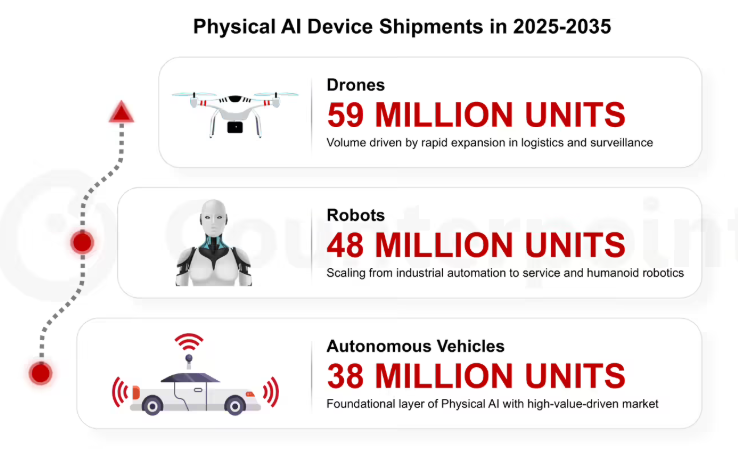
Drones lead the pack with an expected 59 million shipments, followed by robots at 48 million. Autonomous vehicles aren't far behind at 38 million. But the real standout? Humanoid robots are projected to grow sevenfold by 2028, surpassing 100,000 installations.
"What we're seeing is AI literally getting off its feet," explains Peter Richardson, Vice President at Counterpoint. "Autonomous vehicles provide the foundation, but humanoid robots represent the next evolutionary step - machines that can navigate our world as naturally as we do."
Where These Machines Will Work
Drones have already found their niche in logistics and surveillance, with enterprise adoption driving much of the growth. Robots are transforming manufacturing floors and warehouses. And while self-driving cars still face regulatory hurdles, their underlying technology is proving invaluable for industrial applications.
"The smartphone revolution trained AI to see and hear," Richardson notes. "Now we're teaching it to move and interact with physical space. That's when things get really interesting."
Key Points:
- Total shipments: 145 million physical AI devices expected between 2025-2035
- Market leaders: Drones (59M), robots (48M), autonomous vehicles (38M)
- Growth star: Humanoid robots projected to grow 7x by 2028
- First to scale: Drones already achieving widespread commercial deployment