AI breakthrough spots hidden fatty liver risks in routine scans
AI Detects Fatty Liver Earlier Than Doctors Using Routine Scans
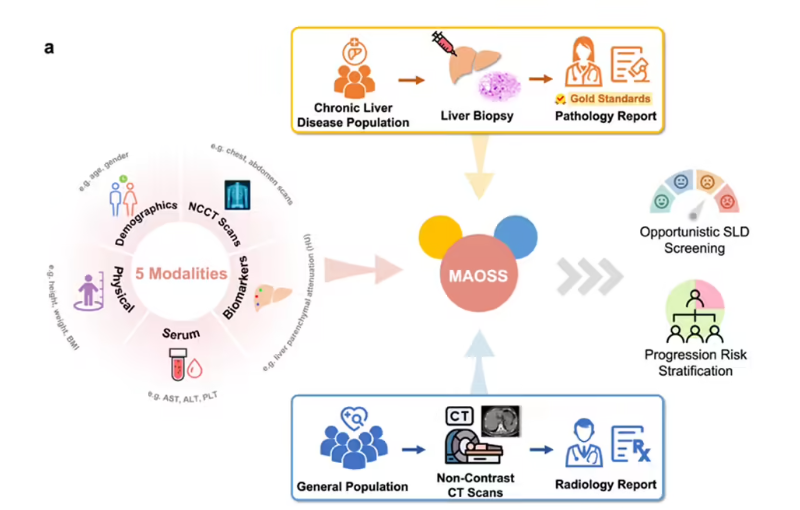
Alibaba's research arm DAMO Academy has developed an artificial intelligence system that could revolutionize how we detect fatty liver disease. Developed alongside top Chinese hospitals, the MAOSS model analyzes standard CT scans to catch dangerous liver conditions before symptoms appear.
The Silent Epidemic
Fatty liver affects over 30% of adults globally, often flying under the radar until serious damage occurs. Traditional ultrasound exams miss many cases, while specialized tests remain expensive and inaccessible for most patients. "This creates a dangerous gap," explains one researcher, "where people don't realize they're at risk until it's too late."
How MAOSS Changes the Game
The breakthrough lies in what the AI can see that humans can't:
- Hidden patterns: By analyzing texture and density in unenhanced CT scans (the kind used for routine checkups), MAOSS spots subtle signs of liver damage
- Dual diagnosis: For the first time, a single scan can assess both fat accumulation and fibrosis progression simultaneously
- Superhuman accuracy: In trials, the model achieved 90%+ accuracy compared to radiologists' 70% when staging liver conditions
The real-world impact? MAOSS identified three times more high-risk patients than traditional methods during testing. Perhaps most crucially, it predicted which patients would develop cirrhosis within two years with alarming precision.
Why This Matters Now
With obesity rates climbing worldwide, fatty liver disease has become a silent public health crisis. Early detection could prevent countless cases from progressing to irreversible liver damage. The beauty of this solution? It requires no new equipment - just smarter analysis of scans hospitals already perform.
The research team envisions MAOSS being deployed quietly in the background during routine physicals, flagging at-risk patients before their condition worsens. As one doctor involved put it: "We're not replacing physicians - we're giving them superhuman vision."
The findings appeared in February's Nature Communications, marking a significant step toward accessible preventive care for one of our era's most overlooked health threats.
Key Points:
- Game-changing detection: Identifies fatty liver and fibrosis simultaneously from standard CTs
- Cost-effective: Uses existing scan data without additional tests
- Early warning: Spots cirrhosis risk years before traditional methods
- Scalable solution: Could be implemented widely through hospital imaging systems