

Xiaomi's New Bionic Hand Mimics Human Touch with Sweat-Gland Cooling
Xiaomi's Bionic Hand Breakthrough: Smaller, Smarter, and Now with 'Sweat Glands'
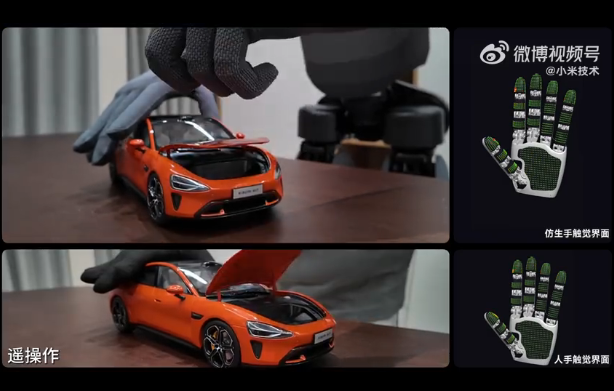
In a significant leap for robotics, Xiaomi has unveiled its latest bionic hand prototype that brings us closer than ever to human-like dexterity in machines. What makes this iteration special? It's not just the remarkably human appearance or the 60% size reduction - it's how the engineers solved one of robotics' trickiest problems: keeping cool under pressure.
Engineering That Breathes Like Human Skin
The standout innovation is what Xiaomi calls "bionic sweat gland" technology. Just as humans cool through perspiration, this robotic hand uses 3D-printed liquid cooling channels combined with micro-pumps to dissipate heat through water evaporation. This clever solution addresses the thermal runaway risk from the hand's high-density motor integration, actively cooling about 10 watts during operation.
"We looked to nature for solutions," explains Dr. Liang Chen, lead engineer on the project. "Human skin doesn't overheat during prolonged use because of our natural cooling systems. We've essentially given our bionic hand the robotic equivalent of sweat glands."
Industrial-Grade Precision
Building on previous success in automotive factories - where earlier versions achieved 90.2% success rates in continuous three-hour nut installation tests - Xiaomi now aims for perfection. The new model boasts:
- 64% more degrees of freedom for fluid movement
- 8,200 mm² of tactile sensor coverage (comparable to human hand sensitivity)
- 150,000+ grip cycle reliability in stress tests
The reduced size finally matches an average adult male hand, making it far more versatile for industrial workstations designed for human operators.
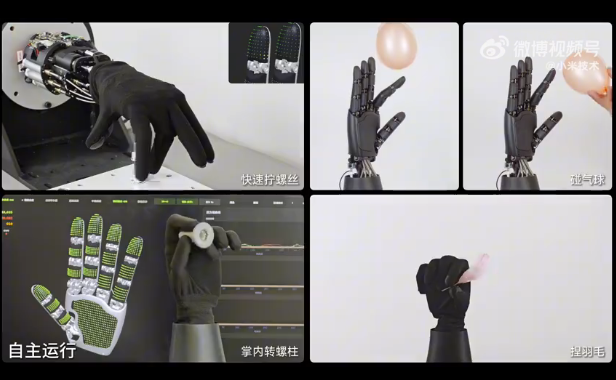
Open-Sourcing the Future of Touch
In an unexpected move, Xiaomi announced it would open-source its tactile perception model TacRefineNet. This allows researchers worldwide to build on their work mapping high-dimensional data from tactile gloves directly to bionic hands.
"We want to accelerate progress in embodied intelligence," says Xiaomi Robotics VP Elena Wong. "By sharing our tactile mapping techniques, we hope to reduce development barriers across the industry."
The decision reflects growing recognition that collaborative advancement benefits all players in this emerging field.
Key Points:
- Compact design: 60% smaller than previous models while adding functionality
- Natural cooling: "Sweat gland" system prevents motor overheating during prolonged use
- Enhanced sensitivity: Tactile sensors now cover 8,200 mm² with improved precision
- Industrial durability: Passed 150,000+ grip cycle tests under heavy loads
- Open research: TacRefineNet model available to public to advance robotics development
