
Xiaomi Lures Top AI Talent with Million-Dollar Deals to Boost AGI Ambitions

Xiaomi Bets Big on AI Talent Amid AGI Race

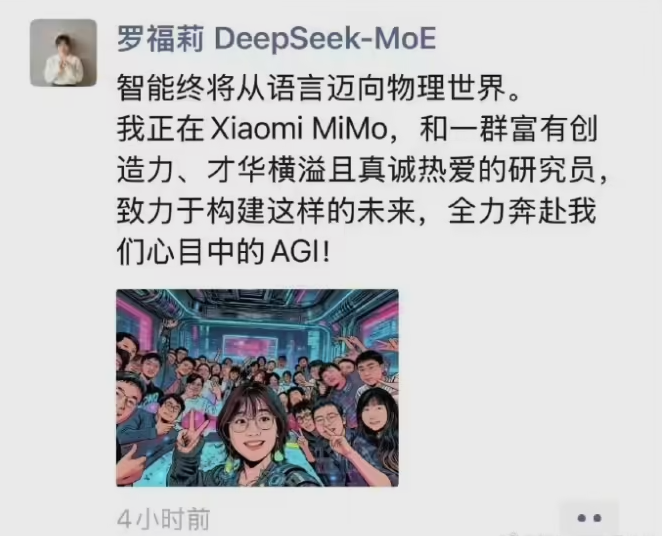
In a bold move that's shaking up China's tech talent market, smartphone giant Xiaomi has successfully recruited Luo Fuli, a founding team member of prominent AI firm DeepSeek. Industry sources reveal the compensation package reaches millions annually - a clear statement about how seriously Xiaomi takes its artificial intelligence ambitions.
Image

Founder-Led Talent Hunt

The recruitment came through Xiaomi's "top talent" initiative spearheaded personally by founder Lei Jun. Known for his hands-on leadership style, Lei reportedly expressed dissatisfaction with the company's progress in large language models despite open-sourcing its MiMo model earlier this year.

"When Lei Jun wants something done faster, he doesn't just throw money at the problem - he goes straight for the people who can solve it," remarked a Beijing-based tech analyst familiar with Xiaomi's strategy.

Luo brings more than just technical expertise. Her experience building AI teams from scratch and consistent academic output made her particularly valuable as Xiaomi looks to close the gap with rivals like Huawei and Baidu.

Academia Meets Industry

The effects of Luo's arrival are already visible. A recent arXiv paper co-authored by researchers from Xiaomi and Peking University showcases early fruits of this industry-academia collaboration. As corresponding author, Luo helped demonstrate advancements in model architecture and reasoning optimization - areas critical for developing more capable AI systems.

This partnership reflects a growing trend among Chinese tech firms to integrate academic research directly into product development cycles. For Xiaomi, it provides much-needed theoretical heft behind its MiMo model.

Beyond Chatbots: AGI Vision Takes Shape

Luo hinted at broader ambitions in a social media post: "Intelligence will eventually move from language to the physical world." This aligns perfectly with Xiaomi's "full ecosystem" strategy encompassing smartphones, electric vehicles, and smart home devices.

The MiMo model appears destined to evolve beyond smartphone assistants into what company insiders describe as a "general intelligent hub" coordinating interactions across Xiaomi's product universe. Imagine your car adjusting cabin temperature based on your calendar schedule while your robot vacuum prepares for guests - all orchestrated by MiMo.

Key Points:

  • Premium Talent Acquisition: Seven-figure salary demonstrates Xiaomi's commitment to competing in top-tier AI development
  • Academic Acceleration: Immediate research output through Peking University collaboration
  • Physical-World AI: Strategic shift from pure language models toward embodied intelligence applications
  • Ecosystem Play: MiMo positioned as central intelligence layer across Xiaomi products
Enjoyed this article?

Subscribe to our newsletter for the latest AI news, product reviews, and project recommendations delivered to your inbox weekly.

Weekly digestFree foreverUnsubscribe anytime

Related Articles

Xiaomi's MiMo AI Model Rolls Out Affordable Subscription Plans for Developers
News

Xiaomi's MiMo AI Model Rolls Out Affordable Subscription Plans for Developers

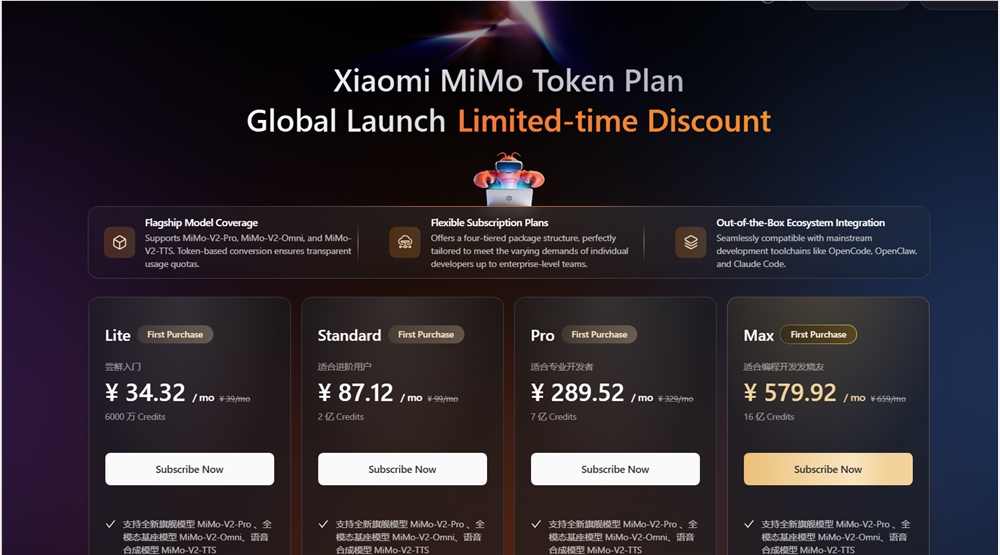
Xiaomi has unveiled a tiered subscription service for its MiMo large language model, offering developers flexible access starting at just 39 yuan per month. The four-tier system covers all modalities from text to audio processing, with the flagship MiMo-V2-Pro ranking among the world's top AI models. This move signals Xiaomi's push into commercial AI services while simplifying cost management for developers.

April 3, 2026
XiaomiAI modelstech subscriptions
News

Xiaomi's MiMo AI Model Goes Paid: Token Plans Start at 39 Yuan

Xiaomi has rolled out its first paid subscription plans for the MiMo large language model, offering four pricing tiers from 39 to 659 yuan per month. The plans give developers and AI enthusiasts access to three core models, marking Xiaomi's shift from free beta testing to monetizing its AI ecosystem. This move reflects the industry's broader transition towards sustainable AI business models.

April 3, 2026
XiaomiAI ModelsTech Subscriptions
News

Indian AI Startup Sarvam Lands $350M with Amazon and NVIDIA Backing

Bangalore-based AI startup Sarvam AI is closing a massive funding round worth up to $350 million, with tech giants Amazon and NVIDIA joining the investor lineup. The deal could value the young company at over $1.5 billion, marking a significant milestone for India's growing AI ecosystem. Sarvam's focus on local language models and voice-first AI solutions has attracted global attention in the competitive artificial intelligence space.

April 3, 2026
Artificial IntelligenceStartup FundingIndian Tech
News

China Backs Meta's AI Startup Deal With Clear Legal Conditions

China's commerce ministry has given cautious approval to Meta's acquisition of AI startup Manus, emphasizing that all tech deals must follow Chinese laws. The move signals Beijing's balancing act between encouraging innovation and maintaining regulatory oversight in the fast-growing AI sector. Analysts see this as Meta's strategic push to strengthen its position in general artificial intelligence.

April 3, 2026
MetaArtificial IntelligenceChina Tech Policy
News

ORCA Lab 1.0 Brings Physical AI Development to Your Laptop

Shanghai Songying Technology has unveiled ORCA Lab 1.0, China's first physical AI platform designed for individual developers. This groundbreaking tool eliminates the need for expensive hardware and complex coding, allowing anyone to create and train robots using just a standard laptop. The platform's no-code approach and full life cycle support could democratize embodied intelligence development, potentially accelerating innovation in this cutting-edge field.

April 3, 2026
Artificial IntelligenceRoboticsTech Innovation
News

Google's Gemma 4: A Powerhouse AI Model Set to Shake Up Open-Source Landscape

Google is gearing up to unveil Gemma 4, its next-generation open-source AI model that promises four times the parameters of its predecessor. With a rumored 120 billion parameters and innovative MoE architecture, this release marks Google's strategic move to reclaim influence in the open-source AI space. The tech world watches closely as this development could redefine the balance between commercial and open-source AI models.

April 2, 2026
AI DevelopmentOpen Source TechMachine Learning