Unsloth Studio Brings AI Fine-Tuning to Your Desktop

Democratizing AI Development: Unsloth Studio Puts Powerful Tools in Developers' Hands
Image

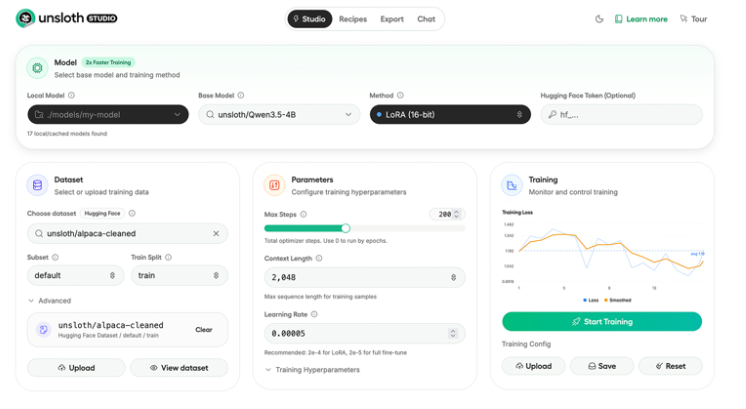
The team behind the popular Unsloth AI fine-tuning library has just unveiled something that could change how we work with large language models. Their new Unsloth Studio brings professional-grade model customization to personal computers, complete with a visual interface that makes the process surprisingly approachable.

Breaking Down Technical Barriers

What makes this release special? For starters, it completely sidesteps the headache of CUDA configurations and complex setup processes. Developers can now fine-tune massive models like Llama3.3 or DeepSeek-R1 on consumer hardware - think RTX4090 graphics cards instead of expensive server clusters.

The secret sauce lies in Unsloth's custom Triton-language backpropagation kernel, which delivers some eye-opening improvements:

  • Double the training speed compared to standard frameworks
  • 70% less memory usage without compromising model accuracy
  • Consumer GPU compatibility that opens doors for individual developers

"We're seeing people run 8B parameter models on single GPUs," explains one beta tester. "For many use cases, this eliminates the cloud computing bills that used to scare off small teams."

A Visual Approach to Complex Tasks

The studio wraps its powerful engine in an intuitive web interface that guides users through the entire process:

  • Data preparation becomes visual with node-based workflows that handle messy PDFs and JSONL files
  • Built-in reinforcement learning through GRPO technology borrowed from DeepSeek-R1
  • One-click deployment options for GGUF, vLLM, and Ollama formats

Perhaps most importantly, everything stays local. In an era where data privacy concerns grow daily, having complete ownership of both process and output gives enterprises peace of mind.

The timing couldn't be better. As companies increasingly seek customized AI solutions but balk at cloud service costs, Unsloth Studio offers a compelling alternative. Early adopters report using it for everything from legal document processing to creative writing assistants - all developed in-house on modest hardware.

What This Means for AI's Future

This release signals a broader shift in artificial intelligence development. Where once only tech giants could afford to customize models, tools like Unsloth Studio are democratizing access. The implications for startups, researchers, and even hobbyists are profound.

The platform currently supports Llama4 and Qwen series models out of the box, with more compatibility planned. For developers tired of wrestling with cloud platforms or constrained by hardware budgets, this might just be the breakthrough they've been waiting for.

Key Points:

  • Local visual interface eliminates complex setup processes
  • Cuts GPU memory needs by 70% while doubling speeds
  • Makes large model fine-tuning feasible on consumer hardware
  • Includes complete workflow from data prep to deployment
  • Maintains data privacy by keeping everything on local machines
Enjoyed this article?

Subscribe to our newsletter for the latest AI news, product reviews, and project recommendations delivered to your inbox weekly.

Weekly digestFree foreverUnsubscribe anytime

Related Articles

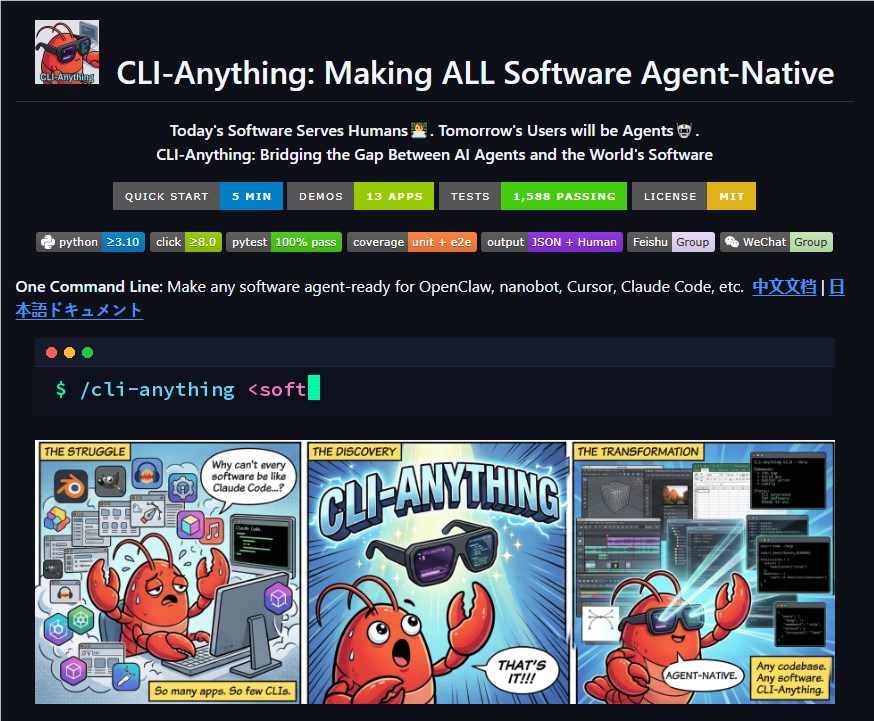
HKU's CLI-Anything Turns Any Software into AI-Friendly Tools with One Command
News

HKU's CLI-Anything Turns Any Software into AI-Friendly Tools with One Command

The University of Hong Kong's Data Intelligence Lab has released CLI-Anything, an open-source tool that transforms any software into an AI agent-friendly command-line interface. This breakthrough eliminates the frustrations of unreliable UI automation, offering developers a robust way to integrate professional tools like GIMP, Blender, and LibreOffice with AI systems. The project has already gained significant traction, surpassing 17,000 GitHub stars shortly after launch.

March 17, 2026
AI developmentsoftware automationopen source
News

AI Takes a Leap: MiniMax's New Model Can Now Improve Itself

MiniMax has unveiled M2.7, China's first large language model capable of actively participating in its own development. This breakthrough allows the AI to build testing frameworks and optimize its performance without human intervention. Meanwhile, the AI industry sees significant movements, with LuChen Technology securing major funding and AliCloud adjusting prices due to surging demand. As models begin 'raising themselves,' we're witnessing a new chapter in artificial intelligence evolution.

March 18, 2026
AI innovationmachine learningtech breakthroughs
News

Baidu's Miaoda Makes App Development Accessible to All

Baidu has unveiled its Miaoda Application Generation Skill, allowing users worldwide to create apps with minimal technical know-how. The platform simplifies development into three straightforward steps, already serving over 10 million users and generating billions in value. Notably, it's empowering solo entrepreneurs to build profitable businesses with AI tools.

March 17, 2026
AI developmentBaiduno-code platforms
News

Mistral AI's Small4: A Triple-Threat Open Source Model Arrives

Mistral AI has unveiled its latest open-source marvel - the Small4 model. This isn't just another incremental update; it combines three powerful capabilities into one package: logical reasoning, multimodal processing, and coding assistance. With its efficient 128-expert architecture and configurable performance modes, developers now have a versatile tool that adapts to different needs while cutting computational costs.

March 17, 2026
AI modelsopen sourceMistral AI
NVIDIA's Nemotron 3 Series: AI Gets a Fivefold Speed Boost
News

NVIDIA's Nemotron 3 Series: AI Gets a Fivefold Speed Boost

At the 2026 GTC conference, NVIDIA unveiled its Nemotron 3 series of open-source AI models, with the flagship Ultra version delivering five times faster processing. The release also includes innovative multimodal tools for audio-visual integration and real-time conversation, plus breakthroughs in robotics and medical research. Major industry players are already adopting these cutting-edge technologies.

March 17, 2026
AI innovationNVIDIAmachine learning
Edge Gets Smarter: New AI Tool Summarizes Web Pages Instantly
News

Edge Gets Smarter: New AI Tool Summarizes Web Pages Instantly

A new browser extension called AI Page Summarizer has landed in the Microsoft Edge Store, bringing powerful AI summarization capabilities right to your browser sidebar. What makes it special? It works seamlessly with both cloud-based AI services like DeepSeek and Doubao, and local models through Ollama - meaning you can get concise summaries even offline. The tool goes beyond simple summarization, offering translation and contextual understanding features too.

March 13, 2026
AI toolsbrowser extensionsMicrosoft Edge