Pinterest Introduces AI Content Controls Amid User Concerns
Pinterest Rolls Out AI Content Filters Following User Backlash
Pinterest unveiled new content control features on Thursday designed to let users limit exposure to AI-generated imagery. The visual discovery platform's decision comes after mounting criticism about synthetic content overwhelming organic inspiration posts.
Addressing the AI Flood
As a hub for creative ideas and shopping inspiration, Pinterest faced growing discontent as algorithmically created images proliferated. Internal data suggests generative AI now produces 57% of online content, according to company-cited research. Without intervention, analysts warned this trend could erode user trust and engagement.
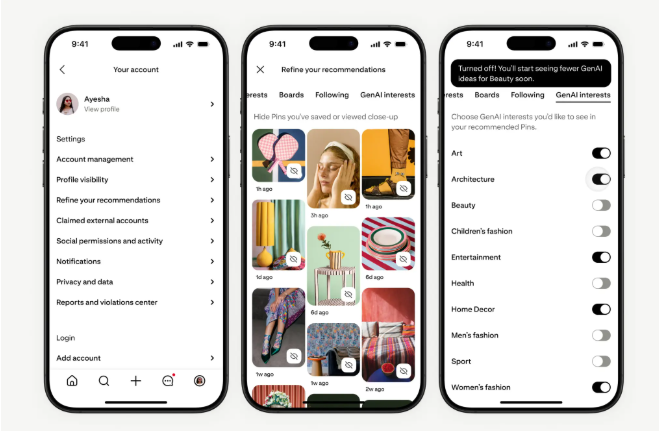
Earlier this year, Pinterest introduced "AI modified" labels identifying synthetic content through metadata analysis and detection algorithms. The latest update delivers promised user controls under "Optimize Your Recommendations" in app settings.
How the Controls Work
The granular filters allow reducing AI content visibility across specific categories including:
- Beauty
- Art & design
- Fashion
- Home decor
The company plans to expand categories based on feedback while maintaining flexibility—users can modify preferences anytime.
During browsing sessions, members can flag problematic AI pins via three-dot menus. "We're empowering users to strike their ideal balance between human creativity and AI innovation," said CTO Matt Madrigal.
Platform-Wide Rollout Underway
The features debuted Thursday on:
- Web version
- Android app iOS support will follow within weeks alongside more prominent AI content labeling.
Strategic Implications
Rather than banning AI entirely or letting it dominate, Pinterest adopted a middle-ground approach. This acknowledges both technological inevitability and preservation of authentic discovery experiences. Success hinges on accurate content identification—a challenge as generation tools grow more sophisticated.
The platform must also motivate users to actively curate feeds amid concerns that default settings favor algorithmic volume over quality.
Key Points:
- Users can now limit AI-generated images across select categories
- Controls currently available on web/Android, iOS coming soon
- Move follows earlier "AI modified" labeling system implementation
- Platform cites research showing 57% of online content is now AI-generated
- Approach balances innovation with authenticity concerns