NVIDIA Open-Sources Audio2Face AI for Real-Time Animation

NVIDIA Democratizes Facial Animation with Open-Source Audio2Face
Image

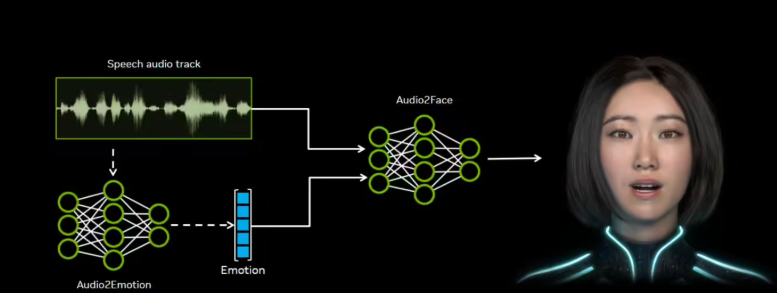
In a major move for digital content creation, NVIDIA has made its Audio2Face generative AI model publicly available through open-source licensing. This advanced technology transforms audio inputs into realistic facial animations in real-time, with applications spanning gaming, film production, and virtual customer service.

Technical Capabilities

The system analyzes acoustic features including phonemes, intonation, and speech patterns to generate accurate lip-syncing synchronized with emotional expressions. NVIDIA's release includes:

  • Complete software development kit (SDK)
  • Training framework for model customization
  • Plugins for Autodesk Maya and Unreal Engine 5.5+
  • Both regression and diffusion model architectures

The technology supports dual operational modes: offline rendering for pre-recorded audio and real-time processing for dynamic AI characters.

Industry Adoption

Leading game studios have already integrated Audio2Face into production pipelines:

  • Survios implemented the technology in Alien: Fireteam Elite, streamlining facial capture processes
  • Farm51 used it extensively in Chernobylite 2: Zone, cutting animation production time significantly

Wojciech Pazdur, Innovation Director at Farm51, called the technology "a revolutionary breakthrough" for character animation.

Developer Resources

The open-source package available at NVIDIA's developer portal includes:

  1. Core animation algorithms
  2. Local execution plugins
  3. Complete training framework documentation
  4. Sample implementation code

Developers can fine-tune models using proprietary datasets to create domain-specific solutions.

Future Implications

This release lowers barriers for creating expressive virtual characters across industries. As NVIDIA continues advancing its AI tools ecosystem, we can anticipate more sophisticated digital interactions in entertainment, education, and enterprise applications.

Key Points:

  • 🚀 Open-source availability: Full SDK and training framework released publicly
  • ⏱️ Dual processing modes: Supports both pre-rendered and real-time applications
  • 🎮 Proven adoption: Already implemented in major game titles
  • 🔧 Developer-friendly: Includes plugins for popular engines like Unreal
  • 💡 Customizable: Models can be fine-tuned with proprietary data
Enjoyed this article?

Subscribe to our newsletter for the latest AI news, product reviews, and project recommendations delivered to your inbox weekly.

Weekly digestFree foreverUnsubscribe anytime

Related Articles

News

South Korea secures priority access to NVIDIA's cutting-edge AI chips

At CES 2026, South Korean officials announced NVIDIA's commitment to prioritize delivery of next-generation Vera Rubin GPUs to the country. This strategic move comes as part of a broader partnership that includes supplying up to 260,000 GPUs for South Korea's AI infrastructure development. Officials emphasized how securing advanced chip technology early could give Korean tech firms a crucial edge in global AI competition.

January 13, 2026
NVIDIAArtificial IntelligenceTech Partnerships
News

Universal Music and NVIDIA Join Forces to Revolutionize Music Discovery with AI

In a groundbreaking partnership, Universal Music Group and NVIDIA are leveraging AI to transform how we find and create music. Their new 'Music Flamingo' model understands songs like humans do - recognizing emotions, structures, and cultural nuances. This isn't just smarter search technology; it's reshaping the entire music experience while protecting artists' rights. The collaboration also includes an artist incubator focused on human-AI collaboration rather than replacement.

January 7, 2026
AI in musicMusic technologyUniversal Music
NVIDIA Takes the Wheel: Open-Source AI Model Accelerates Self-Driving Future
News

NVIDIA Takes the Wheel: Open-Source AI Model Accelerates Self-Driving Future

At CES 2026, NVIDIA's CEO Jensen Huang unveiled Alpamayo, the company's groundbreaking open-source AI model for autonomous vehicles. This move could democratize self-driving technology while challenging Chinese automakers' dominance. The release includes simulation tools and extensive driving data, signaling NVIDIA's push to reclaim leadership in automotive AI.

January 6, 2026
Autonomous VehiclesAI InnovationNVIDIA
NVIDIA's Huang Declares Robotics' ChatGPT Moment at CES 2026
News

NVIDIA's Huang Declares Robotics' ChatGPT Moment at CES 2026

NVIDIA CEO Jensen Huang made waves at CES 2026 by announcing robotics' 'ChatGPT moment,' signaling AI's leap from digital to physical realms. The company unveiled groundbreaking open-source models that enable machines to understand real-world physics and spatial relationships, backed by powerful new hardware that quadruples performance.

January 6, 2026
AI RoboticsNVIDIAPhysical Computing
NVIDIA's Alpamayo Platform Brings Human-Like Thinking to Self-Driving Cars
News

NVIDIA's Alpamayo Platform Brings Human-Like Thinking to Self-Driving Cars

At CES 2026, NVIDIA unveiled its groundbreaking Alpamayo platform, designed to give autonomous vehicles human-like reasoning capabilities. The open-source AI system can navigate complex scenarios like malfunctioning traffic lights without prior training. With its release of datasets and simulation tools, NVIDIA aims to accelerate the development of smarter self-driving technology that can explain its decisions to human passengers.

January 6, 2026
autonomous vehiclesAI innovationNVIDIA
NVIDIA CEO Hails Open-Source AI Breakthroughs at CES 2026
News

NVIDIA CEO Hails Open-Source AI Breakthroughs at CES 2026

At CES 2026, NVIDIA's Jensen Huang made waves by championing open-source AI development, singling out DeepSeek-R1 as a standout success. The tech leader revealed NVIDIA's plans to open-source training data while showcasing their new Vera Rubin chip. Huang outlined four key areas where AI is transforming industries, predicting these changes will define future technological paradigms.

January 6, 2026
AIOpen SourceNVIDIA