
Mode AI 2.0 Launches: Shifting Focus to Human-Machine Collaboration

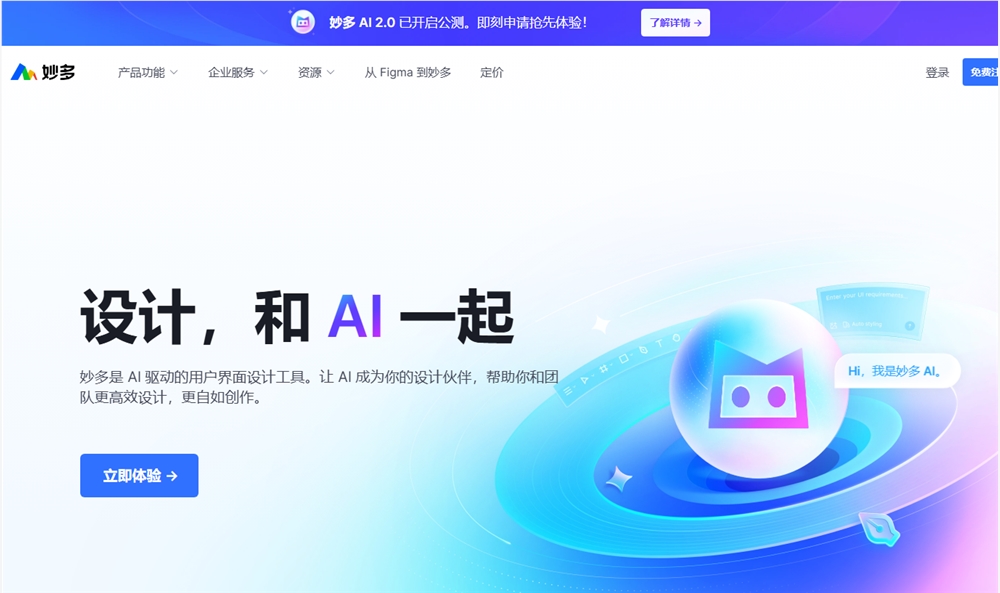
Design assistant platform Mode has taken a significant leap forward with the release of Mode AI 2.0, marking a strategic shift from functional problem-solving to collaborative intelligence. The upgrade represents a fundamental rethinking of how artificial intelligence can partner with human creativity.

From Tools to Partners

Zhang Mingzhe, Mode's Vice President of Product, explains the evolution: "Where Mode 1.0 focused on addressing specific design pain points, version 2.0 asks a more ambitious question - how can AI and humans create together?" This philosophical shift manifests in practical innovations throughout the platform.

The centerpiece is the new "AI Magic Frame", now prominently positioned at the top of the toolbar. This feature allows designers to share context simply by selecting areas of their work, enabling the AI to understand and contribute to projects more intuitively. Image
Technical Breakthroughs

The update delivers substantial improvements across three key areas:

  • Editing: Conversational suggestions and alternative version generation streamline the iteration process
  • Generation: UI creation capabilities graduate from experimental to production-ready, handling diverse inputs from text descriptions to rough sketches
  • Image-text processing: Enhanced understanding bridges visual and textual elements more effectively

Zhang reveals an intriguing strategic pivot: "We're moving beyond Product Technology Fit to what we call Pre-Technology Fit." This approach anticipates rapid AI advancements by building adaptable frameworks upfront - "like changing an engine mid-flight," as Zhang describes it.

Quality assessment has similarly evolved, shifting focus from basic functionality to measuring the percentage of exceptional outputs. This higher standard reflects Mode's confidence in its technology's maturation.

The Future of Design Collaboration

The launch positions Mode at the forefront of a broader industry transformation - AI transitioning from specialized tools to creative partners. As designers increasingly work alongside intelligent systems, platforms like Mode are redefining what's possible in digital creation.

Could this represent the beginning of a new paradigm where human and machine creativity become indistinguishable? Mode's latest offering suggests we may be closer than many realize.

Key Points

  1. Mode AI 2.0 emphasizes collaborative creation over functional problem-solving
  2. The "AI Magic Frame" enables intuitive human-machine interaction through contextual sharing
  3. Significant upgrades span editing, generation, and image-text processing capabilities
  4. New "Pre-Technology Fit" approach builds for future AI advancements
  5. Quality metrics now focus on excellence rather than basic usability

Enjoyed this article?

Subscribe to our newsletter for the latest AI news, product reviews, and project recommendations delivered to your inbox weekly.

Weekly digestFree foreverUnsubscribe anytime

Related Articles

News

DeepSeek V4 Emerges as China's AI Powerhouse with Trillion Parameters

China's DeepSeek is preparing to launch its V4 AI model, boasting trillion parameters and groundbreaking capabilities. The model features native multimodal processing and an unprecedented 1 million token context window, allowing it to analyze entire books or code repositories at once. In a strategic shift, DeepSeek prioritized optimization for domestic hardware like Huawei chips before release, signaling China's growing independence in AI development.

February 26, 2026
Artificial IntelligenceDeepSeekAI Development
News

Chinese AI Startup StepFun Eyes Hong Kong IPO with $500M Target

Shanghai-based AI unicorn StepFun is preparing for a Hong Kong IPO that could value the company at over $2 billion. Founded by former Microsoft executive Jiang Daxin, the company specializes in large language models and has attracted major investors including Tencent. The move comes as China's AI sector sees increasing competition for capital amid soaring computing costs.

February 26, 2026
Artificial IntelligenceIPOChinese Tech
News

NVIDIA and OpenAI Close to Sealing Major AI Partnership Deal

NVIDIA CEO Jensen Huang dropped exciting news during the company's earnings call - they're finalizing a significant partnership with OpenAI. This move signals NVIDIA's deep commitment to shaping the AI landscape, alongside collaborations with Anthropic and Groq. The tech world is buzzing about how these alliances might accelerate AI innovation across industries.

February 26, 2026
NVIDIAOpenAIArtificial Intelligence
News

MiniMax Hits $38.9 Billion Valuation as Goldman Sachs Spotlights China's AI Cost Advantage

China's MiniMax has caught Wall Street's attention with its surprisingly efficient AI technology. Goldman Sachs' first coverage values the multimodal AI company at $38.9 billion, highlighting its ability to deliver top-tier performance at just a fraction of competitors' costs. What makes MiniMax stand out? A clever technical architecture that keeps expenses low while maintaining quality, plus an unusual revenue mix - 70% comes from overseas markets.

February 26, 2026
Artificial IntelligenceTech ValuationChina Innovation
News

Moonlight AI's Valuation Soars Past $12B After Latest Funding Round

China's AI sector sees another unicorn milestone as Moonlight AI secures $700 million in fresh funding, pushing its valuation to $12 billion. The company's K2.5 model has shown explosive commercial potential, with revenue surpassing all of 2025 in just 20 days. Founder Yang Zilin confirms no immediate IPO plans despite the massive cash infusion.

February 25, 2026
Artificial IntelligenceTech FundingChinese Startups
News

OpenAI Poaches Roblox Talent Chief Amid Expansion Push

OpenAI has made a strategic hire from gaming giant Roblox, appointing Arvind KC as its first Chief Human Resources Officer. The move signals OpenAI's transition from scrappy startup to mature tech player, coinciding with preparations for a potential IPO and new funding round that could exceed $100 billion. As AI competition intensifies, companies are shifting focus from computing power battles to talent wars.

February 25, 2026
OpenAIArtificial IntelligenceTech Hiring