Microsoft's Edge Browser Gets Smarter with Outlook Integration

Microsoft Tightens Integration Between Outlook and Edge Browser

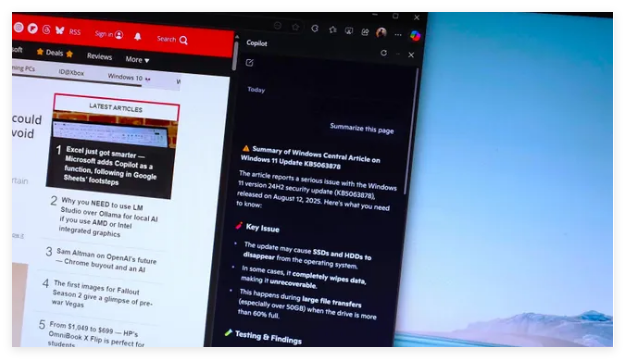
In a strategic push to make its AI tools more indispensable, Microsoft announced plans to seamlessly connect its Outlook email service with the Copilot assistant in Edge. The update, currently slated for May 2025, represents one of the most practical applications of AI we've seen yet.

How It Works

Imagine this: You're scanning your overflowing inbox when an important project email catches your eye. Instead of clicking the link and trying to remember why it matters later, Edge will immediately analyze both the email content and the webpage you're visiting. Within seconds, Copilot serves up:

  • Concise summaries of key information
  • Highlighted critical points
  • Suggested next steps based on context

Image

The technology focuses on what Microsoft calls "context awareness" - essentially teaching AI to understand not just individual pieces of information, but how they relate across applications.

Why This Matters

Microsoft isn't just adding another feature; they're redesigning how we interact with information across their ecosystem. By embedding Copilot at natural workflow junctions (like moving from email to browser), they're reducing what psychologists call "cognitive switching costs" - that mental fatigue from constantly changing tasks.

The company appears committed to turning Edge's sidebar into Copilot's command center. While May 2025 is the target rollout, tech-savvy readers know Microsoft sometimes adjusts timelines (remember those Windows 11 printer driver updates?).

Bigger Picture Implications

This move signals a major industry shift:

  1. From reactive to proactive AI: Instead of waiting for commands, assistants now anticipate needs based on context.
  2. Ecosystem lock-in: By making their apps work better together, Microsoft creates compelling reasons to stay within their software universe.
  3. Productivity redefined: The update could fundamentally change how professionals manage information overload.

The integration exemplifies how tech giants are using AI not just as flashy add-ons, but as glue binding together their existing products.

Key Points:

  • Automatic activation: Copilot springs into action when clicking links from Outlook emails
  • Cross-context analysis: Simultaneously reads email content and webpage material
  • Practical outputs: Delivers summaries, highlights, and suggested actions
  • Target release: May 2025 (subject to change)
  • Strategic play: Part of Microsoft's broader push for deeper ecosystem integration

Enjoyed this article?

Subscribe to our newsletter for the latest AI news, product reviews, and project recommendations delivered to your inbox weekly.

Weekly digestFree foreverUnsubscribe anytime

Related Articles

News

Microsoft Outmaneuvers OpenAI in Global Computing Power Race

A quiet battle over AI infrastructure is unfolding, with Microsoft aggressively expanding its computing resources while OpenAI appears to pull back. The tech giant recently secured 30,000 NVIDIA chips in Norway - a facility originally intended for OpenAI. Meanwhile, Google snapped up UK computing power after OpenAI paused its 'Star Gate' project there. These strategic moves suggest a significant shift in the AI landscape as Microsoft doubles down on data center investments while OpenAI scales back its ambitious plans.

April 15, 2026
AI InfrastructureMicrosoftOpenAI
Microsoft Expands AI Footprint with Norway Data Center and 30,000 NVIDIA Chips
News

Microsoft Expands AI Footprint with Norway Data Center and 30,000 NVIDIA Chips

Microsoft is making significant moves in the AI infrastructure race, securing a key data center in Norway's Arctic Circle and adding 30,000 NVIDIA Vera Rubin chips to its arsenal. This comes as OpenAI, which originally eyed the facility, scales back its global infrastructure plans. Meanwhile, Google has tapped into Nscale's London facility, highlighting the fierce competition for AI computing resources across Europe.

April 15, 2026
MicrosoftAI InfrastructureNVIDIA Chips
Microsoft's New Image Generator: Faster, Cheaper, and Ready for Business
News

Microsoft's New Image Generator: Faster, Cheaper, and Ready for Business

Microsoft has unveiled MAI-Image-2-Efficient, a more affordable and faster version of its image generation model. The new AI tool cuts costs by 41% while quadrupling efficiency, making it ideal for businesses needing quick product photos or UI prototypes. Coming soon to Copilot and Bing, this could change how companies create visual content.

April 15, 2026
MicrosoftAI image generationbusiness technology
News

OpenAI shifts to Amazon as Microsoft partnership cools

OpenAI is reportedly distancing itself from Microsoft while deepening ties with Amazon, according to leaked internal communications. Amazon has committed $50 billion in funding and substantial computing resources to support OpenAI's initiatives. This strategic shift comes as OpenAI executives criticize Microsoft's limitations and question competitors' approaches in the rapidly evolving AI landscape.

April 14, 2026
OpenAIAmazonMicrosoft
Microsoft's Harrier Model Breaks Language Barriers with Open-Source Release
News

Microsoft's Harrier Model Breaks Language Barriers with Open-Source Release

Microsoft's Bing team has open-sourced its powerful Harrier multilingual embedding model, supporting over 100 languages. Trained on 2 billion examples plus GPT-5 synthetic data, this technology promises to revolutionize search and AI applications. Developers can now access three model sizes on Hugging Face, with integration planned for Bing and next-gen AI services.

April 8, 2026
MicrosoftNatural Language ProcessingOpen Source AI
GitHub's New AI Buddy Helps Coders Catch Mistakes Before They Happen
News

GitHub's New AI Buddy Helps Coders Catch Mistakes Before They Happen

GitHub just rolled out an experimental feature called Rubber Duck that acts like a coding partner looking over your shoulder. By combining Claude and GPT models, this tool spots potential errors early, boosting accuracy by nearly 75%. Developers can get instant second opinions during planning, complex tasks, or whenever they hit a snag - making those late-night coding sessions a little less stressful.

April 8, 2026
GitHubAIProgrammingDeveloperTools