Mianbi's Songguo Board Brings AI Development to Your Workbench
Mianbi's Game-Changing AI Development Board Arrives
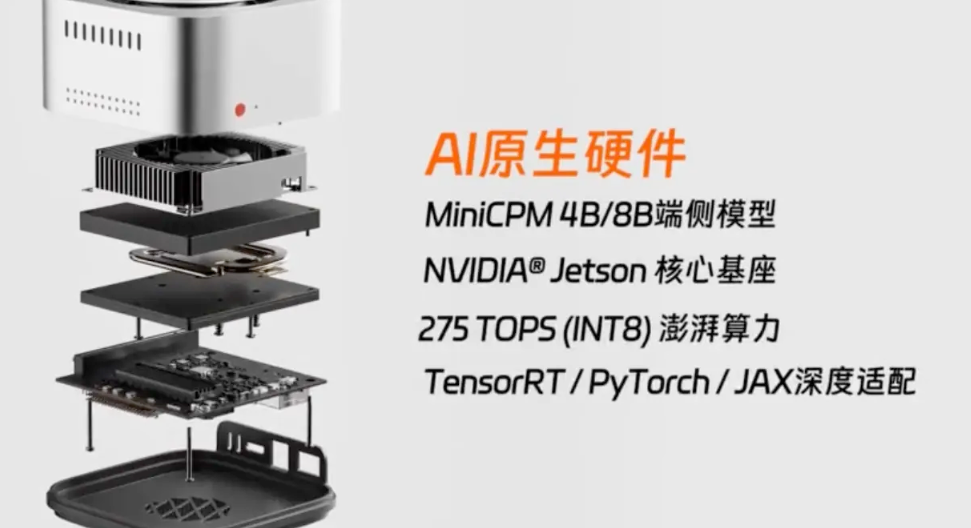
In a move that could democratize AI hardware development, Mianbi Intelligence unveiled its Songguo Board today - an edge computing platform designed to turn complex AI implementations into something approaching plug-and-play simplicity.
At its core sits NVIDIA's powerful Jetson modules, but what makes the Songguo Board stand out is how it wraps that raw capability in developer-friendly packaging. With built-in microphones, cameras and a suite of multimodal interfaces, it's essentially an all-in-one toolkit for creating intelligent physical devices.
"We're seeing AI move from cloud servers to everyday objects," explains Mianbi's Chief Product Officer. "The Songguo Board bridges that gap by giving makers the tools to build responsive, offline-capable AI without needing a data center in their basement."
Power Meets Accessibility
The board delivers serious computational muscle - 275TOPS (INT8) worth - enough to run Mianbi's MiniCPM edge models smoothly. But the real innovation lies in its "Agent-native" approach that lets developers control hardware functions using plain English instructions.
Imagine programming a smart home sensor by typing "alert me when someone enters the room after dark" rather than writing lines of code. That's the paradigm shift Mianbi is banking on.
From Prototypes to Production
Early adopters are already experimenting with diverse applications:
- Offline personal assistants that work without internet
- Embodied AI robots responding to environmental cues
- Smart retail displays analyzing customer engagement
The included toolchain handles everything from model optimization to decision-making workflows. It's a full-stack solution compressed into something barely larger than a credit card.
The LEGO Effect?
The comparison isn't accidental. Just as LEGO bricks made engineering concepts tangible for generations of children, Mianbi hopes its board will make AI development accessible beyond computer science PhDs.
Whether it sparks that kind of revolution remains to be seen, but one thing's certain: the barriers to building intelligent hardware just got significantly lower.
Key Points:
- Edge Computing Powerhouse: 275TOPS performance in compact form factor
- Multimodal Ready: Integrated sensors eliminate peripheral headaches
- Natural Language Programming: Control hardware through intuitive commands
- Offline Capable: Runs sophisticated models without cloud dependency