
Meta Launches Secretive Super PAC to Safeguard AI Interests

Meta Establishes Super PAC to Champion AI Priorities

In late August 2025, two Super Political Action Committees (PACs) dedicated to artificial intelligence (AI) emerged in the U.S. While one followed conventional methods—launching with fanfare and multi-stakeholder funding—Meta took a quieter, more unconventional route. The tech giant created its own Super PAC, Mobilizing Economic Transformation Across California, enabling it to deploy corporate funds for political advertising focused solely on its AI interests.

Image

The Rise of Corporate Super PACs

Since the 2010 Citizens United ruling, Super PACs have become a dominant force in U.S. politics, allowing businesses and wealthy individuals to pour billions into advocacy efforts. These entities can accept unlimited corporate donations for activities like advertising and voter mobilization but are barred from direct coordination with candidates or campaigns. However, campaign finance experts note that Meta’s approach is unusual: a company creating its own Super PAC under singular control is nearly unprecedented.

Zuckerberg’s Unparalleled Control

Meta’s corporate structure grants Mark Zuckerberg near-total authority over the new PAC. This setup effectively transforms the committee into a personal political tool, funded by Meta’s treasury, to advance Zuckerberg’s vision for AI and counter competitors’ influence. Critics argue this blurs the line between corporate and individual political power, raising questions about accountability.

Implications for Tech and Politics

The move underscores the growing intersection of Big Tech and policymaking. By establishing its own PAC, Meta signals its intent to shape AI legislation proactively rather than reactively. Analysts suggest this could set a precedent for other tech giants to follow suit, further amplifying corporate sway over regulatory frameworks.

Key Points:

  1. 🏛️ Exclusive Control: Meta’s Super PAC is uniquely controlled by Zuckerberg, bypassing traditional multi-donor models.
  2. 💰 Unlimited Spending: Super PACs can spend freely on political ads but cannot coordinate directly with campaigns.
  3. ⚖️ Corporate Influence: The move highlights tech firms’ escalating role in shaping policy through financial leverage.

Enjoyed this article?

Subscribe to our newsletter for the latest AI news, product reviews, and project recommendations delivered to your inbox weekly.

Weekly digestFree foreverUnsubscribe anytime

Related Articles

News

Zuckerberg's Digital Doppelgänger: Inside Meta's AI Clone Project

Meta is developing an eerily realistic AI version of Mark Zuckerberg that company employees will be able to converse with in real time. The digital CEO clone, currently in early testing phases, learns from Zuckerberg's speeches, mannerisms, and strategic views. This ambitious project comes as Meta pours billions into AI development, recently launching tools like MuseSpark while facing concerns about digital ethics.

April 13, 2026
Artificial IntelligenceMetaDigital Humans
News

Zuckerberg Crafts His Own AI Doppelgänger to Engage Meta Staff

Meta's CEO Mark Zuckerberg is reportedly coding up to 10 hours weekly while developing an AI version of himself. This digital twin, trained on his voice, image and strategic thinking, aims to interact with employees. The project reveals how deeply Meta is integrating AI into its operations, from product development to internal management. Alongside this avatar, Meta is working on a 'CEO Agent' to assist with daily tasks. These moves show Zuckerberg's hands-on approach as Meta transforms into an AI-driven company.

April 14, 2026
AI avatarsMark ZuckerbergMeta AI strategy
HarmonyGNN: A Breakthrough in Making AI Smarter at Understanding Complex Relationships
News

HarmonyGNN: A Breakthrough in Making AI Smarter at Understanding Complex Relationships

A new AI training method called HarmonyGNN is revolutionizing how computers understand complex networks of information. By helping AI systems better distinguish between different types of relationships in data, researchers achieved accuracy improvements of up to 9.6% across various tests. This advance could significantly boost AI applications in fields like drug discovery and weather forecasting, where understanding connections between different data points is crucial.

April 14, 2026
AI ResearchMachine LearningGraph Neural Networks
News

Apple's AI Visionary John Giannandrea Exits as Tech Giant Restructures

Apple's former AI chief John Giannandrea is making his final exit this week, closing a chapter that began with his responsibilities being gradually stripped away since early 2025. The departure comes after Apple's AI initiatives - including Siri upgrades and generative AI development - failed to meet expectations. His duties have now been distributed among three senior executives, marking a significant shift in how Apple manages its artificial intelligence strategy.

April 13, 2026
Apple AITech LeadershipCorporate Restructuring
News

Apple's AI Pioneer Giannandrea Exits as Tech Giant Struggles to Keep Up

Apple's AI ambitions take another hit as John Giannandrea, the tech giant's former artificial intelligence chief, prepares to depart next week. The executive, who joined from Google in 2018 with high hopes of transforming Apple's AI capabilities, saw his role diminish last year amid disappointing results. While Apple poured resources into projects like Siri upgrades and its Apple Intelligence platform, competitors raced ahead in generative AI. Giannandrea's exit leaves questions about Apple's ability to compete in this crucial tech frontier.

April 13, 2026
AppleArtificial IntelligenceTech Leadership
Researchers Uncover Critical Security Flaw in AI Relay Systems
News

Researchers Uncover Critical Security Flaw in AI Relay Systems

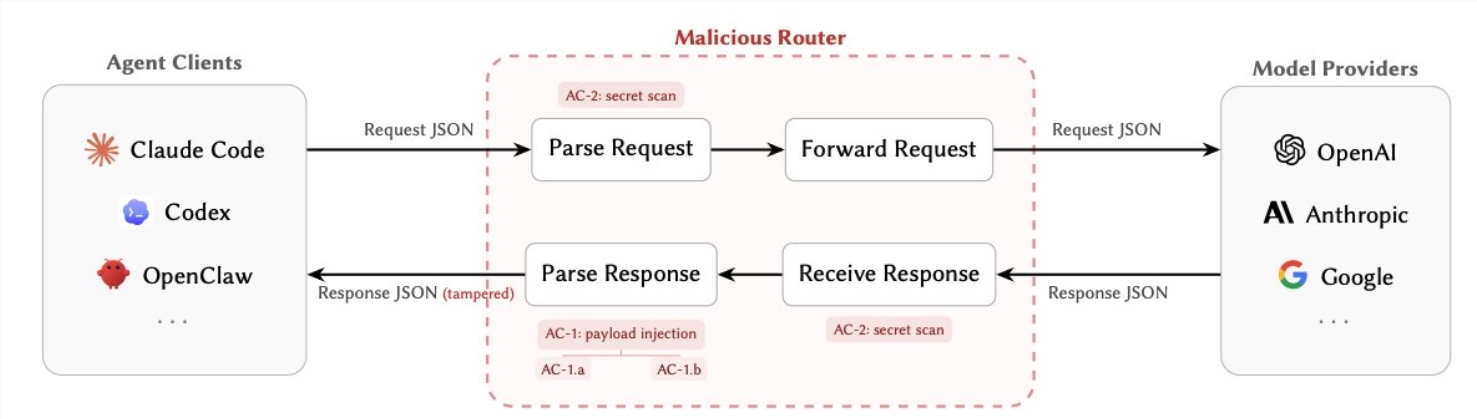
Cybersecurity researchers have exposed a dangerous vulnerability in third-party AI routing services that could allow attackers to secretly control AI agents. The findings reveal how malicious actors could intercept and manipulate data flow between AI models and users, potentially gaining access to sensitive information without detection. Developers relying on these relay services should review their security measures immediately.

April 10, 2026
AI SecurityCybersecurityArtificial Intelligence